

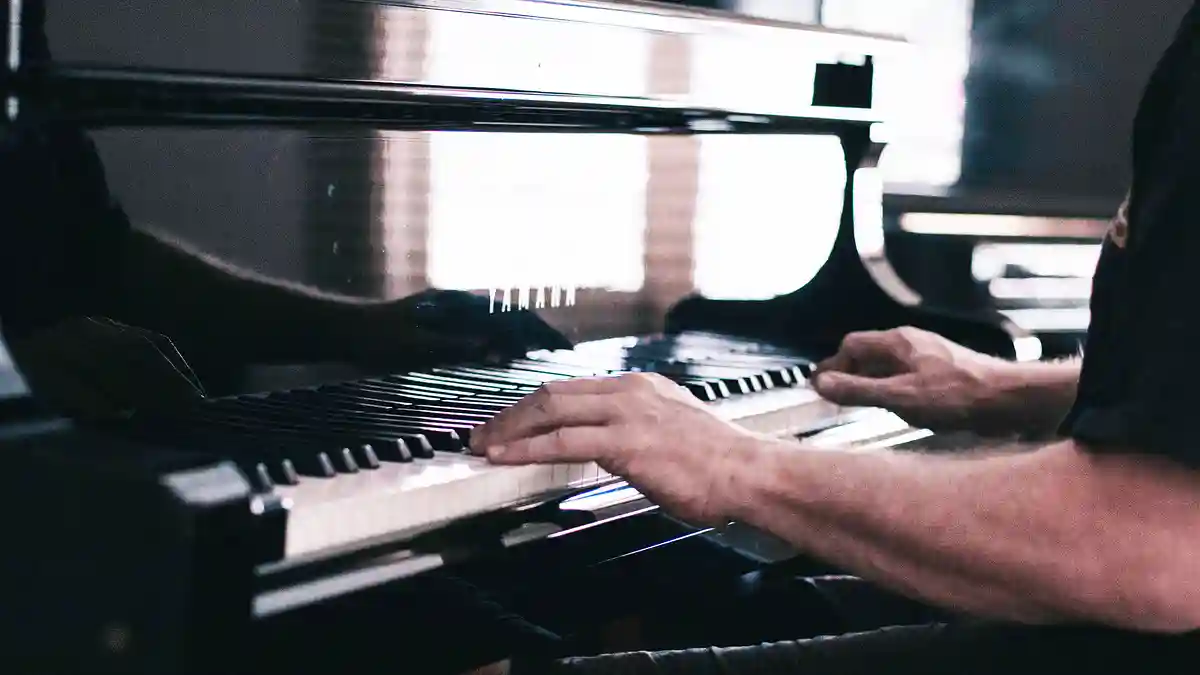
How much practice time can you devote to your piano hobby while balancing work? Do adult lessons never last?

Are any of you taking lessons while working? I hope this will be helpful for those who are thinking about practicing a musical instrument as adults.
I wonder how many people start taking lessons after becoming adults.
At my current workplace, the department has about 20 employees, and among them, including myself, only three are taking lessons.
Once you become an adult, I think the time you can devote to hobbies becomes limited due to your living environment, starting with work.
Given that the time is limited, the inevitable bottleneck when taking lessons is, I think, the amount of time you can devote to preparation and review (i.e., practice time).
It depends on the nature of the lessons, but to a greater or lesser extent, doing preparation and review at home is likely the quickest way to improve.
On the other hand, there may be cases where one chooses extracurricular activities by working backward from the living environment and the amount of time available for preparation and review.
I can’t immediately think of which lessons would fit that category, but perhaps the popular ones are those where you can expect to improve just by attending the lessons, without having to do much preparation or review at home.
Now then, how about the piano?
Of course, I believe the teacher understands the circumstances on our (the adults’) side and will conduct the lessons accordingly, so even if I go to a lesson without having practiced at all, I don’t think I would be scolded.
However, the classical piano teacher I study under
There are no shortcuts to improving at the piano.
That is the view they hold.
In other words, the lessons I’m taking are exactly the same as the ones small children are taking.
It goes without saying, but even if everyone takes a once-a-week lesson, there’s a disparity in how much practice time they can devote before the next lesson.
Therefore, in the case of an adult beginner like me, it takes many times longer than a child to work through the tasks. (This does not necessarily apply to those who are resuming as adults.)
These days, a variety of piano teaching methods have emerged, and there are also teachers who will accommodate students’ requests—such as wanting to polish a specific piece—but given the above premise, as for how much time I spend practicing each day...Actually, it’s nothing special at all.
I live in a rental apartment.
Because it’s a corner room on the first floor, I’ve heard that while you might not need to worry too much about the sound of the digital piano used for practice if you wear headphones, the key action noise can still carry to the upstairs or neighboring rooms.Do not practice the piano after 10 p.m.I make a point of doing so. (No matter how late it gets, I’ve set a cutoff at 10:30 p.m.)
Therefore, on days when I can get home before 10 p.m., I practice the piano first.
Make it practice time30 minutes to 1 hourIt is.
It's not much, is it?
However, since I often get home around 9 p.m., this is about the only amount of time I can devote to it while balancing work.
The practice content is exactly the same as the lesson.
- The teacher’s original finger exercises
- Hanon
- Assignment 1
- Assignment 2
In this setup, Assignment 1 progresses from “Minna no Organ Piano Book” to “Beyer” to “Burgmüller 25,” and Assignment 2 is a short Baroque piece.
For Assignment 1 and Assignment 2, if time allows, we’ll also do a bit of review of songs we’ve done in the past.
When I don’t have much time (only 30 minutes to practice), I only work on the task I’m currently focusing on.
The lessons are on Sundays, so as long as I don’t have anything scheduled, only Saturdays are...about 2 to 4 hoursI will practice.
This day also doubles as practice for the popular and jazz piano lessons I'm taking.
It's been about one year and eight months since I started learning classical piano.
I have never once gone to a lesson without practicing at all beforehand.
However, there are times when I go to lessons only for Saturday practice, about once a month.
The amount of practice definitely shows in improvement, and when I go to lessons having only practiced on Saturdays, I often don’t get a passing mark (lol).
At the end of the lesson, the teacher always
Since you likely have work, just do what you can within your limits.
I often get addressed that way, but as for the very first thing to say when I arrive for the lesson,
How are you doing?
Because I get asked about it a lot, I feel good when I’m practicing diligently, and conversely, when I haven’t been able to practice much, I feel guilty (laughs).
However, so far there have been no remarks from the teacher indicating that the pace is particularly slow.
In my case, I’m not married and I have relatively free time to myself, but when I’m seeing someone, it can be hard to get them to understand (lol).
Piano lessons are only 30 minutes on Sundays, right?
I think you have tons of time on the weekend besides that…
When you put it that way...
It's not that you can just take the lesson—you need practice in order to take the lesson...
Even if I explain it, it's hard for people who haven't done a similar kind of lesson to really understand.
Well, if I had worked harder when I was younger, I probably would have been a bit more comfortable at this age, but time can’t be turned back, so it can’t be helped.
There are all sorts of things I want to do, but in my case, if I try to do everything, I can’t keep up with lessons. So, while setting priorities within my current lifestyle, I’d like to keep taking piano lessons as a hobby going forward.