

[Winter Haiku] A collection of poems composed by junior high school students: a beautiful and amusing anthology that vividly evokes scenes

Have you ever found your hand pausing when you try to write a winter haiku? For middle school students, crafting a haiku that conveys feelings in just a few words using seasonal words (kigo) can feel quite challenging.
But winter is full of moments that move the heart—crisp air, visible white breath, the New Year atmosphere, and more.
In this article, we’ll introduce example poems that can inspire middle schoolers and tips on how to use seasonal words.
Try expressing, in your own words, the feelings you had this winter or your happy memories—haiku can be written casually.
The content will also be useful for class assignments and homework, so please make good use of it!
- [Winter Haiku] A collection of poems written by elementary school students. Excellent works that skillfully use seasonal words.
- Let's enjoy learning winter seasonal words! A collection of easy-to-use word ideas for elementary school students
- [For Elementary School Students] Turn Summer Memories into Haiku! A Collection of Fun Summer Haiku Ideas
- Funny senryu poems composed by junior high school students: introducing outstanding works that will make you burst out laughing
- [For Elementary School Students] Spring Kigo for Haiku Writing! A Collection of Fun, Easy-to-Memorize Ideas
- [For Middle School Students] Also Helpful for Haiku Writing! A Collection of Famous Haiku Using Spring Seasonal Words
- For elementary school students! A recommended collection of famous haiku using spring kigo
- Recommended for elementary school students! Ideas for composing summer haiku
- Surprisingly little-known winter season words! A collection of everyday, easy-to-use vocabulary ideas
- A collection of heartwarming quotes for the winter season | Gem-like words that resonate with the heart
- [Elementary School Senryu] A Collection of Hilarious Masterpieces about Summer Vacation, Friends, and School Life. Tips and Explanations Learned from Outstanding Works
- Picture Books to Read in Winter: A Collection of Story Ideas That Resonate with Elementary School Children
- [Elementary School Students] Perfect for Kakizome! A Collection of Four-Character Idiom Ideas
[Winter Haiku] A collection of works composed by junior high school students. A beautiful and amusing anthology that vividly evokes scenes (1–10)
The air turns clear before it snows—how mysterious.
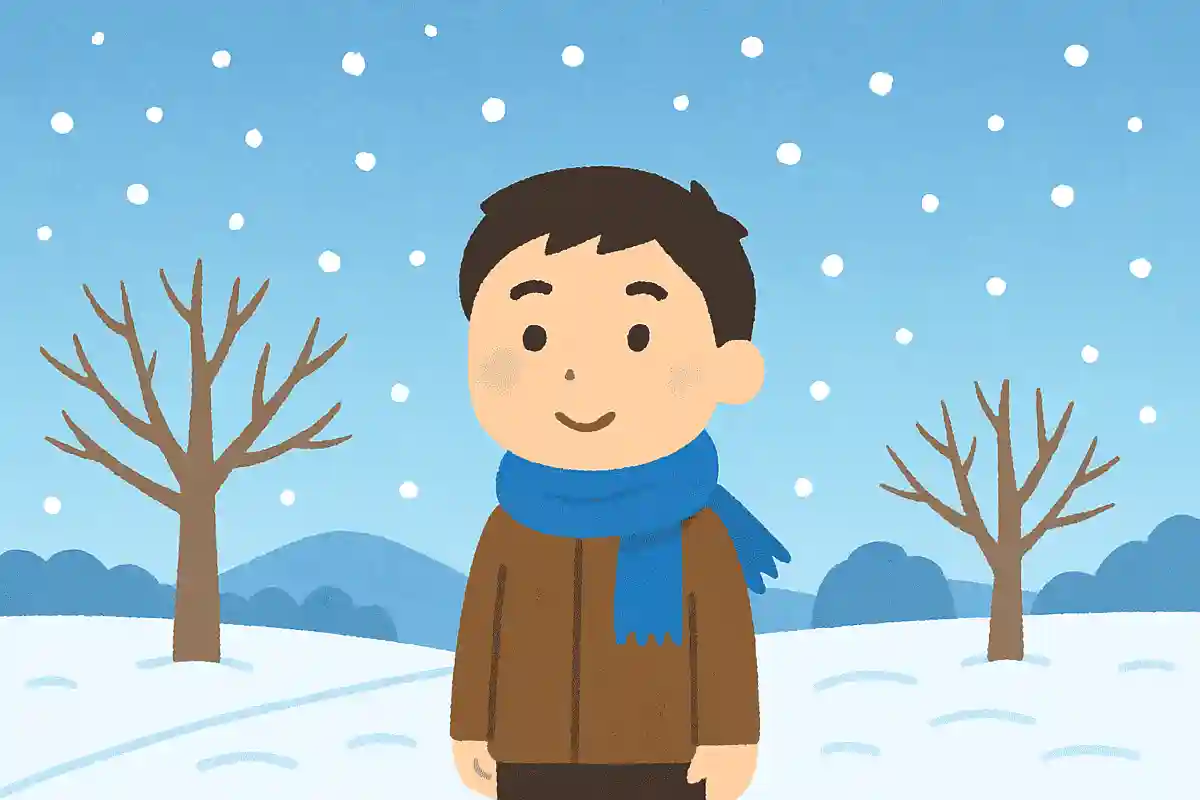
Compared to other seasons, the winter sky looks clear and beautiful.
This is said to be because in winter the temperature is low and convective activity is weak, so there is less water vapor and dust in the air.
The air also seems clear when it gets cold right before it snows.
From the haiku, you can sense how people perceived the subtle changes before snowfall.
You can imagine what feelings the clear sky might have inspired.
Besides the phenomena that occur before snow, there are many natural phenomena on Earth, such as rainbows and auroras.
It could be interesting to look into them as well.

Frost columns—the night before still lingers there.
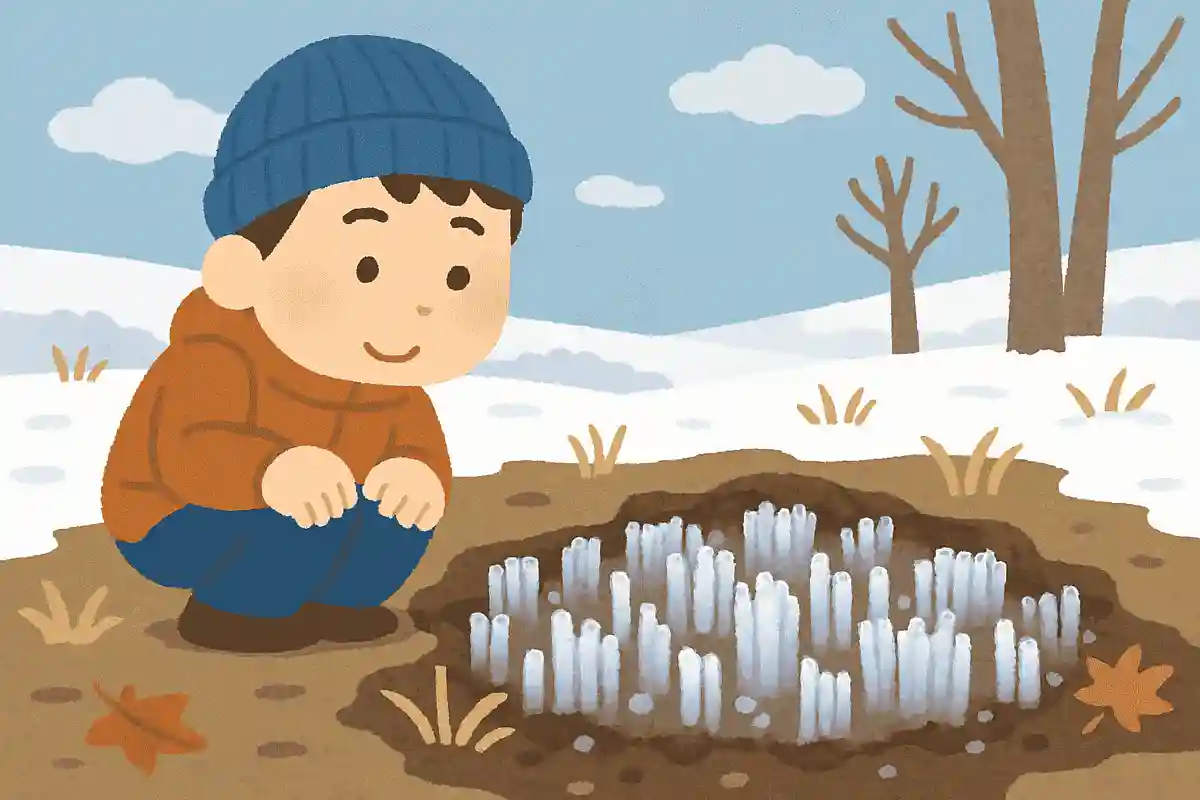
Needle ice that can be seen on cold mornings.
Columns of ice push up from the ground, and when you walk on them they make a crunchy, crackling sound.
Some kids love stepping on needle ice because the crunchy sound and sensation are so fun.
Needle ice doesn’t appear every winter day; there are several conditions required for it to form.
One condition is that the ground surface temperature must be at or below 0°C, while the soil beneath must be above 0°C.
If the soil is below 0°C, needle ice will not form.
When all the various conditions come together just right and needle ice forms, it’s also fun to imagine what the night or early morning was like.
Making a wish—/ the gate’s pine decorations / smile at me
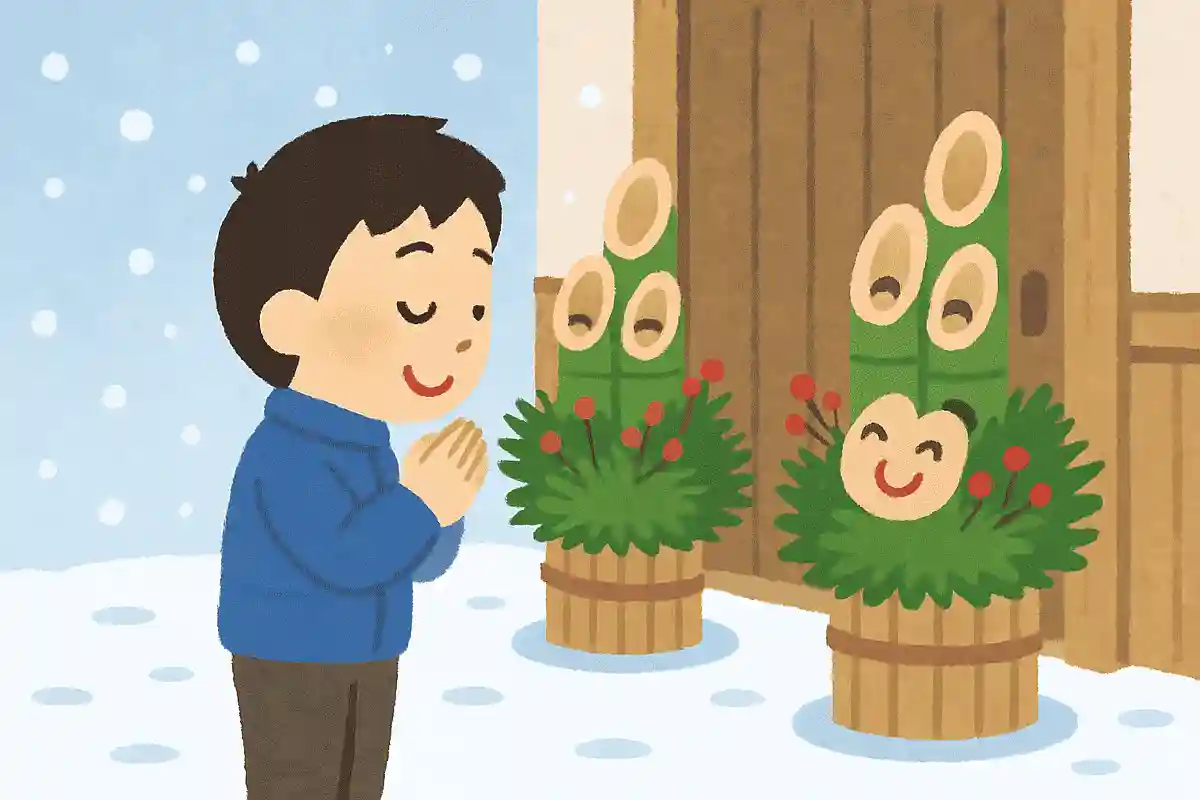
Some households decorate with kadomatsu for the New Year.
Originally, kadomatsu were said to be for the toshigami, the deity who is believed to visit at the start of the year.
Placing them at the entrance or gate served as a marker to guide the deity.
In recent years, people also display kadomatsu to pray for their family’s happiness throughout the year or for prosperity in business.
The festive arrangement, with three straight bamboo stalks standing upright, conveys the joy and delight of welcoming the New Year.
The expression that the kadomatsu “smiled” may suggest that, when making their wish, people sensed that same warmth.
[Winter Haiku] A collection of poems composed by junior high school students. A beautiful and interesting anthology that vividly evokes scenes (11–20)
New Year’s gift money, like the snow, has melted away.
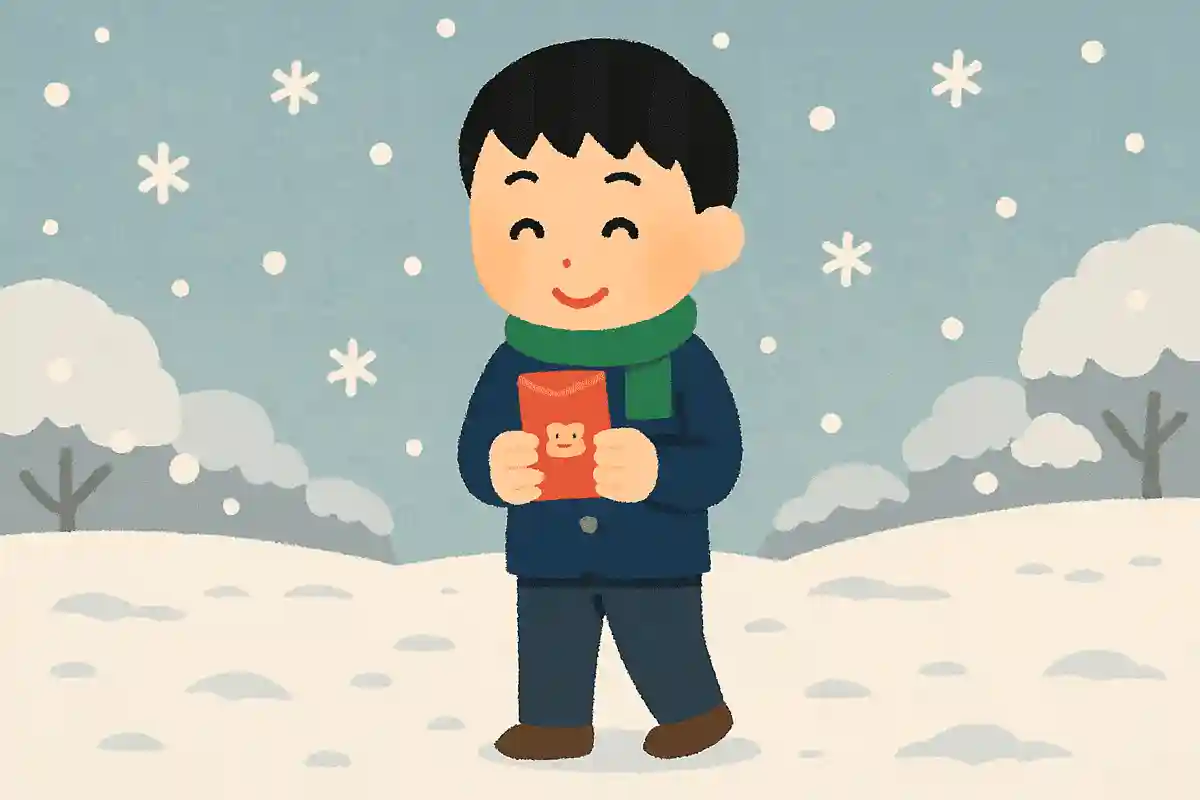
Have you ever had the experience of getting New Year’s gift money and then overspending because you felt flush? In this haiku, the poet links snow and New Year’s money with the word “melt.” In other words, just like snow that quickly melts away, the gift money you received disappears in no time.
When we come into some money, it’s easy to want to buy this and that, but that’s exactly when you should pause and ask yourself whether you truly want it and whether you really need it.
It’s also a good idea to save so you can use the money when you really need it.

New Year’s—so many relatives, it’s a lively bustle
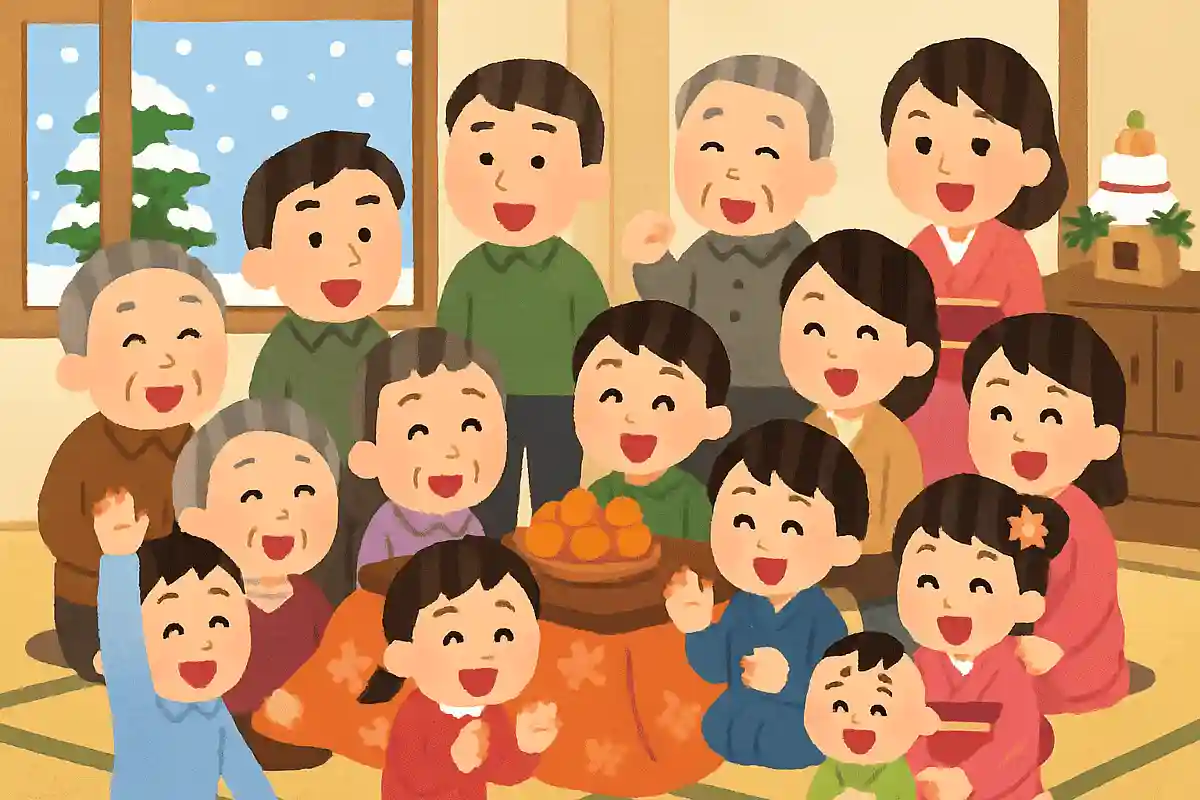
At New Year’s, many families probably have all their relatives gather and make a lively ruckus, don’t they? It’s a happy time—chatting about last year’s events while eating delicious osechi and ozoni, and the children receiving New Year’s gifts from everyone.
This haiku, in simple words, evokes the cheerful, bustling joy of the New Year.
The seasonal word, of course, is “New Year.” Let’s all begin the New Year—the start of another year—with smiles, just like in this haiku!
My path in life—still undecided—winter galaxy.
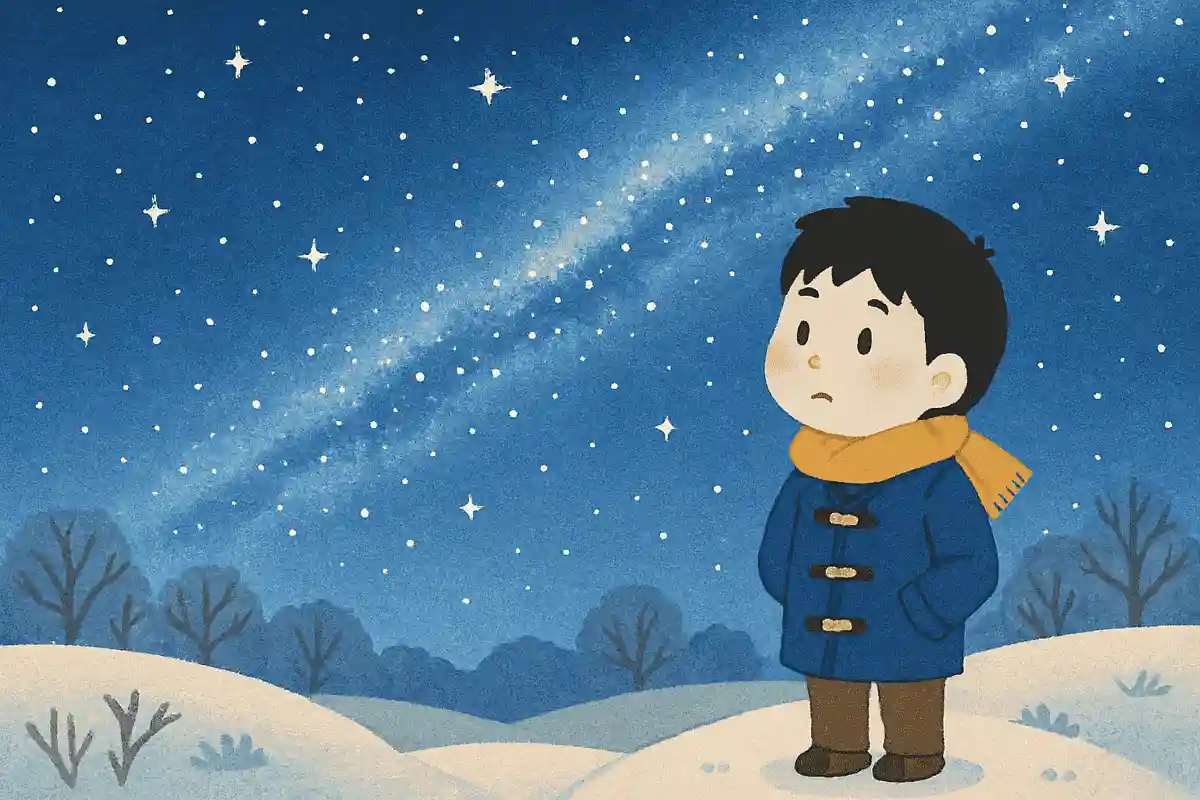
“Winter Milky Way” is a winter season word that refers to the period from the first day of winter to the day before the first day of spring, and it points to the Milky Way as seen in the clear winter night sky.
Perhaps this is a haiku composed by a student preparing for high school entrance exams.
Many schools begin accepting applications around December and hold exams around January, don’t they? On the eve of that season, it conveys the anxiety, wistfulness, and confusion of still being unable to decide one’s path.
The winter night sky stretches boundlessly, with small yet shining stars.
Beneath that starry sky live many people, each grappling with their own worries.
Somehow, one’s own troubles start to feel small.
And yet, because it’s an important decision about one’s future, it’s hard to choose.
Such inner conflict seems to come through.

New Year’s Day—good taste of osechi, good omens.
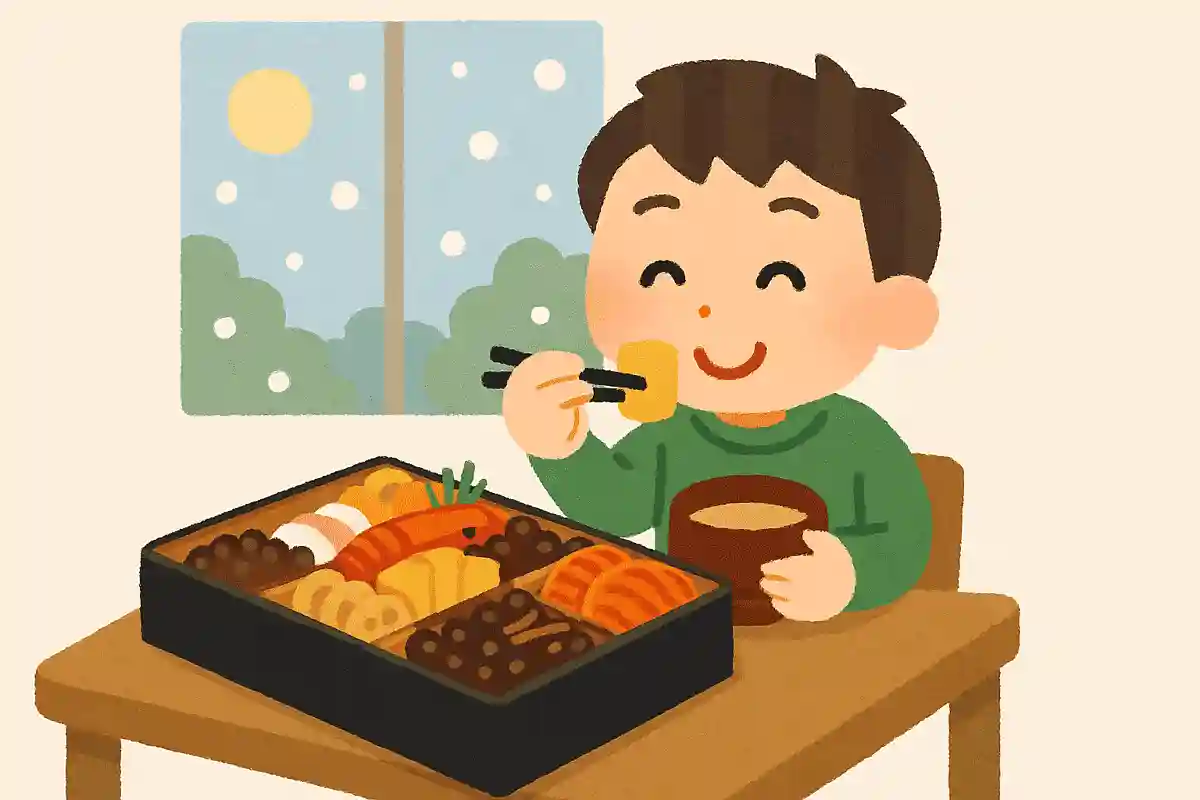
Osechi is a lucky New Year’s dish.
It’s one of the essentials when families gather around the table on New Year’s Day.
Herring roe (kazunoko) for prayers for prosperity of descendants, sweet chestnut paste (kurikinton) for better fortune, and black soybeans (kuromame) to ward off evil and wish for good health—most of you have probably tasted them at least once.
This haiku takes osechi, such an auspicious food, as its theme.
When the osechi tastes good, it feels like your luck will rise too, and it’s wonderful when the start of the year is filled with that kind of joy.
As you reflect on the meanings of osechi, please enjoy a happy New Year’s meal.