

[Piano Recital] Perfect Pieces for Middle Schoolers! A Curated Selection of Impressive, Audience-Pleasing Works

Even children who didn’t care much about choosing pieces for recitals in elementary school often start longing for dazzling works the moment they become junior high students, saying, “I want to try playing this!” Performances by older students and adults heard at past recitals may have left a strong impression, and some students might be eager, thinking, “Someday I’ll perform a piece that sounds this impressive.” So here, we’ll introduce pieces that are perfect for junior high schoolers to showcase at a piano recital—works that really make an impact.
As children enter junior high, they grow both mentally and physically, and their musical tastes may change from what they liked in elementary school.
Let’s choose pieces that are just right for them and boost their motivation to sit down at the piano even more!
- [Intermediate Level] Cool Piano Pieces You Can Play [Great for Recitals Too]
- [Piano Recital] Recommended for Middle Schoolers! A Comprehensive Introduction to Classical Masterpieces
- [For Intermediate Players] Challenge Yourself! Recommended Masterpieces That Shine at Piano Recitals
- For Advanced Players: Showstopping Classics to Play at a Piano Recital
- Piano Masterpieces: Surprisingly Easy Despite Sounding Difficult!? A Curated Selection Perfect for Recitals
- [Piano Recital] Recommended for Boys! A Curated Selection of Cool, Impressive, and Popular Pieces
- [Intermediate Level] A curated selection of piano masterpieces featuring strikingly brilliant melodies!
- [Piano Recital] Carefully Selected Classical Pieces Recommended for Upper Elementary School Students
- [For Elementary School Students] Brilliant, Showy Masterpieces That Sound Impressive at Piano Recitals
- [Intermediate] Recommended Piano Duets | A Curated Selection of Cool and Dazzling Pieces
- [For Advanced Players] A Curated Selection of Classical Masterpieces to Tackle at Piano Recitals
- [Popular Piano] Capture the Audience’s Attention! Recommended Pop Songs That Shine at Piano Recitals
- [Advanced] Super cool if you can play it! Selection of famous piano pieces
[Piano Recital] Perfect for Junior High Students! Carefully Selected Impressive Pieces (21–30)
Fantasia in F-sharp minor, Op. 28 “Scottish Sonata”Felix Mendelssohn

Felix Mendelssohn, a great composer who has gained popularity for his fantastical musical style.
Among his works, a recommended piece for intermediate players is the Fantasy in F-sharp minor, Op.
28 “Scottish Sonata.” It has the brilliant musical character typical of Mendelssohn, and in the third movement you can savor an intensely romantic melody.
The key point is the rapid sextuplets at the beginning of the third movement.
Practicing this section—where both hands must sound together—is essential, but because there are many repeats, it’s easy to practice and can be considered a perfect piece even for busy middle school students.

Impromptu Op. 90 No. 3Franz Schubert

Franz Schubert’s Impromptu Op.
90 No.
3 is distinguished by its graceful melody.
Its gentle flow allows for expressive phrasing and rich emotion, making it a guaranteed showpiece on any recital stage.
If you can accurately control the ever-moving left-hand accompaniment at a comfortable tempo while staying mindful of phrase connections and dynamics, your performance will be taken to the next level.
This piece is packed with the elements that junior high school students need as they aim to step up their playing—so why not take this opportunity to give it a try?

Fantasy Pieces: Prelude in C-sharp minor, Op. 3 No. 2 “The Bell”Sergei Rakhmaninov
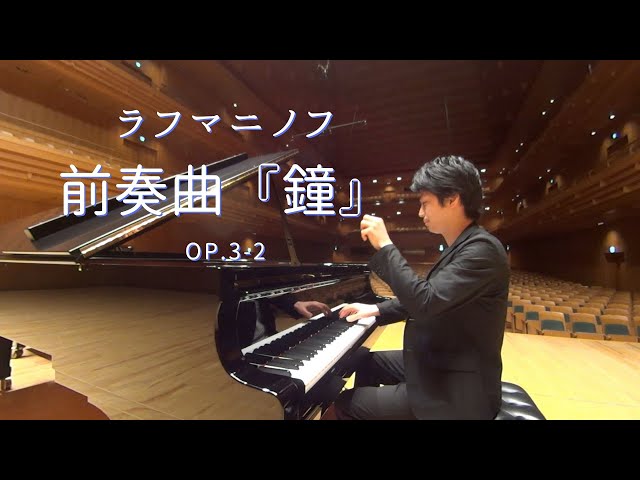
Sergei Rachmaninoff, a Russian composer who was extremely active in the 1890s.
Among his works, Prelude in C-sharp minor, Op.
3 No.
2 “The Bells” from Morceaux de fantaisie is especially famous.
Rachmaninoff was also active as a pianist, and because his hands were very large, this piece is written so that you essentially cannot play it unless you can comfortably span a tenth.
Expressing the sound of bells on the piano is also difficult, and in any case there are many octaves, requiring stamina! That said, it’s undoubtedly a showpiece, so for junior high school students with relatively large hands, it’s a piece well worth the challenge.
Waltz EtudeWilliam Gillock

A captivating classical piece with a beautiful triple meter, it enchants the audience from the opening with a lively and dazzling waltz rhythm.
Beginning in G major, the middle section modulates to E-flat major, where the tempo relaxes and settles, lending the entire work a profound expressiveness.
Demanding both delicate touch and powerful expression, this piece—released in 1972—fully showcases the piano’s expressive range.
Its blend of graceful melody and brilliance makes it an ideal choice for recital performance.
With inventive technical features throughout, it is a superb work that rewards practice by deepening musicality.
Offering the chance to experience the waltz’s rhythmic character and the color changes brought by modulation, it is perfectly suited for upper elementary school recital programs.
Invention No. 8, BWV 779J.S.Bach

This piece in F major, set in 3/4 time, begins with ascending broken chords brimming with the lively energy of a fanfare and exudes a bright, spirited atmosphere.
The distinctive rhythm created by the interplay of upper and lower voices, chasing each other with a one-measure delay, is pleasing and makes the listener’s heart dance.
Although composed for educational purposes, the work’s musical appeal captivates audiences.
The left-hand passages using the 3rd, 4th, and 5th fingers are somewhat challenging, but with practice, it’s a wonderful piece that allows you to feel tangible improvement in two-hand technique.
With its bright, festive character and a well-balanced technical challenge, it’s an ideal choice for a recital.
Piano Sonata No. 8 “Pathétique,” 3rd movementLudwig van Beethoven

A piece with a powerful, passionate character and an imposing aura that is truly captivating.
From its striking opening, the gripping melody recurs throughout, alternating between tension and release to naturally draw listeners into its musical world.
Highly acclaimed since its publication in 1799 and still performed worldwide today, the work stands out for its dynamic expressiveness and rich shifts in tone color.
It has frequently appeared in TV shows and films, and its influence is such that Billy Joel even quoted its melody in “This Night.” Designed to showcase the piano’s full appeal, it’s an ideal choice for ambitious performers looking to refine rapid passages and expressive nuance.
Prelude, No. 1 from Eight Concert EtudesNikolai Kapustin

A grand piece of music that opens up a new world of classical and jazz.
Its dynamic rhythms and brilliant melodies blend exquisitely, captivating the audience.
The skillful structure creates the illusion of a jazz combo improvising, while the Latin rhythms add a cheerful atmosphere that makes your heart dance.
Composed in 1984, this masterpiece beautifully fuses the rigorous structure of classical music with the free expression of jazz.
Highly recommended for piano learners and those who crave more than traditional classical music.
It works wonderfully as a concert opener or encore piece and is sure to enthrall the audience.