
[J-Pop] List of Popular and Famous Songs That Use the Canon Progression [2026]


The first half of Baroque composer Johann Pachelbel’s Canon and Gigue in D major for three violins and basso continuo—the Canon, commonly known as “Pachelbel’s Canon”—is a piece almost everyone has heard, even if they don’t recognize the title.
Did you know that the chord progression from this Canon is actually used in many J-pop hit songs? In this article, we’ll introduce not only songs that employ the straightforward Canon progression, but also works that feature various patterns with unique arrangements.
A must-read for anyone looking to study composition!
- Songs that use the Canon progression that I want to try playing on the piano
- [For Beginners] Play on the Piano! A Collection of Songs Using the Canon Progression
- [Composition] A roundup of famous songs that use classic chord progressions [by ear]
- [Guitar] Easy Chord Progressions! A Compilation of Recommended Japanese Songs for Singing and Playing
- [2026] Introducing Recommended Classic J-Pop/Nihon Music Medley Videos!
- Popular songs used in lyric videos trending on TikTok
- [Tearjerker] Songs that make your heart tremble with tears & moving tracks with lyrics that touch the soul
- [J-Pop] A compilation of popular songs with irresistible guitar cutting [2026]
- [April 2026] Trending songs: A roundup of the hottest, viral tracks right now
- Great for karaoke too! Upbeat songs that will get you hyped
- A lineup of classic hits! Karaoke songs recommended for the yutori generation
- [Autumn Songs] Songs of autumn. Classic tracks and popular favorites you’ll want to listen to in the fall.
- Songs with satisfying key changes: classic J-POP and Japanese tracks where the mood and impression shift naturally
[J-Pop] List of popular and famous songs that use the Canon progression [2026] (21–30)
My heart is gradually being drawn to youFIELD OF VIEW

“DAN DAN Kokoro Hikareteku” is a song by FIELD OF VIEW with a refreshingly memorable melody.
Since it’s in the key of C major, there aren’t many semitones that use the black keys on the piano, making the chords easy to understand even for beginners in music theory.
The chorus progression is C → G → Am → Em, which follows the classic canon progression.
What’s interesting is that before moving from Em to F, it goes through E.
By inserting this E chord, the transition to F becomes smooth!

BOYKing Gnu

King Gnu is a four-piece crossover band dominating the J-POP scene with overwhelming performance prowess and rich musical backgrounds, delivering pop songs that still have depth.
Their third single, “BOY,” was written as the opening theme for the TV anime Ranking of Kings.
The canon progression that appears in the chorus adds a jazzy touch, creating a sound that’s both classic and stylish.
It’s a cool rock tune packed with King Gnu’s sensibility—pay special attention to the chord progressions as you listen.

[J-Pop] List of Popular and Famous Songs That Use the Canon Progression [2026] (31–40)
Dragon NightSEKAI NO OWARI
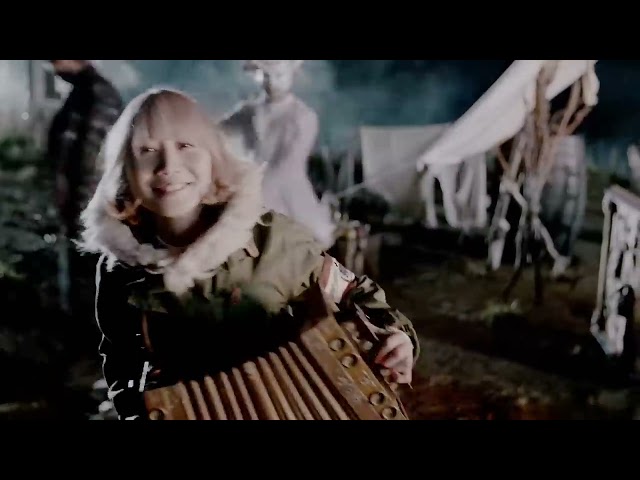
This is the ninth single by SEKAI NO OWARI, a four-member mixed-gender band whose avant-garde musicality—now synonymous with fantasy in the J-POP scene—has earned them widespread popularity.
The song was used as the ending theme for the film TOKYO FANTASY SEKAI NO OWARI, in which the members appear, and its positive lyrics and atmosphere are truly uplifting.
Aside from using G in place of Em, the entire piece—interlude included—cycles through a canon progression, showcasing the band’s melodic sensibilities and high-level ensemble.
It’s a classic yet modern number that evokes a sense of humanity’s prayers and universality.
Love is…Kawamura Ryuuichi

Ryuichi Kawamura, who rose to prominence as the vocalist of LUNA SEA—the pinnacle of 90s visual kei bands—and later embarked on a solo career.
Released in October 1997, this work is positioned as the song that concludes his solo activities.
Its world, woven from lyrics where longing and hope intersect and a beautiful melodic line, left a deep impression on listeners’ hearts.
Footsteps ~Be StrongMr.Children

A four-piece rock band, Mr.Children captivates fans with lyrics woven from inventive phrases—from catchy themes to messages that probe the depths of the human heart—in their 35th single.
Chosen as the theme song for both the TV drama and film Nobunaga Concerto, the track’s expansive, string-featured rock sound vividly evokes the scenes in the lyrics.
The canon progression used in the intro, verse, and chorus creates a unique atmosphere by incorporating substitute chords and sus4 voicings.
It’s an emotional number whose melody blends a floating lightness with melancholy—one you’ll want to replay again and again.
My Neighbor TotoroInoue Azumi

One of Azumi Inoue’s signature songs.
It’s the ending theme of Hayao Miyazaki’s animated film My Neighbor Totoro, released in March 1988.
Its charming, graceful melody vividly reflects the film’s world, and Inoue’s sincere, warm voice really resonates with the heart.
Listening to it makes you want to watch the movie again—truly one of the great classics of Japanese music.
MiracleGReeeeN

A song by GReeeeN that delivers a hopeful, uplifting message based on the chord progression of the Baroque masterpiece “Canon.” Treating encounters as “miracles” and overlaying the time spent together with the “traces” of one’s journey, its lyrics beautifully portray the universal theme of love.
Released in May 2008 and known as the theme song for the TBS drama “ROOKIES,” it was also selected as the entrance march for the opening ceremony of the 81st National High School Baseball Invitational Tournament.
Cherished at important life milestones such as weddings and graduations, this is a song that gently supports those who want to express their feelings to a loved one or are about to take a new step forward.