

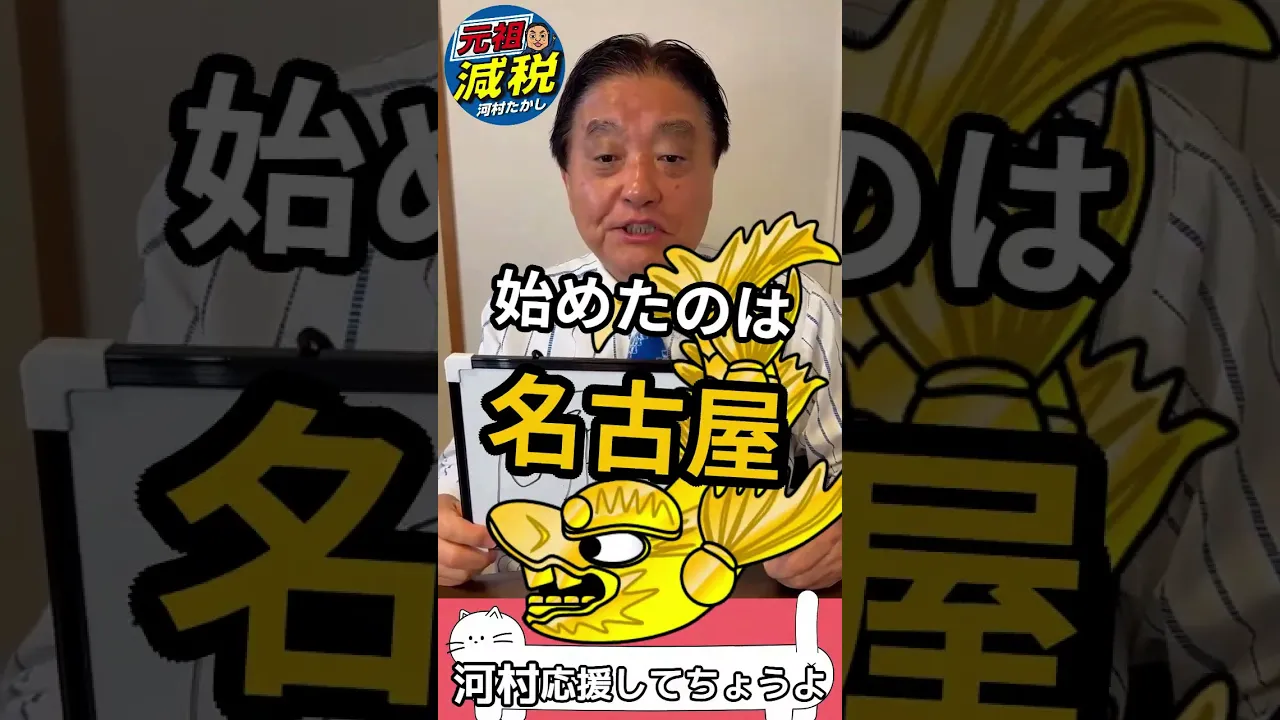

Takeshi Kawamura, who has upheld the banner of “Tax Cuts Japan” and maintained his own distinctive political style as mayor of Nagoya.
His plain-spoken remarks and unique way of speaking, peppered with the Nagoya dialect, likely remain vivid in many people’s memories.
His words, which reveal his convictions and outlook on life as a politician, have a way of sticking with you, transcending mere approval or disapproval.
In this article, we introduce memorable quotes left by Takeshi Kawamura.
As you read on, we’ll also touch on the beliefs and personality behind those words.
- Exhilarating! A collection of memorable quotes by Haruo Kitamura. Sharp words from a legal professional.
- [Sanae Takaichi] Quotes that reflect conviction and resolve. Powerful words with an eye on the future
- Katsuya Okada’s famous quotes. A collection of words that reveal the true feelings of a politician.
- Satsuki Katayama’s famous quotes: Looking back at the sharp words she delivered in the political arena
- Kazuyoshi Shimba’s fiery quotes: words spoken from the citizens’ perspective
- Nagoya dialect tongue twisters are exquisite! A fun collection where your tongue gets tied in knots with regional dialects
- Yoshihiko Noda’s famous quotes: profound words that exude sincerity
- A collection of resonant quotes by Sohei Kamiya that pierce the heart: passionate words born from love for Japan.
- [Yuichiro Tamaki] A passionate message to politics and the people. Memorable, impactful words.
- Heartfelt! Inspiring Quotes Left by Great Figures of Japan
- Shinjiro Koizumi’s quotes that make you do a double take! A slowly-sinking-in collection of uniquely original sayings
- [Taro Aso] Exhilarating, sharp-tongued, and cool quotes. Powerful, thought-provoking messages
- Seiji Chihara’s famous quotes: the deep life philosophy hidden behind his sharp tongue
[Takashi Kawamura] Distinctive turns of phrase and unforgettable quotes. Addictive words spoken in Nagoya dialect (1–10)
The original tax cutter! Takashi Kawamura

Takashi Kawamura is a politician known for his distinctive turns of phrase and memorable quotes.
His style of speaking, which mixes in the Nagoya dialect, makes even complex political topics easy to understand and compelling to listen to.
For example, the phrase “The original tax cuts!” clearly promoted efforts in Nagoya City to reduce residents’ tax burdens, conveying a topic that directly affects everyone’s lives in a simple way.
Rather than explaining complex systems and policies in a complicated manner, he talks from the perspective of everyday life, turning his message into one that reaches many citizens.
Kawamura’s notable quotes and humorous expressions make politics feel familiar and encourage younger generations to think, “Hey, I can engage with politics.”

Even when life doesn’t go well, it’s sometimes necessary not to blame yourself too much and to think that society is at fault.
These words teach us the importance of not blaming ourselves too much and of paying attention to problems in social structures and the environment.
For example, there are young people who want to become full-time employees but have few job openings and are forced to work in non-regular positions or for low wages.
There are also situations where tuition and housing costs are so high that people can’t pursue their dreams.
If we only think, “It’s because I didn’t try hard enough,” we can be crushed by the logic of personal responsibility.
What matters is recognizing the issues in society and its systems, speaking up, and calling for improvement.
These words convey the message that, in addition to individual effort, it’s necessary to adopt a perspective that reexamines fairness and the broader environment of society in order to make our lives and futures better.
People go through all kinds of things. I have lived honestly and have never betrayed anyone.
It conveys the importance of holding to one’s convictions while accepting the ups and downs of life and politics.
For example, anyone can face setbacks like losing an election, having policies criticized, or being put in adverse situations.
Even so, refraining from lies, keeping promises, and continuing to act for citizens and the public builds trust.
Integrity as a politician or a member of society is not something that wavers due to temporary failures or difficulties.
These words send the message that even when life or work isn’t going well, continuing to make honest efforts ultimately leads to trust and results.
Living without betrayal and with honesty is a value that does not change, no matter the circumstances.
We have to practice courageous politics. That’s the kind of love I’m talking about.

These words convey that, for politicians, genuine concern for the people is inseparable from concrete action.
For example, policies such as overhauling the social security system, tax reform, and correcting long working hours carry the risk of criticism and backlash.
However, if reforms are necessary to protect people’s lives and future, then taking them on with courage is the “love” of politics.
Rather than chasing popularity or clinging to the status quo, the commitment to implement the right policies even when difficult is proof of politics that truly puts the people first.
Embedded in these words is the message that it is precisely politicians’ courageous actions that constitute the love that safeguards daily life and the strength that builds the future.
Tax cuts are a symbol of anti-authority
These are words that show politics should not be skewed toward the power that constrains people’s lives, but should stand with citizens.
For example, by lowering resident taxes and income taxes, people have more money they can freely use for their own lives and consumption, without being bound by the state or local governments.
This is also a declaration that “the people are the protagonists” in the face of systems decided for the convenience of the central authorities and those in power.
In addition, tax cuts can help restore trust in politics.
They demonstrate a stance that puts citizens’ livelihoods first and strongly appeal to the idea that politics is on the side of the people, not of power.
Embedded in these words is the message that protecting citizens’ freedom and livelihoods through policy is a symbol of politics that does not rely on authority.
I didn’t accept the 460 million yen; I returned it to the citizens.
@iersojumsk950591 “I refused to take the 460 million yen retirement bonus and returned it to the citizens.” The man who will become Prime Minister, Takashi Kawamura, follows through on his words at an extraordinary level [November 9, 2024] Hiroyuki, Takashi Kawamura, Japan Conservative PartyTranslationMayor of NagoyaTranslationTranslation# Political NewsTranslation
♬ original sound – iersojumsk950591 – iersojumsk950591
It strongly demonstrates integrity as a politician and a sense of responsibility toward citizens.
For example, instead of accepting the large allowances and remuneration provided to lawmakers and government offices for personal gain, it means choosing to return that money to citizen services and welfare.
Such actions embody the idea that politics exists to protect the lives of the people, showing that taxes are not wasted but are actually used for citizens.
Moreover, the stance of prioritizing the public interest over personal gain is extremely important in building trust in politics.
This statement conveys the message that politics is not for power or money, but works for ordinary people’s lives.
The Man Targeting the Prime Minister Again
@tbsnewsdig "The Man Aiming for Prime Minister, Again": Nagoya Mayor Takashi Kawamura to run in the House of Representatives election, Aichi District 1#tbs#news on tiktok
Original music – TBS NEWS DIG Powered by JNN – TBS NEWS DIG Powered by JNN
These words express the determination and resolve to take on a major challenge once again as a politician.
For example, they suggest someone who has previously pursued the premiership or a significant political role, and regardless of past outcomes, is now seeking to bring fresh energy to politics by trying again.
In the political arena, it’s rare to succeed on the first attempt; failures and setbacks are part of the process.
But continuing to persevere without giving up leads to the power to implement policies and tackle social issues.
This statement conveys not only personal ambition but also the courage to rise again for the sake of changing the nation and society, carrying the message that “it is the act of continual challenge that opens the path to the future.”