



Kids love playing with toys.
We want to provide toys that match their developmental stages and interests and let them play a lot, but buying new toys every time can be costly, which is a concern.
So this time, we’re introducing toy ideas you can make with materials from the 100-yen shop.
From items that stimulate the five senses through seeing and touching, to those that promote fine motor development, to things that can be used for pretend play—there are plenty of fun toy ideas that babies to preschoolers can enjoy.
Another great point is that they’re easy to make without spending much money!
These are perfect not only for daycare and kindergarten but also at home, so be sure to give them a try.
- Make it with everyday materials! A collection of DIY toy ideas recommended for 1-year-olds
- Handmade ideas for wall-mounted toys for 0-year-olds
- Recommended for 5-year-olds! Simple DIY toy ideas
- [Childcare] Easy to make! Handmade toys that delight 0-year-olds
- Toddler-approved fun! DIY toy ideas for 2-year-olds
- [For toddlers] Simple but amazing craft ideas — including toys they can play with
- Simple yet amazing crafts: craft ideas that elementary school students will want to make
- Turn a cardboard tube into an educational toy! A handmade toy your kids will love
- Craft ideas using plastic bottle caps [for boys]
- [Childcare] Easy! Make a DIY target game. Playful craft and fun game
- [Daycare/Preschool] Handmade toys that delight infants
- Fun to play! A collection of handmade toy ideas made with construction paper
- An empty box becomes a toy! A collection of ideas for handmade toys
Made with dollar-store materials! Fun DIY toy ideas (1–10)
Squeeze

Let’s try making a squeeze toy you can enjoy for its squishy feel using gel tape! Gel tape is originally used as an anti-slip or cushioning material.
But if you cut the tape into squares, assemble it into a box shape, and simply put beads or slime inside, you’ve got a squeezable toy you can touch and play with! By reinforcing the overlapping gel tape sections from the outside with cellophane tape or similar, you can prevent the contents from leaking out.
Since squeeze toys tend to get dirty quickly, it’s super convenient that you can whip one up in no time using 100-yen shop materials!

busy board

A busy board is a board-style toy that you attach to the wall or floor.
Using a perforated design board—handy for DIY projects—you can easily make a busy board your kids will love.
Get items from the dollar store that kids might find interesting, such as a toy clock, zippers, or a calculator.
Then simply arrange them evenly on the design board and secure them with zip ties! It’s also a great idea to repurpose things you already have at home, like unused keychains.
Finishing it in bright colors or adding items that make sounds may capture their interest even more.
drop-in box toy

Let’s make a perfect drop-in toy for focusing attention on fingertip control using name tags that you attach to keys! Just remove the ring and the paper insert from the name tag, and you’re ready in no time.
Pinch the tag and drop it into a coin bank you can buy at a 100-yen shop.
If you decorate the tags with stickers or washi tape together with the kids, it will make them even more engaging.
You can use anything that can pass through the coin slot—like ice cream sticks or flower tags used for planters—so give it a try!
register

Barcode-scanning registers are fascinating machines for children, and something they want to touch.
Why not make a toy register using a 100-yen shop organizer and a calculator? Stack a slanted organizer on top of a drawer-type organizer, secure them with double-sided tape, and attach the calculator with a hot glue gun.
Then reinforce it with tape so the calculator doesn’t come off, and you’re done! If you also pick up a register checker and toy coins at the 100-yen shop, you’ll have the perfect toy for playing store.
gachapon

You can make a dream-like, endlessly playable gacha machine for kids using materials from a 100-yen shop! Stack assembly-style cardboard to create the main body of the machine, then use a utility knife to cut holes where the capsules drop and where they come out.
For the rotating mechanism, repurpose items like a socket or a doorknob, connect them to an internal board, and set up a system that lets the capsules fall.
Finally, cover the front of the capsule compartment with transparent cellophane, decorate the sides so the cardboard isn’t exposed, and you’re done!
playmat
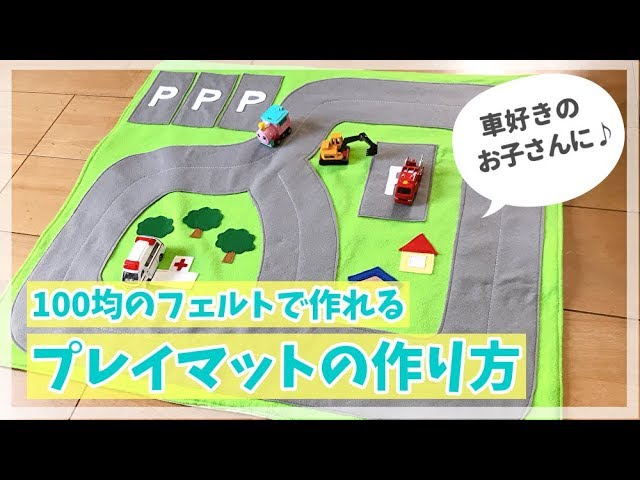
This is a play mat made using large fabric or felt from a 100-yen shop! Once you decide on a theme kids will love—like roads, townscapes, or maps—cut felt pieces to make the parts.
Glue each piece onto a large felt base, then sew them with a machine to keep them from coming off.
Prepare felt for the backing, sew it right sides together, turn it right side out, and hand-stitch the opening closed to finish your handmade play mat! Kids can enjoy all kinds of play, from walking dolls around to driving mini cars.
busy bag

A busy bag is a portable version of a busy board that kids can play with by attaching it to walls or floors! All you need is a soft laptop-style bag case and some toys like keychains, a doodle board, and hooks.
Open the bag and arrange items from the dollar store on both sides.
Then secure them—tying them to the elastic inside the bag, for example—so they don’t come loose, and you’re done! It’s perfect to pull out quickly when kids get bored during car rides.