

A childcare quiz to enjoy on Children's Day! Learn about traditions and customs

How about incorporating quizzes related to Children’s Day into your childcare activities?We’ve gathered quizzes that naturally help children learn about the event—such as the origins of Tango no Sekku and the meaning of the carp streamers—through play.They’re in multiple-choice format, so children can enjoy thinking for themselves and choosing answers.Because the questions draw on familiar topics—like “What’s at the very top of the carp streamers?” and “Why do we display a samurai helmet?”—they’re sure to be a hit.Please try using them to kick off activities and events at your center.
- [Childcare] A collection of quizzes related to May! Let's think about them together with the children.
- [Childcare] Quiz collection to enjoy in December!
- [Childcare] Fun! Hinamatsuri (Girls’ Day) Quiz Roundup
- [Childcare] May events and activities at nursery schools and kindergartens
- [Childcare] April Events and Food Quiz | Learn with the Kids
- Ideas for Childcare Quizzes to Enjoy in January
- Surprisingly, there’s a lot we don’t know? A quiz to learn trivia about May!
- [Childcare] Summer Quiz Activities for Kids | Deepen Their Learning
- Fun for Children’s Day! A Collection of Performance and Play Ideas Recommended for Early Childhood Education
- [Childcare] Spring Quiz Collection | Fun for Adults and Kids Alike
- Fun for childcare! Summer Festival Trivia Quiz & Fun Facts Questions
- [Childcare] Tanabata Trivia Compilation | Learn About the Festival
- Fun for March childcare! A collection of multiple-choice quiz ideas perfect for spring
A childcare quiz to enjoy on Children's Day! Learn about traditions and customs (11–20)
Who is the composer of the children’s song “Koinobori”?
- school teacher
- police officer
- Composer unknown
See the answer
Composer unknown
The composer is unknown. This song celebrates carp streamers swimming lively in the sky on Children’s Day, and it isn’t clear when or by whom it was created. Even so, it has been sung across Japan for many years, conveying the joy of Children’s Day and the hope for children’s healthy growth. Even without knowing the creator’s name, it has become a song cherished by everyone.

In which historical era was Children’s Day established?
- Heian period
- Edo period
- Showa era
See the answer
Showa era
Children's Day was established as a national holiday in 1948. Before that, it was observed as Tango no Sekku, a festival celebrating the healthy growth of boys. Today, it is celebrated in many households as a day to wish for the health and happiness of all children.
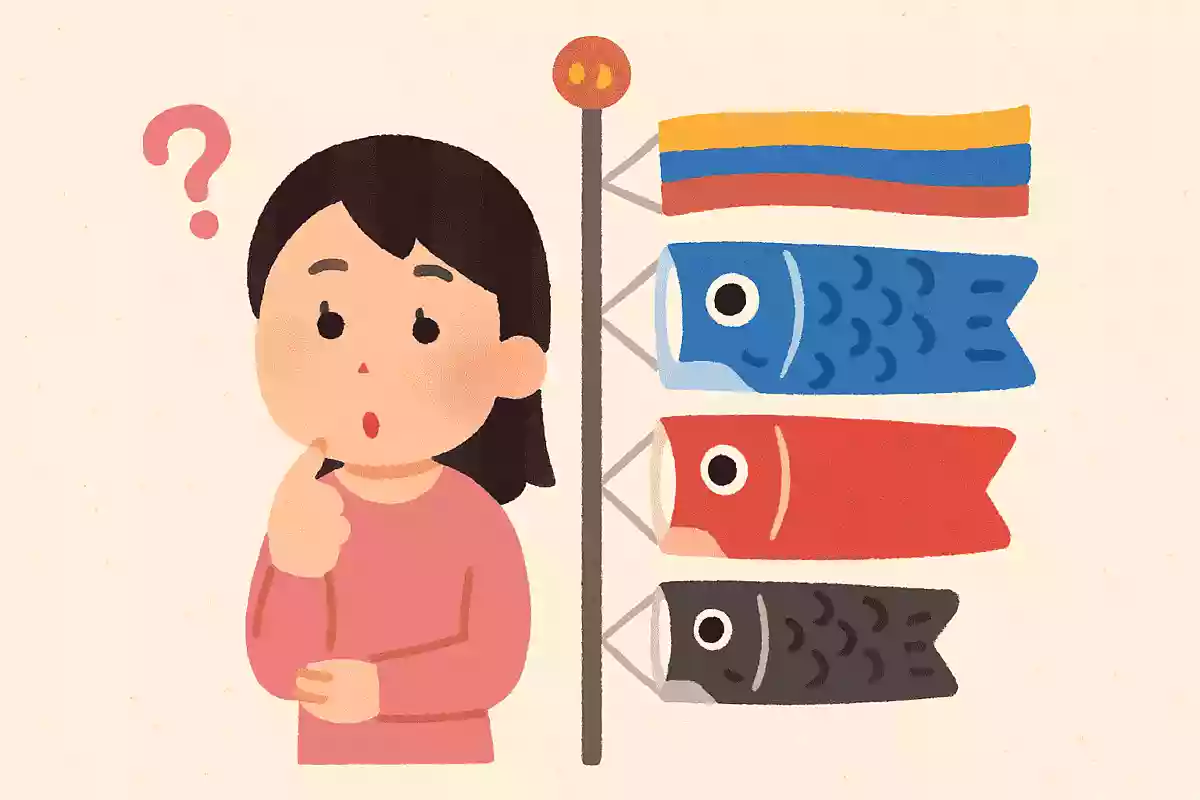
What color represented the family of the koi nobori (carp streamers)?
- red
- blue
- black
See the answer
black
The black carp in the koinobori represents the “magoi,” a large carp. Because this carp is big, strong, and lively, it embodies wishes for the whole family’s long life and good health. By letting it swim in the sky on the celebration day, people express the hope that the entire family will be happy.
Who are we supposed to give thanks to on Children’s Day?
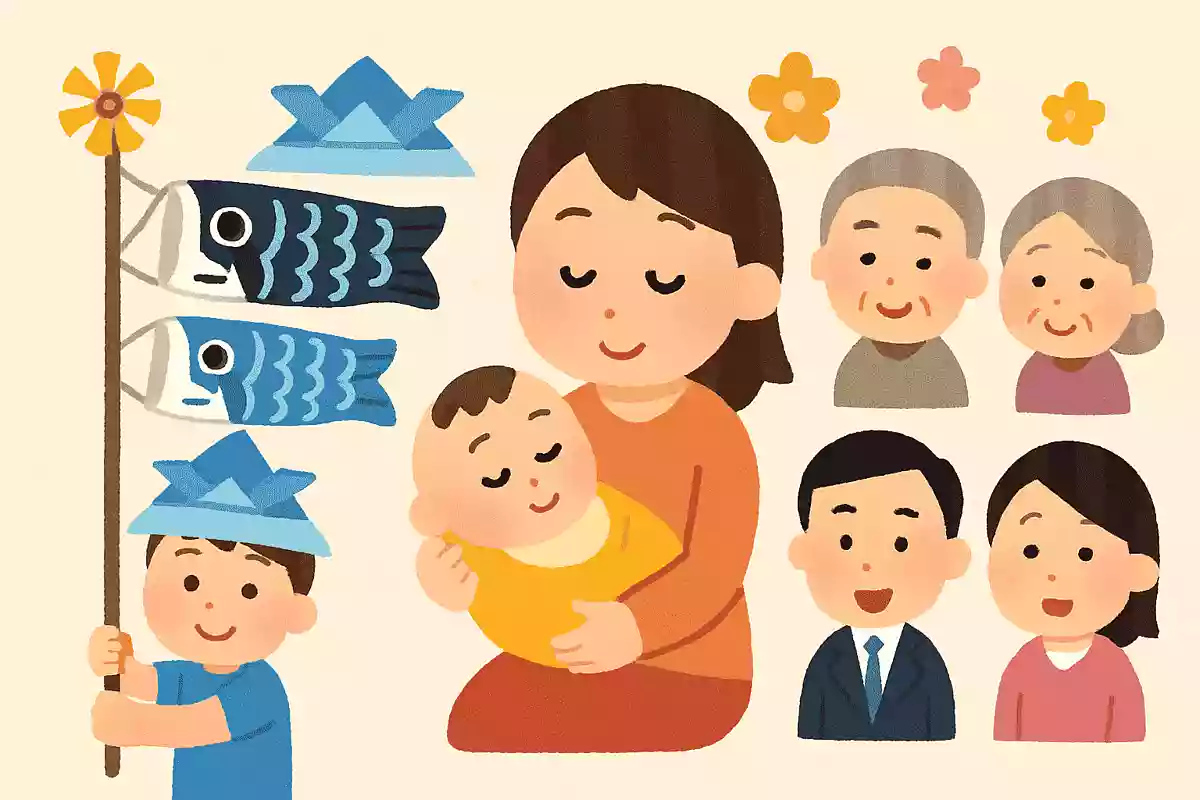
- child
- 2. Parent
- 3. Teacher
See the answer
2. Parent
Children’s Day is a day to celebrate the growth of children. But it’s also a day to show appreciation to parents. Children grow up healthy thanks to their families’ support. On this day, let’s express our gratitude and enjoy the time together as a family!
What plant is displayed as a symbol of Children’s Day?
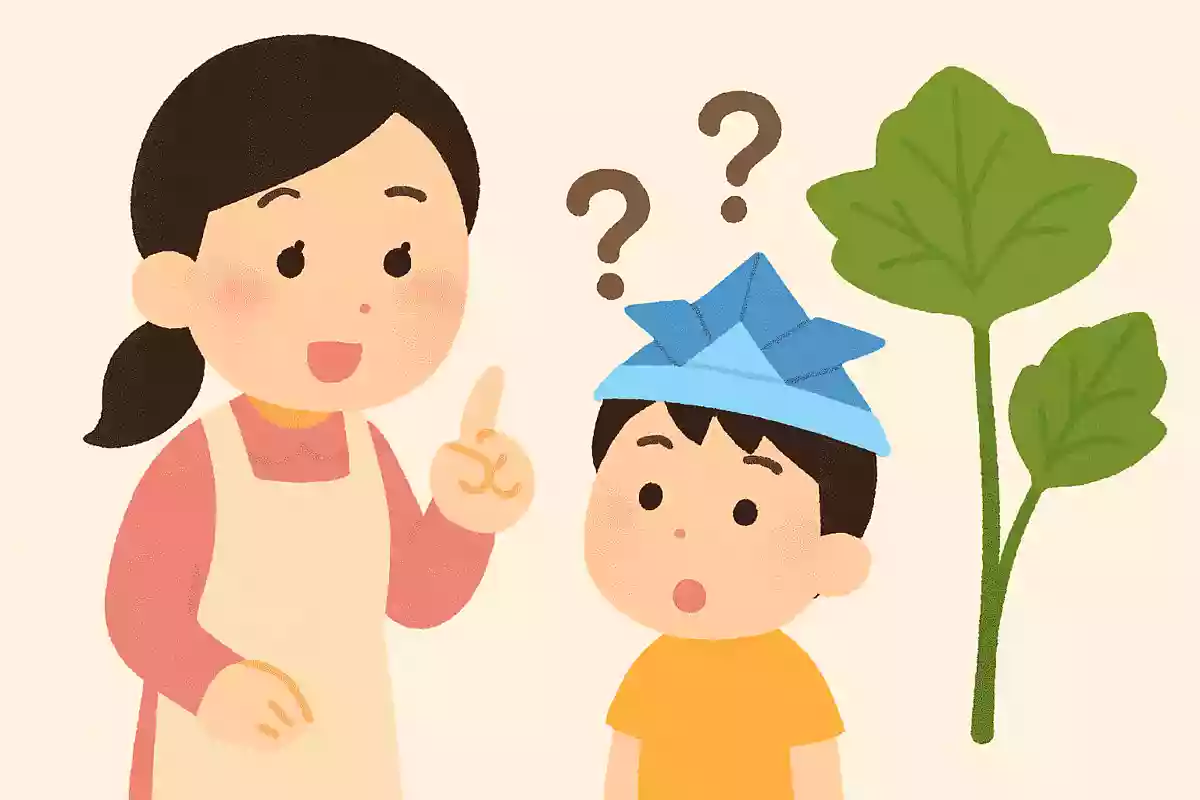
- Rose
- carnation
- horse chestnut
See the answer
horse chestnut
The horse chestnut is a vigorously growing tree and one of the symbols of Children’s Day. It’s displayed together with iris flowers to wish for boys’ growth. The sturdiness of the horse chestnut symbolizes children growing up healthy and strong. On Children’s Day, horse chestnuts and irises embody wishes for children’s good health.
In China, it is said that carp that swim up waterfalls evolve into a legendary creature. What is it?
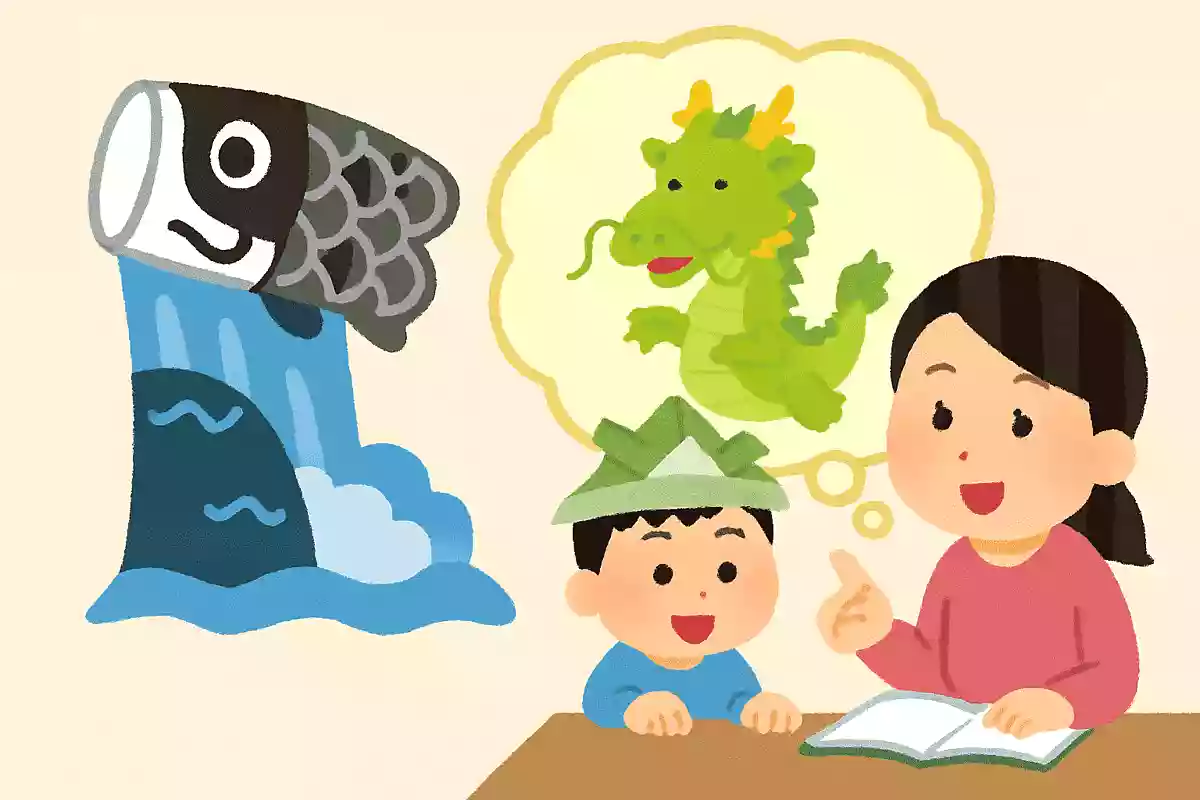
- ryu
- Phoenix
- giraffe
See the answer
ryu
In Chinese legend, it is said that a carp that climbs a waterfall becomes a dragon. This story, known as “The Carp at the Dragon Gate,” carries the meaning that working hard is important. The image of a carp ascending a waterfall teaches us to take on challenges to achieve our dreams. It reminds us that effort is essential when aiming for success.
A childcare quiz to enjoy on Children's Day! Learn about traditions and customs (21–30)
Fun as a game too! A carp streamer hand play

Hand play that you can enjoy like a game seems like something kids can happily take part in! In “The Carp Streamer Sucked It In,” children guess what the carp streamer gulped down with its big mouth.
The teacher makes the sounds or cries of whatever was sucked in, and the children answer based on those hints.
Another one, “Koinobori,” features a carp streamer appearing along with Children’s Day essentials, set to a tango-like melody that matches the Boys’ Festival.
Have the children answer which way the carp streamer’s tail fin points, like playing ‘Acchi Muite Hoi!’
