

How to spend time at home with children

Even adults find themselves wondering what to do with time at home, so it’s even tougher for kids—when they get bored, they can get cranky, and it becomes a real challenge.
To help you enjoy those long hours at home, here’s a lineup of games and ideas that kids are sure to love.
There’s a variety—from things you can do with little to no money, to items you can get at a 100-yen shop, to activities that take a bit more time and effort.
Of course, there are also options that adults can enjoy together with the kids, so use these as a reference and have a great time at home!
- [For Kids] Indoor Games and Activities Recommended for Winter Break
- Crafts parents and kids can enjoy together. Recommended craft ideas to keep children entertained.
- [100-Yen Store Crafts] Handmade ideas that captivate adults too. Stylish DIY/handmade.
- [For Adults] Make the Most of Your Free Time! Ideas to Kill Time
- Have Fun with Your Kids! A Roundup of Board Games Recommended for Parents and Children
- [Indoor Activities] A Collection of Craft Ideas Recommended for Elementary School Students
- [Fun For Solo Adults] How to Enjoy Your Time at Home
- [For Kids] Today’s Handmade Craft Ideas
- [Children’s Club] Easy and fun indoor games. Exciting party games
- Indoor activities you can do at home—from educational play to physical games! Fun ideas that will fill your day with smiles.
- Solo indoor play ideas for elementary school kids: a collection to turn boredom into fun time
- Indoor recreation for children: A roundup of exciting games
- Fun for adults and kids alike! Home festival ideas to capture the lively spirit of a Japanese matsuri
How to Spend Quality Time at Home with Your Kids (21–30)
Solo play that’s safe even if you fall

Kids falling down is common, and even though we know that, every time we see our child hurt and crying, we can’t help wanting to do something to help.
So let’s add a play activity that teaches foot control.
Fix pool noodles that have been cut in half lengthwise onto a wire grid.
Place a short piece of pool noodle under the wire grid to make a seesaw, then set a marble in the center groove of the pool noodle.
Have your child place their feet on both ends of the wire grid and move the seesaw left and right, controlling it so the rolling marble doesn’t fall off.

Exercise play you can enjoy at home

Even when you can’t play outside, you still want to move your body! In times like that, let’s enjoy some active play at home.
For infants and toddlers, try baby massage or touch-and-play activities.
For preschoolers through elementary school kids, how about a spy game with a treasure hunt or a round of table tennis on the table? For the spy game, setting up obstacles around the room and preparing a treasure map can really liven things up.
For table tennis, you can substitute household items: a tissue box for the net, a pot lid for the paddle, and a super ball for the ball.
5 super fun activities
We’ll be introducing five activities: “Irregular Play,” “Swirly Tail Chase,” “Receive & Catch,” “Ball Rolling Play,” and “Cross Rubber Jump Tail Chase.” They mainly use a ball—putting it into a basket, catching it, and combining movements like hopscotch and forward rolls to get the body moving.
In “Swirly Tail Chase,” attach a jump rope instead of a string and run away from the tagger, changing directions between clockwise and counterclockwise.
For “Cross Rubber Jump Tail Chase,” stretch elastic bands across the room and escape from the tagger while jumping over the bands.
Eurhythmics with the children’s song “Matsubokkuri”
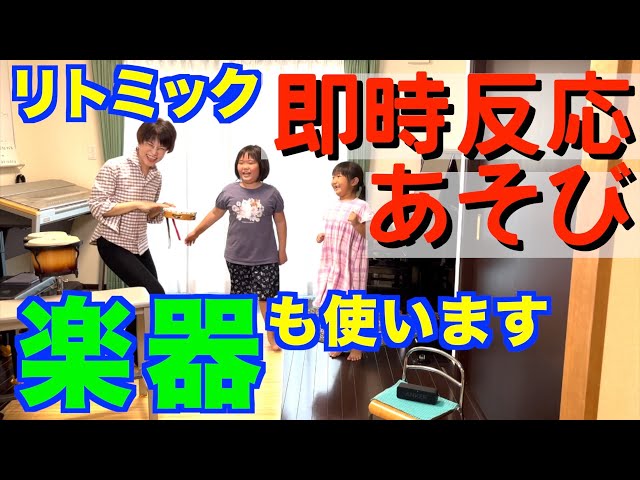
Eurhythmics set to the popular children’s song “Matsubokkuri” is perfect for those who want to freely enjoy expressing themselves.
As you walk around the room to the song, clap your hands, touch different parts of your body, and move freely.
Adding facial expressions can spark communication with one another and make it even more exciting.
Eurhythmics, which lets you feel the vibration and comfort of sound, is a rhythm activity everyone can enjoy while moving together.
Give it a try with everyone—from little kids to adults!

cute ice cream
Here’s how to make a cute treat that even elementary school kids can make! It’s an easy homemade ice pop.
First, prepare your favorite ice pop molds, like the ones sold at 100-yen shops.
Mix one snack-sized yogurt cup with 1 teaspoon of honey.
Pour the mixture into the molds and freeze—your ice pops are ready! If you used animal-shaped molds, you can draw faces using bamboo charcoal powder mixed with a little water.
You can also use a chocolate pen, but it tends to harden and can be hard to draw with.
You can leave out the honey for a less sweet version, so try different flavors and have fun experimenting!

Aquabeads

Aquabeads are easy and fun: just place the small beads on a tray and stick them together with water.
Kids can focus on their own, creating all kinds of shapes and colors at their own pace.
Using their fingertips improves fine motor skills, and thinking about what design to make really expands their imagination.
Plus, there’s no glue or ironing, so cleanup is quick and easy! It’s also great because kids can feel a sense of accomplishment by completing projects on their own.
Once they get used to it, they can even make 3D creations—give it a try!
My First Fake Sweets
Let me introduce some super cute-looking fake sweets.
These days, you can find all kinds of candy-themed items at 100-yen shops, so it’s easy to enjoy.
How about decorating your favorite shaped motifs with whipped cream for sweets deco and adding dragees? You don’t even have to make the motifs yourself to have fun, so it’s perfect for your first fake-sweets project! Thinking about colors and shapes and handling tiny parts helps develop fine motor skills and boosts concentration.
You’ll nurture many abilities while having fun making them, so give it a try!