

Amazing discoveries with everyday materials! Fun summer vacation independent research ideas


Many children probably still haven’t decided on their summer vacation independent research project yet, right? For those of you thinking, “I want to do something interesting!” but wondering, “What theme should I choose?”, here are experiment and observation ideas that will make you think, “I want to try this!” From fun experiments you can do with everyday materials to studies where you can observe the fascinating behavior of living creatures—these are all activities anyone can enjoy.
Through your independent research, new discoveries and excitement are waiting for you!
- Stand out with your junior high school independent research! A collection of fun experiment and craft ideas
- [Summer Vacation Crafts] Stylish Ideas for Girls
- Make it with everyday materials! A collection of fun summer vacation craft ideas
- Recommended for elementary school students' independent research! Experiment and observation ideas using everyday materials
- [For 4th Graders] Fun Independent Research Ideas You Can Do With Everyday Materials
- Third graders will be hooked! A collection of science project ideas using everyday materials
- [Summer Vacation Crafts for Lower Grades] Make It with Everyday Materials! Simple Yet Awesome Craft Ideas
- [For Upper Elementary Students] Simple but Awesome! A Collection of Summer Vacation Craft Ideas
- [For First Graders] A Collection of Science Project Ideas Using Everyday Materials
- Recommended for elementary school students! Science fair topics & craft ideas
- [For 2nd Graders] Make it with everyday materials! Irresistibly engaging ideas for independent research projects
- Elementary School Students: Simple One-Day Science Project and Craft Ideas
- DIY science projects that elementary school boys will love: ideas you can make with everyday materials
Amazing discoveries with everyday materials! Fun summer vacation independent research ideas (1–10)
Cute goldfish scooping

When you think of summer, you think of festivals—and goldfish scooping, right? Let’s make a cute, handmade goldfish scooping game and have some fun! Prepare a cardboard box as the base and cut several slits into the sides.
Thread a thick blue string across the slits to represent water and create an aquarium.
Next, cut a paper cup to make a ring from the rim.
Attach a popsicle stick as the handle, and glue tissue paper to the inside of the ring to complete the poi (scooper).
Finally, tie individually wrapped candies with rubber bands, add eyes to make goldfish, and you’re done.
Arrange the goldfish in the aquarium and try scooping them up with the poi!

Puru-Koro Soap
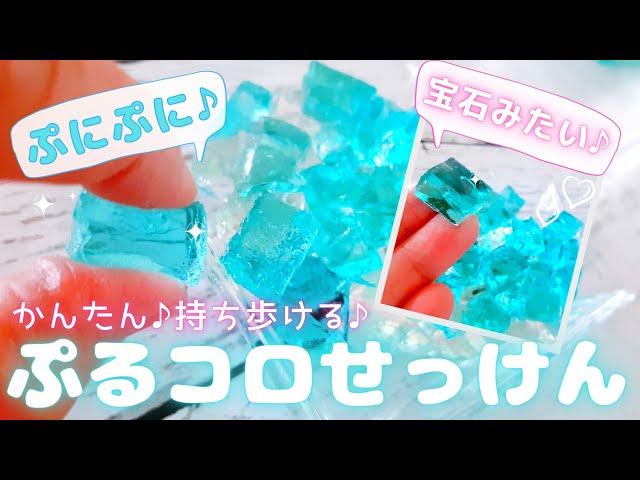
It’s like a jewel! Let me show you how to make cute, jiggly soap.
You’ll need liquid hand soap, gelatin, hot water, and food coloring.
Dissolve the gelatin in hot water, then mix in the liquid hand soap.
The trick is to stir slowly so it doesn’t foam.
Add food coloring, pour into a flat container, and chill in the refrigerator for 1–2 hours.
Then just cut it into your favorite shapes and you’re done! It looks adorable and might make handwashing more fun.
Just be careful to prevent small children from accidentally swallowing it.
Sparkling Kaleidoscope

If you’re unsure what to make for your summer vacation craft project, why not try a sparkling kaleidoscope? You can make this kaleidoscope with recycled materials and items from the 100-yen shop.
Cut a hard plastic case and form it into a triangular prism, then place beads in the bottom and secure them.
On the opposite end, attach a piece of black construction paper with a peephole.
Glue a milk carton—lined on the inside with black construction paper—around the triangular prism, and decorate it as you like to finish.
While kaleidoscopes typically use mirrors, in this idea the hard plastic case serves that role.
Surprising discoveries with everyday materials! Fun summer break independent research ideas (11–20)
Growth record of baby rabbits

If you keep rabbits at home, a great independent research project is to record the growth of the babies.
Observe and log their body size and weight, how their movements change day by day, and what they eat.
Noticing daily changes—such as ear movements and how their fur comes in—deepens your understanding of the growth of life.
Taking photos and arranging them in sequence will also make your research materials visually clear.
It’s also valuable to note interactions with the mother rabbit and behaviors among the baby rabbits themselves, which can lead to fascinating discoveries.
Observations require a quiet environment and a gentle attitude, and through engaging with living creatures, you can cultivate empathy.
It’s an idea that nurtures the heart while deepening learning through living alongside animals.

Let’s learn about sugar crystallization while making canelés.

Let’s make an experimental piece using a canelé mold for sweets.
Put powdered gelatin into a container filled with water and heat it in the microwave.
After heating, add sugar, color it with edible food coloring, and heat it in the microwave again.
Pour it into the canelé mold, and once it sets, remove it from the mold.
Your beautiful, colorful sugar canelés are ready.
At first, they look jiggly, but after a week, the sugar crystallizes and they turn into sparkly, crystal-like pieces.
You can enjoy watching the sugar change over time.

Experiment where ham melts with kiwi

Here’s a curious and fun science project using kiwifruit and ham.
Get your materials ready: kiwifruit, ham, paper, and felt-tip pens.
Place a sliced kiwifruit on top of a halved piece of ham.
By timing this setup, you can find out how many minutes it takes for the ham to start breaking down.
If you photograph the changes over time, your project will gain more depth.
You might discover something new by comparing heated kiwifruit with unheated kiwifruit.
Write down the purpose of the experiment and your results to complete your summer science project.

Independent study at the play park
A play park where children can fully immerse themselves in nature is perfect for a hands-on independent study project.
It’s packed with activities that are hard to experience in everyday life, such as tree climbing, chopping firewood, and making campfires.
Rather than just spending a day playing and calling it done, you can turn it into a solid research project by recording what activities you did, what you enjoyed, and what ingenuity you used, together with photos or drawings.
It’s important to summarize in your own words what you learned and felt through play.
Learning how to use tools, paying attention to safety, and understanding how to interact with nature can also be part of the project.
This is an action-observation style idea that lets you deepen your experience by engaging all five senses.