

Spirit of Wa: Masterpieces for the Koto — Japan’s Beautiful Melodies

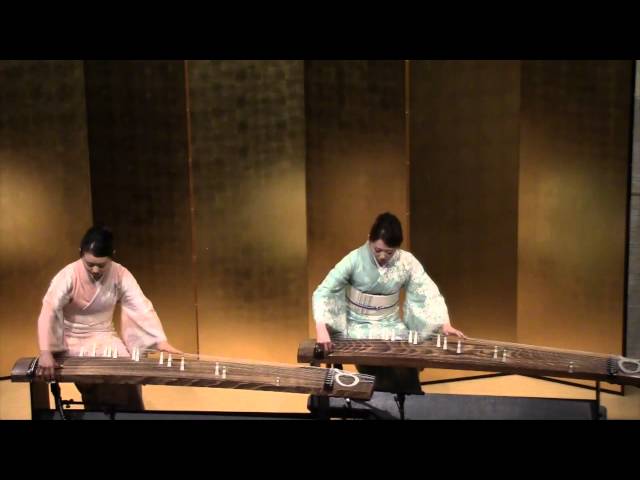
The koto is an instrument with a soft tone and an enchanting sound.
Koto music is perfect for quintessentially Japanese occasions like New Year’s celebrations.
When you listen to it, it feels familiar to the ear and calms the heart.
In this article, I’d like to introduce many famous koto pieces.
By the way, I’ve been using the character “琴” for koto, but some of you might be thinking, shouldn’t it be “箏”?
Strictly speaking, “koto” (琴) and “koto/so” (箏) refer to different instruments.
However, since I want to cover as many pieces as possible, I’m using “koto” here as an umbrella term.
Please read on to the end.
- [New Year BGM] New Year Songs Loved Across Generations
- The Spirit of Japan: A Collection of Famous and Popular Shamisen Pieces
- [I Want Healing] Songs That Bring a Sense of Calm: Heartwarming Masterpieces of Japanese Music
- Traditional Japanese Music: Famous Pieces of Gagaku and Kagura. Recommended Traditional Japanese Music
- A Collection of Moving Shakuhachi Masterpieces | Beautiful Japanese Melodies That Stir the Heart
- [Japanese-style Piano Pieces] A selection of recommended works with a pleasantly Japanese flavor
- [Hometown Songs] A curated selection of popular Japanese tracks that fill your heart with nostalgia
- Makoto Kawamoto’s famous and popular songs
- [Kyoto Songs] Masterpieces that sing about Kyoto — songs themed on the ancient capital. The enduring heart of our hometown passed down in song.
- Today's Piano: Masterpieces and Popular Pieces Woven with Delicate Tones
- Nothing but masterpieces! Hit songs from the Reiwa era that are perfect for background music
- Band songs perfect for winter nights: heartwarming masterpieces of Japanese music.
- Gently soaking into a weary heart... Healing songs released in the Reiwa era
Spirit of Wa: Masterpieces for Koto. Beautiful Melodies of Japan (11–20)
MemoryEto Kimio

“Memories” is a richly emotional piece whose beautiful, wistful melody seeps into your heart, making it impossible not to recall dear people and places.
It was composed by Kimio Eto, one of Japan’s leading koto musicians.
Eto held a recital at Carnegie Hall, becoming the second Japanese performer to do so, following violinist Toshiya Eto, and he was active internationally as a koto virtuoso.
Spring SeaMiyagi Michio

The koto’s melodies, steeped in Japan’s history, are perfect for evoking the seasons.
Haru no Umi, composed by Michio Miyagi—also renowned as a man of letters—is a beloved national piece known as New Year’s background music.
As soon as the koto’s intro begins, it feels like the year has turned and a bright new start is at hand.
The beautiful interplay with the shakuhachi conveys the spirit of wa (Japanese harmony).
Brimming with wabi-sabi and gentle warmth, it’s a piece you’ll want to hear not only at New Year’s but whenever there’s something to celebrate.

Song of the Autumn WindKozaki Kengyo

This piece was composed by Kengyō Kōzaki during the Tenpō era of the Edo period.
It portrays the romance between Emperor Xuanzong of Tang and Yang Guifei.
Gammon Makita wrote the lyrics based on Bai Letian’s “Changhenge” (Song of Everlasting Sorrow), and Kōzaki Kengyō set them to music.
The piece uses a unique tuning method known as Akikaze-jōshi (“autumn wind” tuning).
It consists of a prelude played on the instrument alone, followed by the sung section.
Because performing it requires singing, it may be challenging for those planning to start learning the koto now.
But that’s exactly why it’s worth the challenge!

vortexKagrra

‘Uzu’ is a song with a beautiful intro melody that begins on the koto, showcasing a superb harmony between rock sound and the traditional instrument.
It is a work by Kagrra, a visual-kei rock band that made their major debut in 2004 with a neo-Japanesque style of creating and performing music based on traditional Japanese sounds.
Etenraku

Etenraku, one of the pieces of gagaku, is among the most famous works in the repertoire.
It is said to have once had an accompanying dance, but only the music has been handed down today.
It’s sad to see such wonderful cultural assets being lost.
In gagaku there are six modes, classified by scale type and the pitch of the principal tones, and this piece is most often performed in the mode called hyōjō.
Unlike Western music, it’s also interesting that the tones are written with Chinese characters.
There is also Etenraku Imayō, a version that sets lyrics to Etenraku, so it’s fun to compare the two by listening.
Ekusō KotoSawai Higarū

Hikaru Sawai continues to compose new pieces for the koto.
Given his background of having made a major-label debut as a guitarist in a metal band, some of his works evoke the feel of “rock on koto.” If a standard koto is like the guitar, then the 17-string koto serves as the bass, projecting a powerful low end.
Unlike traditional koto repertoire, these pieces offer a different image—one that might inspire younger generations to think, “I want to play the koto” in this genre.
It’s music that hints at the future potential of the koto.
[Spirit of Wa] Masterpieces for Koto: Japan’s Beautiful Melodies (21–30)
Phase changes of waterMiyagi Michio
This is a work by Michio Miyagi, a genius koto performer and composer.
While living in Incheon, Korea, he was inspired by an elementary school textbook his younger brother was reading, and in 1909, at the age of 14, he composed this piece.
His debut and signature work, celebrated as a masterpiece for the koto, is this ‘Transformation of Water.’