

“Can you learn to play jazz piano on your own?”
I get this question a lot, but to be blunt, mastering it through self-study is difficult.
Unlike classical music, in jazz you play things that aren’t written on the score, so naturally there are many techniques, practice methods, and essential knowledge you must know.
- How much is the monthly fee for piano lessons? What’s the going rate?
- Advantages and Disadvantages of Learning Piano on Your Own
- Jazz piano improvisation. What are they actually playing?
- How can a beginner pianist learn to play chords easily?
- [Must-See for Beginners] How to Start Learning Piano on Your Own: A Clear, Step-by-Step Guide!
- Difficult Piano Pieces: From Classical to Jazz Piano
- Shall we get started? Jazz piano. Let's explore the sound of chords.
- Cool jazz piano: from classic favorites to hidden gems.
- Self-Study Piano Lessons! A Complete Introduction to Easy and Recommended Sheet Music for Adults
- [J-POP] It's like free sheet music! Easy songs you can play on the piano while watching the video
- [Complete Manual for Playing the Piano] From Transcribing by Ear to the Mindset for Performing While Filming
- Difficult Piano Pieces | Even Pros Can't Play Them!? Classical Works Requiring Virtuosic Technique
- [J-POP] Certified Pro if You Can Play It!? An Insanely Difficult Piano Piece
I don’t know what I don’t understand.
Many of my students have said that, when it comes to jazz and jazz piano, they don’t even know what they don’t understand.
I was the same at first.
If we’re talking about taking classical piano lessons, you can more or less guess what it might involve—like doing that well-known method called Beyer in lessons, or maybe listening to Bach or Mozart before you start, whether that’s the “right” approach or not. But with jazz, you can’t even begin to guess, can you?
To begin with, we hardly ever cover jazz even in music classes, and at most we hear it as background music at a stylish izakaya.
So it may be natural that you 'don't know what you don't understand' about jazz.
It’s hard to self-study something when you don’t even know what you don’t understand.
Reasons not to recommend instructional books or instructional DVDs
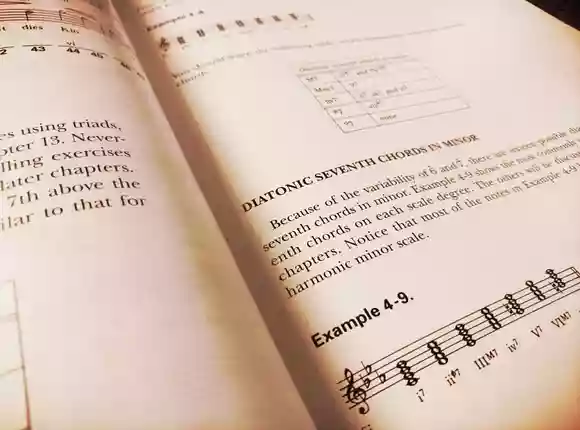
If you study on your own, I think you’ll end up using instructional books and instructional DVDs.
But I don’t really recommend instructional books or instructional DVDs.
One reason is that, for example, even if a book is labeled as an instructional guide for beginners, the level implied by “beginner” can vary slightly depending on the publisher.
At one publisher, a “beginner” might be treated as an “intermediate” at another—and vice versa.
Also, the names and notations for a given technique, theory, or piece of code differ depending on the publisher.
Even though they mean the same thing, having different names or ways of writing them can be confusing for beginners.
There are other reasons as well—such as occasional notation errors in the code itself and scores that are markedly different from how jazz is actually played—but mainly for the reasons above, I don’t really recommend method books.
It's hard to find an instructional book that suits me.
http://www.photo-ac.com/
I want sheet music for the jazz version of ○○.
I want to buy some kind of jazz instructional book—anything is fine.
Shall we try buying something for practice?
Even if you think so, it's rare to find (and buy) exactly 100% of what that person wants in one go.
They’re usually either a bit too easy or too hard, crammed with technical jargon that makes no sense, or they include lots of songs when I only want this one, and then 2,800 yen feels expensive—there’s generally something to complain about.
(There may be rare cases where that’s not the case for some people, though.)
If you want to be able to play jazz piano, study theory, and understand it deeply and properly, I recommend finding a teacher or joining a class or school rather than buying lots of theory books, instructional manuals, or DVDs.
The ideal for learning jazz
https://pixabay.com/
- It's better to at least have a rough idea of what jazz is at first.
- It's better to know what you don't understand about jazz.
- It’s better to be familiar with improvisation (ad-lib) methods, how chords work, and the rules and flow of a session.
- It’s also good to know efficient practice methods and which parts you can safely leave alone for now.
- It's better to know musicians or CDs that serve as good examples.
- It's better to have peers who are also studying jazz.
There are many others as well.
At first, attaching yourself to a teacher and joining a class or school will allow you to clear all of the points mentioned above.
Compared to self-study, you improve faster because there’s no wasted trial and error.
In the anime Kids on the Slope, which tells the story of a protagonist who becomes obsessed with jazz, there is a jazz pianist named Takashi Matsunaga who performed all of the piano parts for the main character, Kaoru Nishimi.
He is said to have taught himself jazz piano, but in reality it seems he did study with several teachers.
As a final conclusion, I recommend that you initially learn jazz piano from someone—either by taking lessons with a teacher or attending a class.