


Traditional folk games that have long been loved in Japan are packed with timeless charms that captivate children across generations.
Because folk games let us experience old cultures and local traditions, we want to pass many of these games from adults down to children.
In this feature, we’ll introduce a wide variety of such time-honored folk games.
We’ve gathered many activities kids can truly get absorbed in—everything from physical games, to ones using traditional toys like ohajiki (small playing pieces) and stilts, to word- and song-based games like karuta and chachatsubo.
We hope you’ll incorporate them in nursery schools and kindergartens and enjoy them together with the children.
- Nostalgic games that were popular when we were kids
- Let's play with a big group! A collection of fun children's recreational activities
- Games using beanbags (otedama)
- [January Childcare] Traditional New Year’s Games! A Collection of Ideas to Enjoy with Children
- [Children’s Club] Easy and fun indoor games. Exciting party games
- [For Preschoolers & Kids] Game, Play, and Craft Ideas to Enjoy on Hinamatsuri (Girls’ Day)
- Recommended for upper elementary grades! Exciting indoor recreation and games
- [Play Right Away!] Exciting Recreation Games Recommended for Elementary School Students
- [Hand Play] Popular with kids! A collection of trendy hand-play songs and nostalgic traditional children’s songs
- [Elementary School] Quick and Easy! Indoor Recreational Activities Perfect for Lower Grades
- A collection of ideas for infant/toddler play, recreation, and games
- [Parenting] Parent-child bonding! Hand-play songs and traditional nursery rhymes collection
- Handkerchief and Towel Play! A Collection of Fun Play Ideas
[Traditional Games] Fun Games from the Past: Popular Activities for Early Childhood Care (1–10)
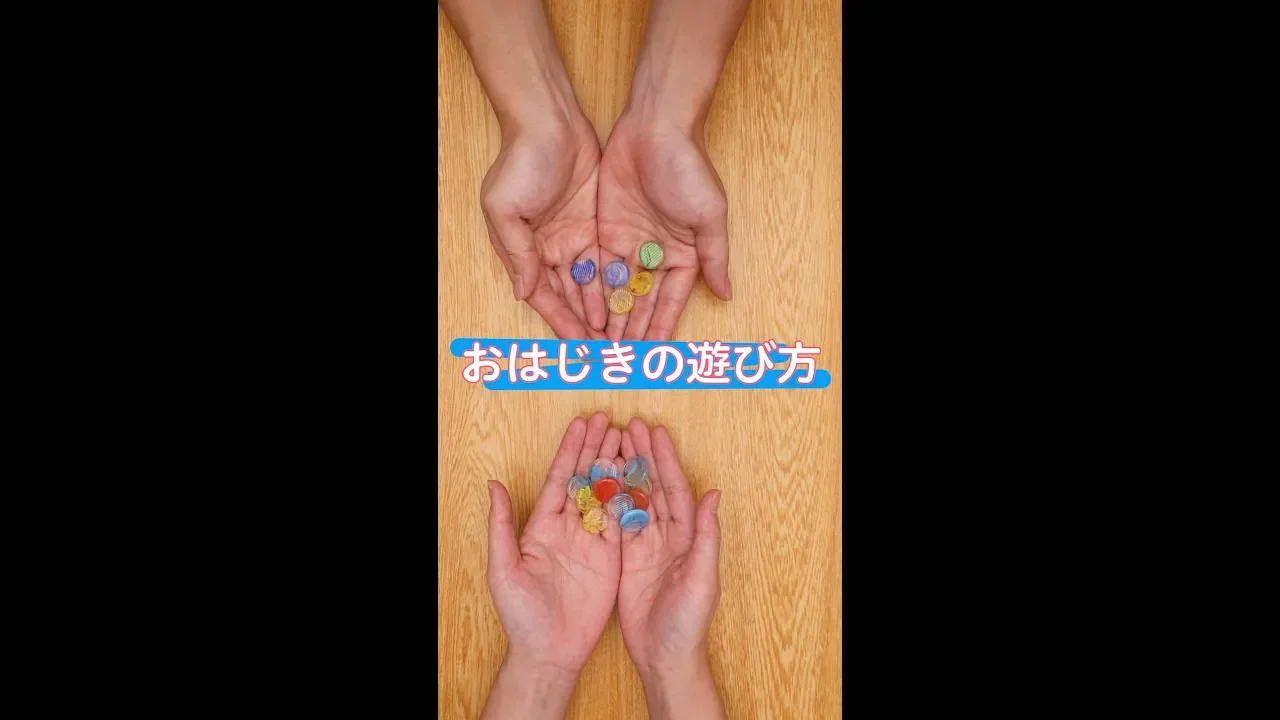
Ohajiki (traditional Japanese coin-flicking game pieces)

Ohajiki, those shiny glass pieces, are a nostalgic toy, aren’t they? Many of you probably feel a sense of nostalgia! As the name suggests, ohajiki are flicked with your fingers to play.
Simply flicking them is fun, but it can be even more exciting if you set rules or add your own variations! Playing with ohajiki also helps children practice fine motor skills—moving their fingers and adjusting the force when flicking.
When small children play, be careful to prevent accidental swallowing.

beanbags

Otedama is a traditional toy made by filling small bags with things like adzuki beans or nuts.
Many people probably remember playing with it when they were little! Basically, you sing a song while tossing it up with one hand and catching it with the other.
It’s also fun to raise the difficulty, like juggling two or three at the same time.
You can even add variations, such as balancing them on the back of your hand or catching with one hand.
Enjoy trying different ways to play according to your child’s age.
cat’s cradle

Ayatori, or string figures, is a game you can enjoy solo or with a partner, and it features a wide variety of tricks.
Many people probably played it as children.
One of its charms is that you can play with just a single string, making it a classic traditional indoor pastime.
You can enjoy solo tricks like “Tokyo Tower,” “Ladder,” and “Milky Way,” or get excited with two-person ayatori, where you take turns passing and transforming the string.
It helps kids practice dexterity and fosters memory and creativity, so try incorporating it into at-home playtime or activities at kindergartens and preschools!
Where are you from?

This is a traditional game enjoyed by bouncing a ball to the lyrics of the children’s song “Antagata Dokosa.” As long as you have a ball, you can play it either outdoors or indoors, making it perfect for time at home, or for nursery and kindergarten activities.
While singing the song, you bounce the ball and, at each “sa” in the lyrics, you rotate your foot from the inside to the outside.
Since you have to do this quickly at the exact moment the ball hits the ground, it may be difficult at first.
It’s said that playing this game also naturally helps you develop a sense of rhythmic timing!
Kendama

The traditional game that became a hot topic during the Guinness World Records challenge on NHK’s Kōhaku Uta Gassen is kendama.
It’s now known around the world as “KENDAMA,” and many people may want to give it a try.
If you can pull off cool tricks like “Baseball,” “Airplane,” or “Trapeze,” you’re sure to be popular! If your child is going to play, start by helping them get used to the kendama.
Practice landing the ball on the largest big cup first.
Mini kendama designed for children is also recommended, so be sure to give it a try together as a parent and child.
Red light, green light

A traditional game that lots of people can enjoy is “Daruma-san ga koronda.” It’s a thrilling, heart-pounding game that both children and adults love.
Players move closer to the “it” person during the chant, “Daruma-san ga koronda,” and when “it” turns around, everyone must freeze instantly.
Anyone who moves gets caught by “it” and has to link hands.
This repeats, and whoever reaches “it” cuts through the linked hands of “it” and the captured players and then runs away.
The game is quite deep, with rules that vary and different arrangements depending on the region.
Inside-out pots!

“Nabe nabe soko nuke” is a game where two people sing together and sync their movements.
The two hold both hands, sway side to side, and sing, “Nabe nabe soko nuke.” When you reach the lyric, “When the bottom falls out, let’s turn around,” try spinning around while keeping your hands joined.
If Dad, Mom, or the teacher leads, children can play smoothly too! It seems simple, but the timing of the spin can actually be tricky.
Once you can play well in pairs, try increasing to three or four people and give it a go.