

A must-see for low-voiced women! Popular songs that are easy to sing at karaoke


These days, many songs for both women and men are in higher keys, so there are probably many women with lower voices who feel, “I can’t find songs I can sing because my voice is low,” or “I’m looking for lower-key songs for karaoke.” Forcing yourself to sing songs that don’t suit your natural voice can hurt your throat, and it can be stressful when you can’t sing the way you want.
But don’t worry! There are plenty of songs that sound captivating even with a low voice.
In this article, we’ll introduce lots of songs that women with lower ranges can sing comfortably and confidently.
Find your new favorite track!
- [Karaoke] A roundup of songs that are easy for women to sing!
- Female vocal songs where women with low voices can shine
- Karaoke songs that are easy to sing even if you’re not confident in your pitch (for women in their 50s)
- [For women] Songs with a narrow vocal range that are easy to adjust the key for!
- Easy-to-sing songs recommended for women in their 20s with low voices | Also great for getting a good reaction at karaoke!
- Karaoke songs that are easy to sing even with a low voice (for women in their 30s)
- [Calling all low-voiced women in their 40s!] Songs that are easy to sing at karaoke
- [Women in Their 40s] Even If You’re Tone-Deaf, You Can Sing! Karaoke Songs That Fit a Woman’s Vocal Range
- Recommended for teenage girls! Easy-to-sing karaoke songs
- Even if you’re tone-deaf, it’s okay! Easy karaoke songs for women
- Karaoke songs that make it easy to score 100 points [for women]
- Cool If You Can Sing! Popular Karaoke Songs Recommended for Women
- [For Women] Easy-to-Sing and Crowd-Pleasing Karaoke Songs
Women Artists (61–70)
Where the Wind GoesAdo

A female singer who enjoys overwhelming support from young people, Ado.
While Ado isn’t necessarily a high-voiced artist, she has a very wide vocal range, which can make her songs quite challenging for women with lower voices.
That’s why I recommend Kaze no Yukue (Where the Wind Goes).
Among Ado’s songs, this one has a particularly narrow range, so even women with lower voices can sing all parts without any problem.
There are sections that sound somewhat like falsetto, but that’s due to Ado’s singing style.
When you sing it, avoid copying her and perform it with your own natural voice.

The Theory of HappinessShiina Ringo

Here is Shiina Ringo’s debut single, released in 1998.
It’s a song she wrote about a man she was dating when she lived in Fukuoka, and it forms a set of three tracks along with “Suberidai” and “Toki ga Bōsō Suru.” While the key may need to be lowered, the range isn’t very wide, so it’s one of those classic songs that could very well be sung by lower-voiced women.

School HeavenKoizumi Kyoko
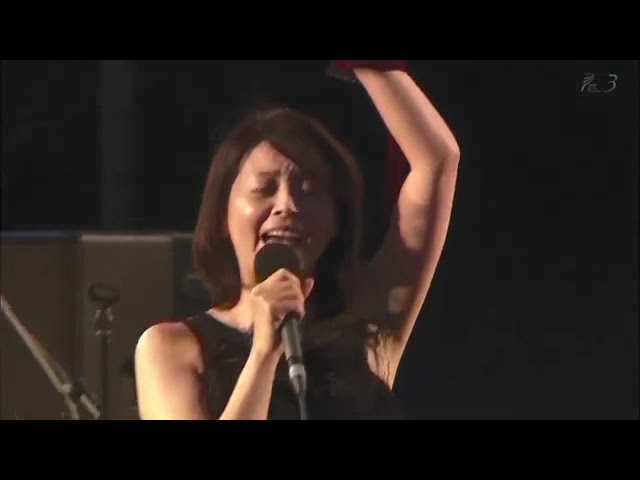
It was released in November 1989 as Kyoko Koizumi’s 28th single, but the original version was released by Finger 5 as their fifth single in 1974.
Even people who don’t know this song have probably heard the call-and-response at the very beginning of the intro.
If you sing this one as a cool rock song, you should be fine even if high notes aren’t your strong suit.
However, in the chorus—more precisely, in the latter part of the C section where the tempo drops to half-time and the melody goes a bit higher—try to sing it without relying on falsetto as much as possible.

to go see (someone) / to go meetaimyon

Aimyon is a singer-songwriter who has gained nationwide popularity with her catchy, folk-tinged pop music.
Since many of her songs are quite simple, a lot of people find them easy to sing.
Among her tracks, the one I particularly recommend is “Ai ni Iku noni.” Compared to her other works, the chorus in this song sits in a lower vocal range.
While that can make it harder to create a sense of power, it should be easier for women with naturally lower voices.
Let yourself go with the flow of timeTeresa Ten

It’s Teresa Teng’s 16th single, released in February 1986.
Although it came out near the end of the Showa era, it’s truly one of the era’s classic songs.
I imagine it’s also become a karaoke staple for the Showa generation.
The song doesn’t demand extremely high notes, but from the chorus onward, the “shine” in the midrange of the voice becomes very important.
Don’t just breeze through it because the range seems easy—focus on delivering your voice firmly to the microphone.
You don’t have to sing it with the slightly enka-like flavor of the original; it works perfectly well as a pop ballad, so you don’t need to stick too closely to the original style.
First Love Killernozomi

The female singer-songwriter Noshiki, loved by many listeners for her unique musical style.
Among her many hit tunes, the one I especially recommend for women with lower voices is “First Love Killer.” This track features a comical lyric and overall tone, and its vocal line is very simple, built from repeating the same phrase.
With a very narrow range and an easy vocal line, it’s a great song for women with low voices to try.
hanatabamilet

Milet is a female artist who has gained popularity with her Western pop-style vocals and catchy sound.
While she certainly isn’t an artist with a limited vocal range, she is a singer whose lower to mid register is particularly striking, so many lower-voiced women may find themselves often singing her songs.
Among her tracks, the one I especially recommend is “hanataba.” Although falsetto appears in the A and B sections, it’s not a song that demands very high notes.
What’s more, the chorus centers on the lower to mid range, making it a very singable piece for lower-voiced women.