

![[For Lower Elementary Students] Play Right Away! Learn with Fun True-or-False Quizzes](https://media.ragnet.co.jp/img/1200__png__https://www.studiorag.com/files/2025/10/c4c4348571c01b9b4839bb81c79d1f96.webp)

Why not try a fun true-or-false quiz that you can enjoy while learning together with lower elementary school kids? Here, we’ve gathered questions about familiar nature and living things—like the mysterious habits of animals, the secrets of plants, and how clouds float or the sun moves across the sky.
It’s an easy, enjoyable format where you answer simple questions such as “Do bears really sleep in winter?” and “Can penguins fly?” Reading the answers brings new discoveries—“So that’s how it is!”—and it will spark your child’s curiosity even more.
Adults can join in too—think together and enjoy a shared learning time!
- For upper elementary school students! A lively and educational true-or-false quiz
- [Common Sense & Trivia] True-or-False Quiz with Knowledge for Elementary School Students
- Recommended for upper elementary school students! True-or-false quizzes that make you think
- Get the Crowd Going at the Kids’ Club! A Collection of True-or-False Quizzes Everyone Can Enjoy
- Recommended for lower grades! A fun, educational quiz for elementary school students
- [Play Right Away!] Multiple-Choice Quiz Questions for Lower-Grade Elementary School Students
- [For Elementary School Students] Animal Quiz to Learn Knowledge and Fun Facts
- [For Elementary School Students] 3-Choice Quiz to Deepen Knowledge of Living Things
- [For Elementary School Students] Collection of Science-Related Games and Quizzes
- Recommended for elementary school students! Trivia quiz you'll want to share once you know it
- Fun quizzes for elementary school kids: a collection of questions everyone can enjoy together
- True-or-false quiz for adults: a full roundup from common-sense questions to surprising trivia!
- A multiple-choice quiz with three options for upper elementary students. Questions you can enjoy between classes or at home.
[For Lower Elementary Students] Play Right Away! Learn with Fun Through True-or-False Quizzes (1–10)
Do sunflowers face toward the sun, true or false?
- ○
- ×
See the answer
○
Sunflowers grow by turning their flowers and buds toward the sun. This is called diurnal movement (heliotropism). By soaking up plenty of sunlight, they grow vigorously and large, and their flowers open more easily. You can see that plants, too, have devised ways to survive.

True or false: The moon shines by itself?
- ○
- ×
See the answer
×
The Moon does not shine by itself; it appears bright because it reflects sunlight. Sunlight that hits the Moon during the day reaches our eyes at night. The reason the Moon seems to change shape is that the positions of the Sun, the Moon, and the Earth change.
Are cherries the fruit of a tree: true or false?
- ○
- ×
See the answer
○
Cherries are fruits that grow on trees. Flowers bloom in spring, and after the flowers fall, the fruit forms. The fruit contains seeds, from which new trees grow. By observing the growth of cherry trees and their fruit, we can understand how plants reproduce.
Are clouds made of water floating in the sky: true or false?
- ○
- ×
See the answer
○
Clouds are formed by tiny droplets of water or ice particles coming together. They look like they’re floating in the sky, but in reality they are lightly suspended in the air. By observing the shapes and movements of clouds, we can sometimes predict the weather, making them a useful subject for studying natural phenomena in the sky.
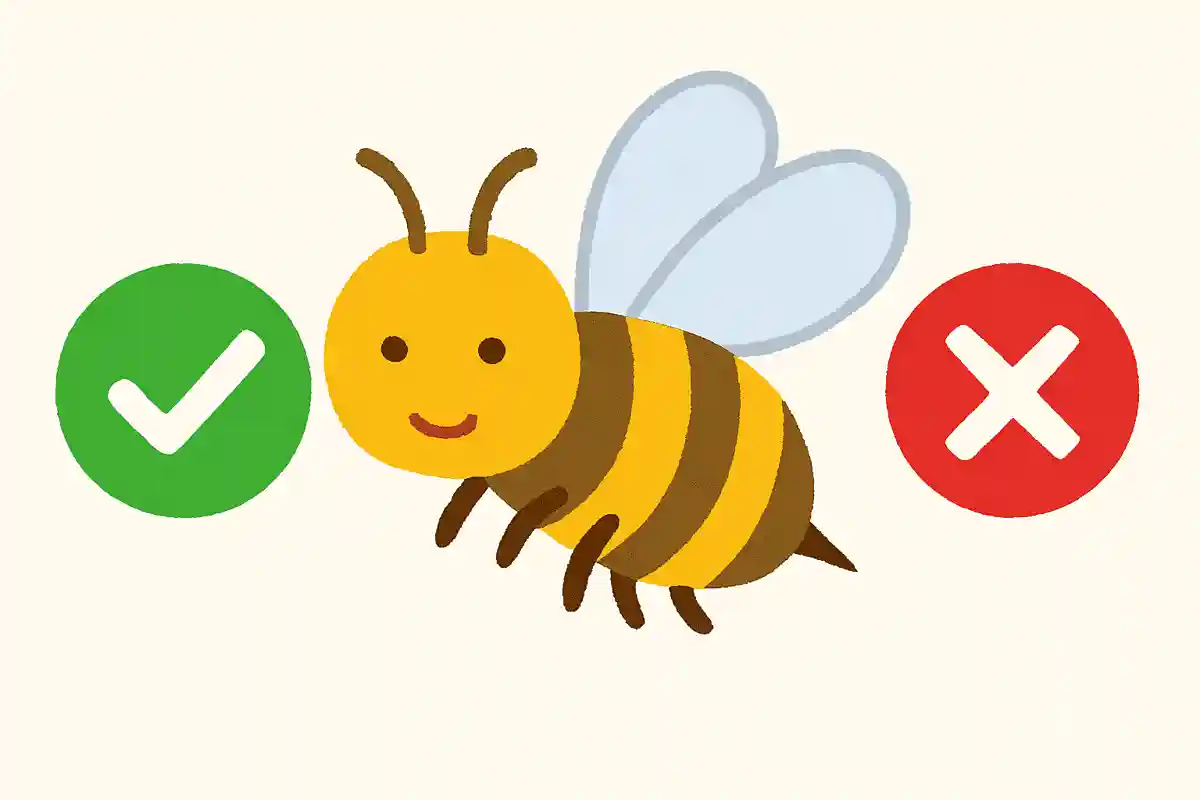
Bees use their stingers only when they sting—true or false?
- ○
- ×
See the answer
○
Bees use their stingers to protect themselves and their nests. They don’t use them when they aren’t being attacked, and it’s safe when they are collecting nectar from flowers. Care must be taken when they use their stingers. Although small, bees are very important and also help pollinate flowers. They are creatures that know when to use their stingers in order to survive in nature.
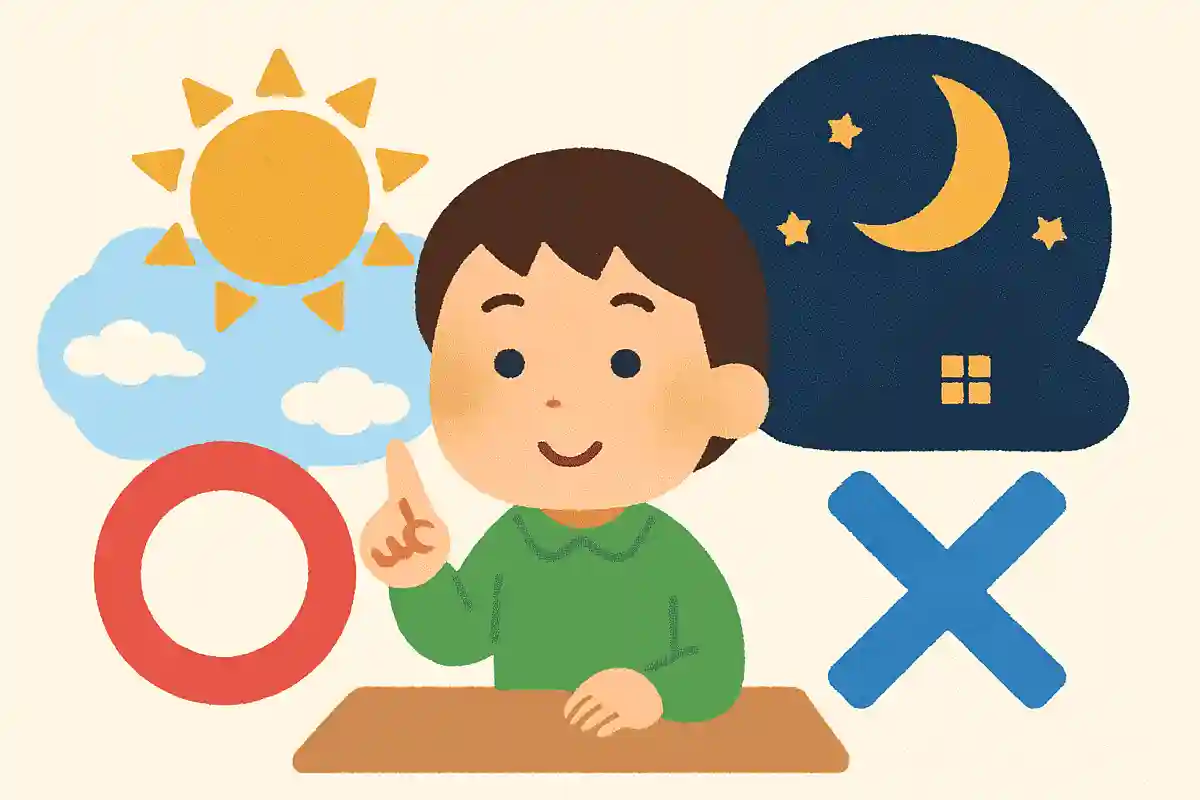
True or false: In winter, the days are short and the nights are long?
- ○
- ×
See the answer
○
In winter, because the Earth's axis is tilted, the duration of sunlight is shorter, making the days shorter and the nights longer. Conversely, in summer, the days are longer. The fact that the lengths of day and night change with the seasons is evidence that the Earth is rotating.
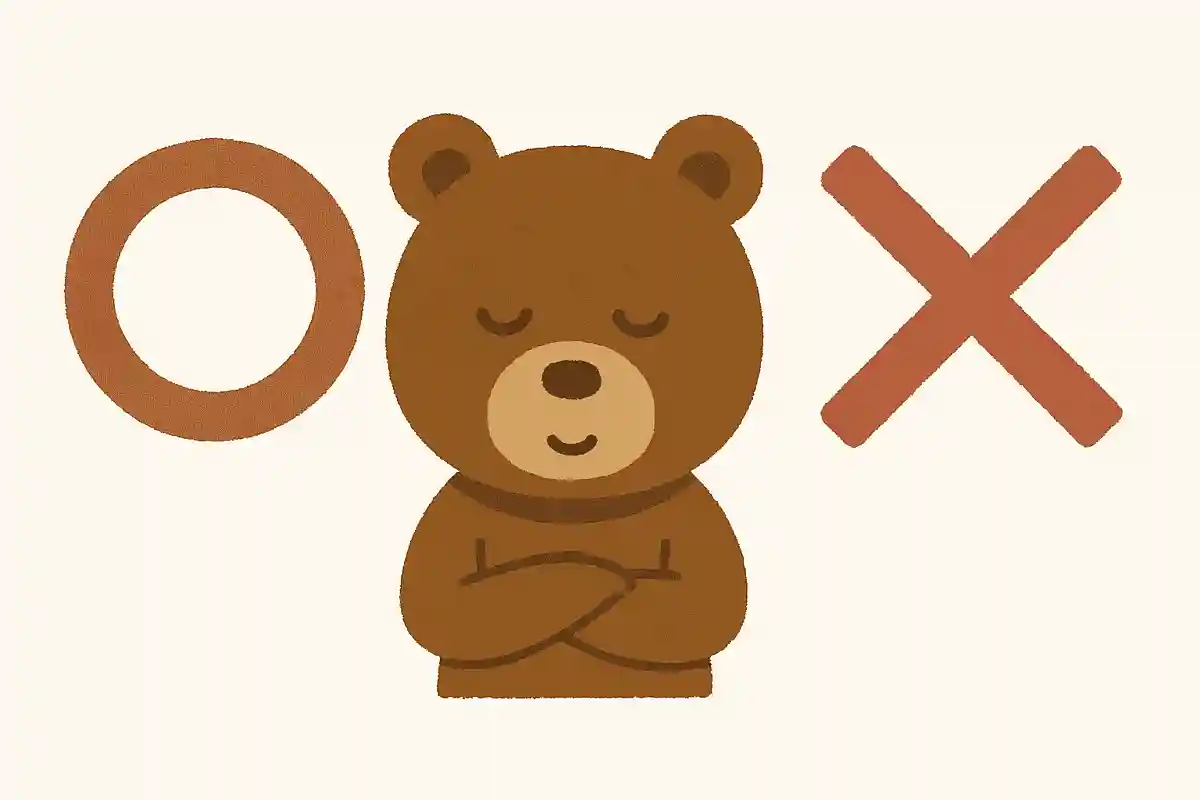
Bears sleep in winter: true or false?
- ○
- ×
See the answer
○
In winter, bears go into what’s called hibernation and sleep for a long time. They do this to get through the cold season when food is scarce. Even during hibernation, their hearts keep beating a little and their body temperature is maintained. When spring comes and the temperature rises, they go outside again and become active. By hibernating, bears protect their bodies and skillfully survive the cold season.