

Trivia & Fun Facts about Miyazaki Prefecture

When you hear “Miyazaki Prefecture,” what kind of image comes to mind?
Located in the southern part of Kyushu, it’s famous for mangoes when it comes to food, and for Takachiho Gorge as a sightseeing spot.
In this article, we’ll introduce plenty of fun facts, including lesser-known local specialties and travel-related tidbits about Miyazaki Prefecture!
Take this opportunity to stock up on knowledge about Miyazaki, so you can make use of it when you visit, or impress your family and friends with what you know!
Now, let’s dive in and see what kinds of fun facts there are!
- [For elementary school students] Challenge! Local quiz of Miyazaki Prefecture
- [Miyazaki Prefecture Local Quiz for Seniors] Easy and Fun Questions
- Trivia quiz with useful tips to know: fun facts that come in handy at school or at home [for kids]
- [Trivia] Fun to Know! Prefecture Name Quiz Collection
- [For Seniors] Great for killing time! A fun three-choice trivia quiz
- [For Elementary School Students] Collection of Local Quizzes from Fukuoka Prefecture
- Trivia & Fun Facts About Fukuoka Prefecture, the Culinary Capital
- A classic song about Miyazaki. A song filled with feelings for one’s hometown [2026]
- Deep dive into the charms of Okinawa! A roundup of trivia and fun facts about Okinawa Prefecture
- [Trivia Quiz for Seniors] Introducing fun facts questions about sweet potatoes!
- Trivia and fun facts about Niigata Prefecture: history, industries, and even some surprising national number ones?
- Trivia and fun facts about food (summary)
- Trivia about Tokyo: A collection of fun facts useful for sightseeing
Miyazaki Prefecture Trivia & Fun Facts Collection (1–10)
Automatic ticket gates were introduced at Miyazaki Station in 2015.

When you take the train, the image of passing through automatic ticket gates is strong, isn’t it? Although these gates now feel like they’re everywhere, they were first introduced in Miyazaki Prefecture relatively late, in 2015.
They were installed at 12 major stations, including Miyazaki Station and Miyazaki Airport Station, and this rollout marked the moment when Miyazaki shed its status as the only prefecture in Kyushu without automatic ticket gates.
The fact that they were introduced more for users from outside the prefecture than for locals also conveys Miyazaki’s laid-back atmosphere.

There’s a confection called “Nanjakora Daifuku.”

Hidaka, a confectionery long loved in Miyazaki, is best known for its iconic product, the “Nanjakora Daifuku.” Just from the name, you can’t help but wonder what kind of surprise awaits.
At first glance it looks like an ordinary daifuku, but inside it’s an indulgent and playful combination: not only sweet red bean paste, but also chestnut, strawberry, and even cream cheese.
Since the shock of that first bite is part of the experience, it’s a daifuku you’ll want to try while avoiding spoilers as much as possible.
Japan’s No. 1 bonito catch

When you think of the sea off Miyazaki Prefecture, the Hyuga-nada comes to mind—an area also famous for its thriving fisheries.
The Kuroshio Current flows into the Hyuga-nada, bringing migratory fish such as sardines, tuna, and especially bonito.
Bonito is the standout here, with Miyazaki boasting the highest catch in Japan.
Thanks to the Kuroshio’s flow, Miyazaki lands bonito earlier than anywhere else in the country, which likely contributes significantly to its large haul.
As a fish long beloved in the prefecture, there are many ways to enjoy it, making it a great gateway to experiencing Miyazaki’s food culture.
Miyazaki Prefecture Trivia & Fun Facts (11–20)
Miyazaki beef is also served at the Academy Awards after-party.
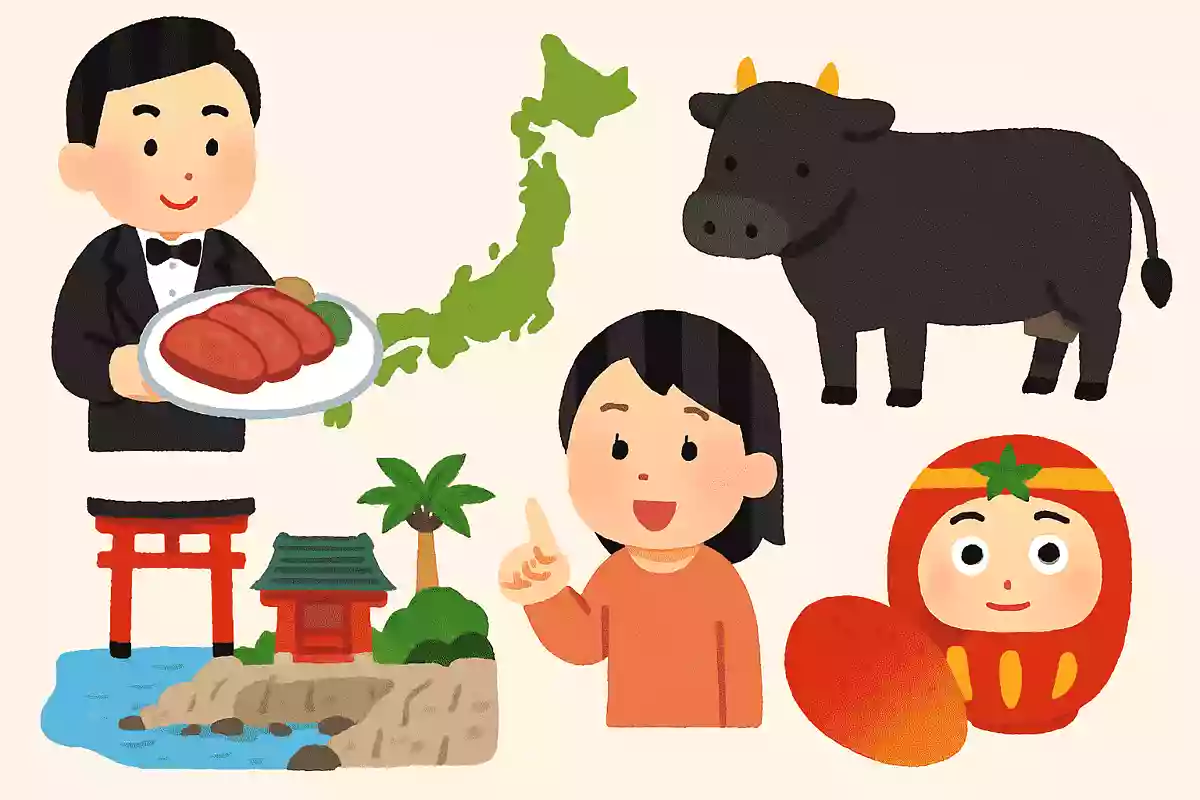
Japan has a wide variety of branded beef, and Miyazaki Beef is among the most famous.
It has been served multiple times at the Academy Awards after-party, earning the unprecedented honor of being listed on the menu as an individual branded beef.
The strict criteria for bearing the Miyazaki Beef name—such as breed, the region where it is raised and fattened, and meat quality grades—underscore its exceptional quality.
As one of Japan’s representative branded beefs, it is loved not only domestically but also around the world.
There is a trolley train that uses the tracks of the former Takachiho Railway.

In Takachiho Town, there’s a trolley train called the “Grand Super Cart” that makes use of the former Takachiho Railway’s stations and tracks.
The trolley holds 30 passengers and covers a roughly 5 km route in about 30 minutes, and astonishingly, its floor is made of reinforced glass.
This lets you look straight down and enjoy the view directly beneath the Takachiho Railway Bridge along the route.
The scenery changes with the seasons and is a major draw for visitors.
It’s not recommended for those with a fear of heights, but chances to gaze straight down from beneath a bridge are rare—so if you’re visiting Miyazaki Prefecture, why not give it a try?

Call a scab ‘tsu’.
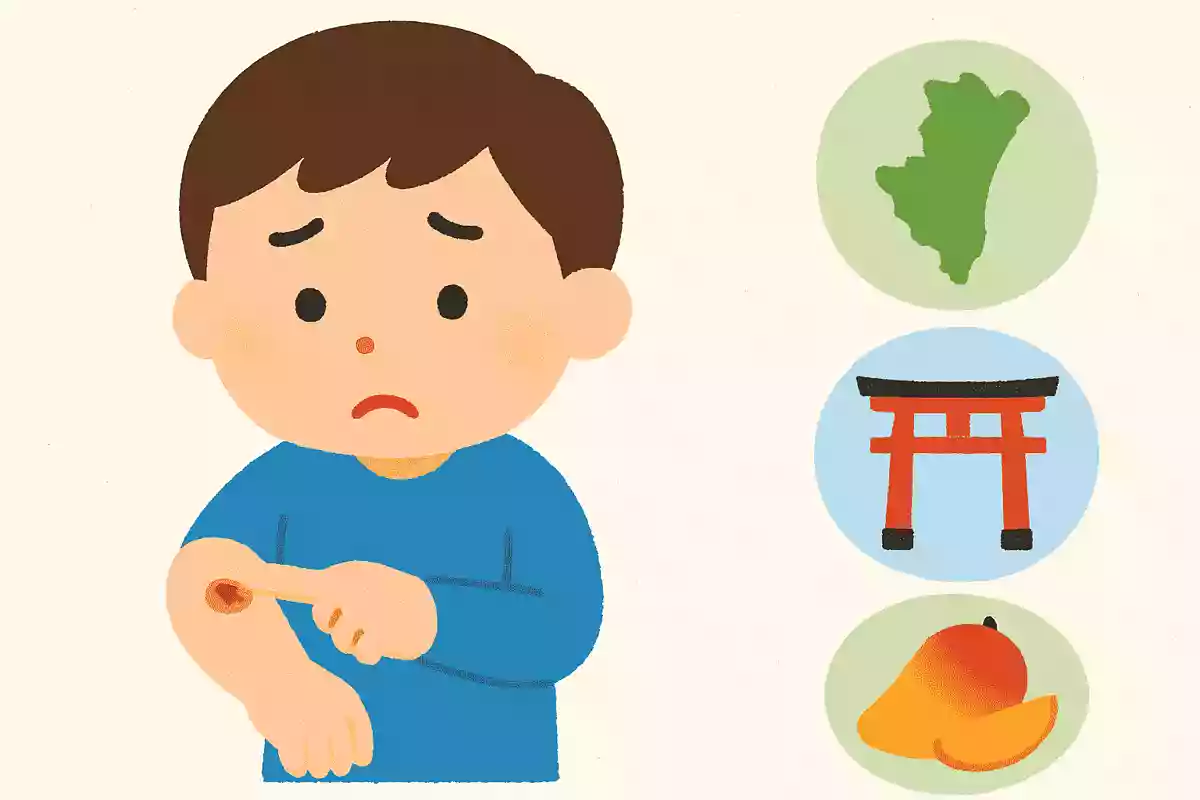
In the Kyushu dialect, a scab that forms after a wound is expressed with a single character: “tsu.” Because it’s so simple and easy to say, it’s the kind of word you might forget doesn’t make sense outside the region and end up using anyway.
The origin of this “tsu” is also noteworthy: it’s said to come from the sequence of events—injury causes bleeding (chi), followed by a scab—so they use “tsu,” which comes after “chi” in the Japanese syllabary.
In Miyazaki Prefecture, when people say “Phoenix,” they mean palm trees.
When you hear “phoenix,” most people probably think of the immortal bird.
Because it’s said to plunge into flames and be reborn, it’s also called the firebird.
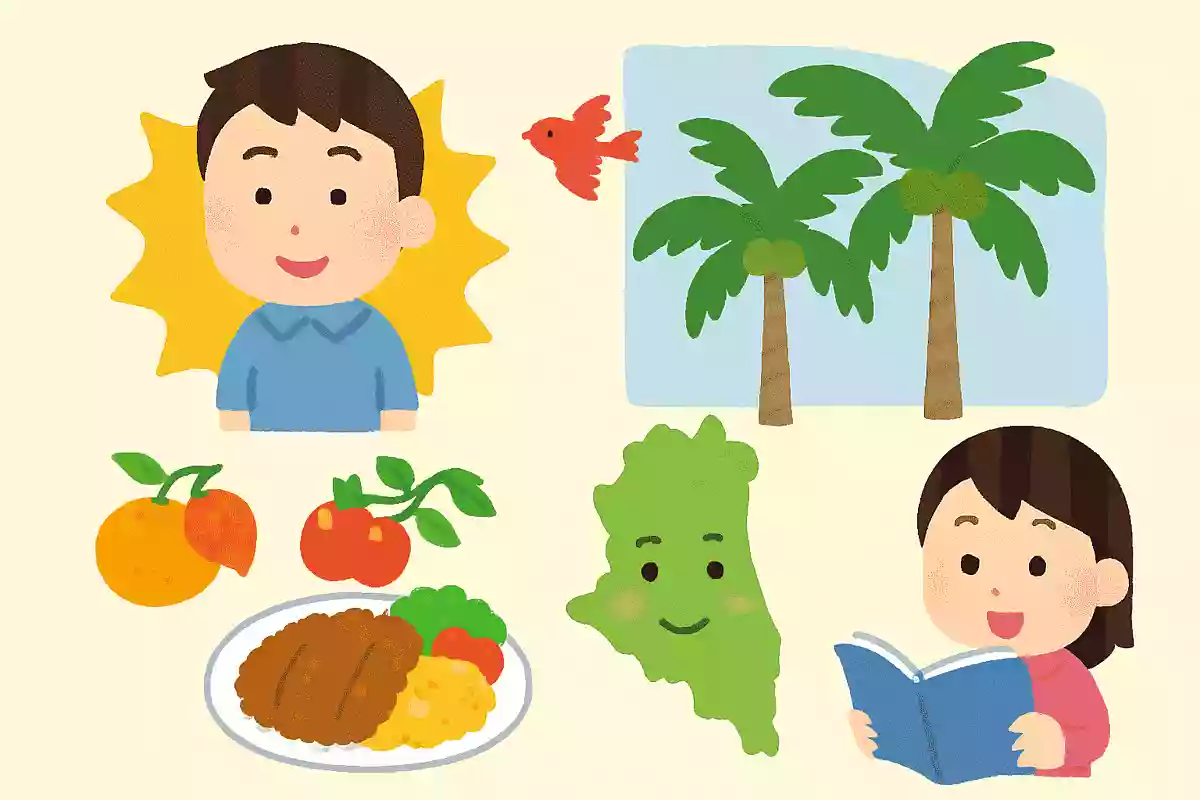
However, for people living in Miyazaki Prefecture, “Phoenix” means palm trees! There’s actually a palm called Phoenix, and it was the first official prefectural tree of Miyazaki.
As for why the palm is named Phoenix, it’s said to be because it’s resistant to disease and pests and rarely withers—hence the name associated with the immortal bird.