



When you hear “Miyazaki Prefecture,” what kind of image comes to mind?
Located in the southern part of Kyushu, it’s famous for mangoes when it comes to food, and for Takachiho Gorge as a sightseeing spot.
In this article, we’ll introduce plenty of fun facts, including lesser-known local specialties and travel-related tidbits about Miyazaki Prefecture!
Take this opportunity to stock up on knowledge about Miyazaki, so you can make use of it when you visit, or impress your family and friends with what you know!
Now, let’s dive in and see what kinds of fun facts there are!
- [For elementary school students] Challenge! Local quiz of Miyazaki Prefecture
- [Miyazaki Prefecture Local Quiz for Seniors] Easy and Fun Questions
- Trivia quiz with useful tips to know: fun facts that come in handy at school or at home [for kids]
- [Trivia] Fun to Know! Prefecture Name Quiz Collection
- [For Seniors] Great for killing time! A fun three-choice trivia quiz
- [For Elementary School Students] Collection of Local Quizzes from Fukuoka Prefecture
- Trivia & Fun Facts About Fukuoka Prefecture, the Culinary Capital
- A classic song about Miyazaki. A song filled with feelings for one’s hometown [2026]
- Deep dive into the charms of Okinawa! A roundup of trivia and fun facts about Okinawa Prefecture
- [Trivia Quiz for Seniors] Introducing fun facts questions about sweet potatoes!
- Trivia and fun facts about Niigata Prefecture: history, industries, and even some surprising national number ones?
- Trivia and fun facts about food (summary)
- Trivia about Tokyo: A collection of fun facts useful for sightseeing
Miyazaki Prefecture Trivia & Fun Facts Collection (1–10)
Wild horses live there.

When you think of horses, you probably picture them being raised and managed on ranches.
Even so, at Cape Toi in Kushima City, Miyazaki Prefecture, a rare population of wild horses lives there.
They are native Japanese horses called Misaki-uma, a medium-sized breed with a height of about 130 cm, designated as a National Natural Monument.
Another important point is that Cape Toi is largely untouched by people, making it a precious spot where not only animals but also the natural scenery preserves a glimpse of Japan’s past.

There is a flower that blooms only on the Ebino Plateau.

Miyazaki Prefecture is home to a variety of highland areas that are popular as tourist spots, and Ebino Plateau is one of them.
Among Miyazaki’s highlands, Ebino Plateau is particularly popular, and its greatest appeal lies in the rare seasonal plants that grow there.
Of the many plants, the wild crabapple, designated a National Natural Monument, is especially famous and is said to bloom only at Ebino Plateau anywhere in the world.
Why not take note of how little the area has been altered by human hands and experience the vast natural scenery?
Actually, a famous producer of caviar
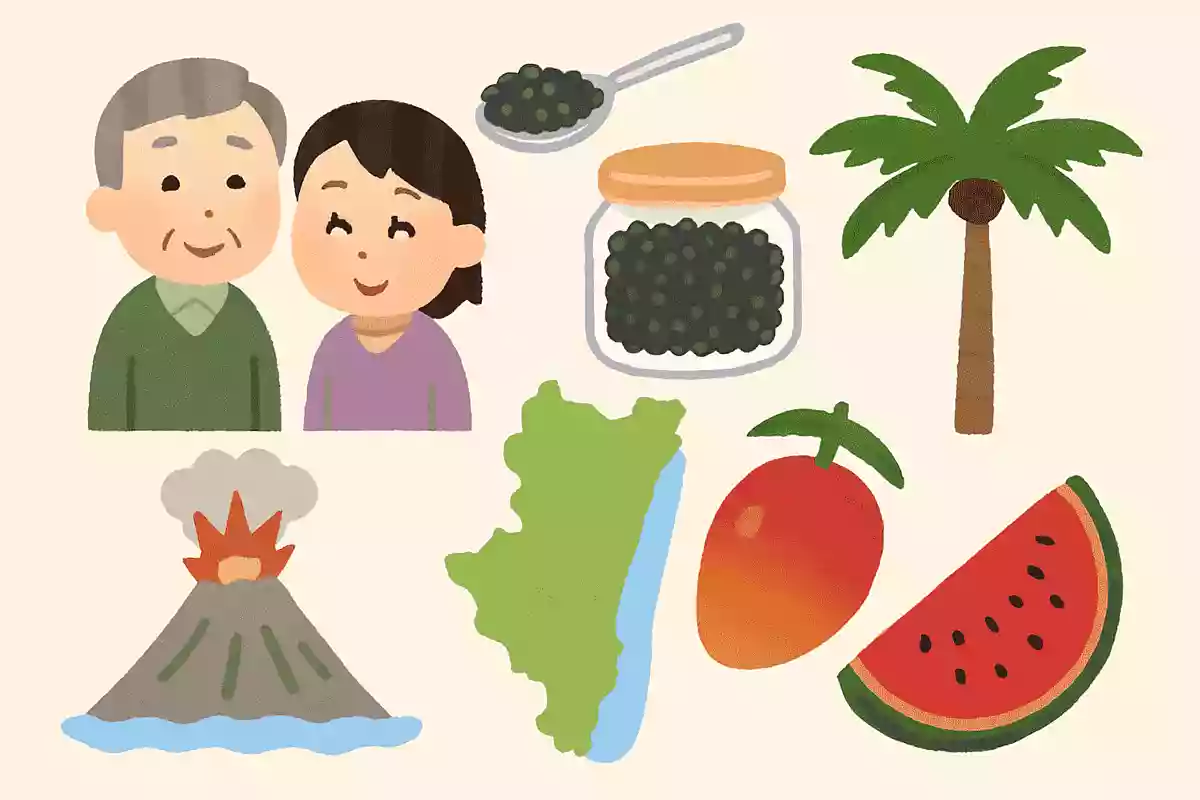
Caviar is salted sturgeon roe and is cherished as one of the world’s three greatest delicacies, alongside truffles and foie gras.
Although caviar has a strong image as an overseas food, it is also produced in Japan, and Miyazaki Prefecture is a renowned production area.
Miyazaki began sturgeon farming in 1983, and its history of coordinated efforts between the public and private sectors shows just how committed the region has been.
Unlike imported caviar, a notable point is that it is not processed with high salt content for long-term preservation, nor are preservatives added.
Call the blackboard eraser “Rahul.”
A blackboard eraser, used to wipe off chalk writing from the board, is an indispensable tool in school classes.
In regions such as Miyazaki Prefecture—and also Kagoshima and Ehime—it’s called a “raafuru.” Raafuru comes from Dutch, a word that refers to frayed thread or the act of rubbing, and it’s said to trace back to the use of old cloths when blackboards first became widespread.
The name clearly reflects the strong trade ties with the Netherlands during the Edo period.
There are only two commercial TV stations in Miyazaki Prefecture.
Miyazaki Prefecture has only two commercial TV stations: MRT Miyazaki Broadcasting and UMK TV Miyazaki.
Their broadcasting setups are also unique.
UMK TV Miyazaki primarily carries Fuji TV programming while also airing shows from the Nippon TV and TV Asahi networks.
MRT Miyazaki Broadcasting focuses on TBS content but also broadcasts programs from Nippon TV, TV Asahi, and TV Tokyo.
Because programming from various key networks is mixed together, viewers there may be less conscious of which network a show belongs to compared to other areas.
Given the limited number of commercial stations, subscribing to cable TV is also a common option.
You can ride a tuk-tuk in Qingdao.

Tuk-tuks, the three-wheeled vehicles known for their open-air feel and commonly used as taxis in countries like Thailand.
In Aoshima, Miyazaki Prefecture, courses that take you around photo spots and cafes by tuk-tuk are getting attention.
Aoshima is one of the places in Miyazaki where you can really feel the tropical vibe, with subtropical plants and beach scenery, and the tuk-tuk adds an extra boost of that breezy, tropical sensation.
If you come to Aoshima without a set itinerary, asking the driver for recommendations is a great idea.
There is an officially recognized Moai statue from Easter Island.
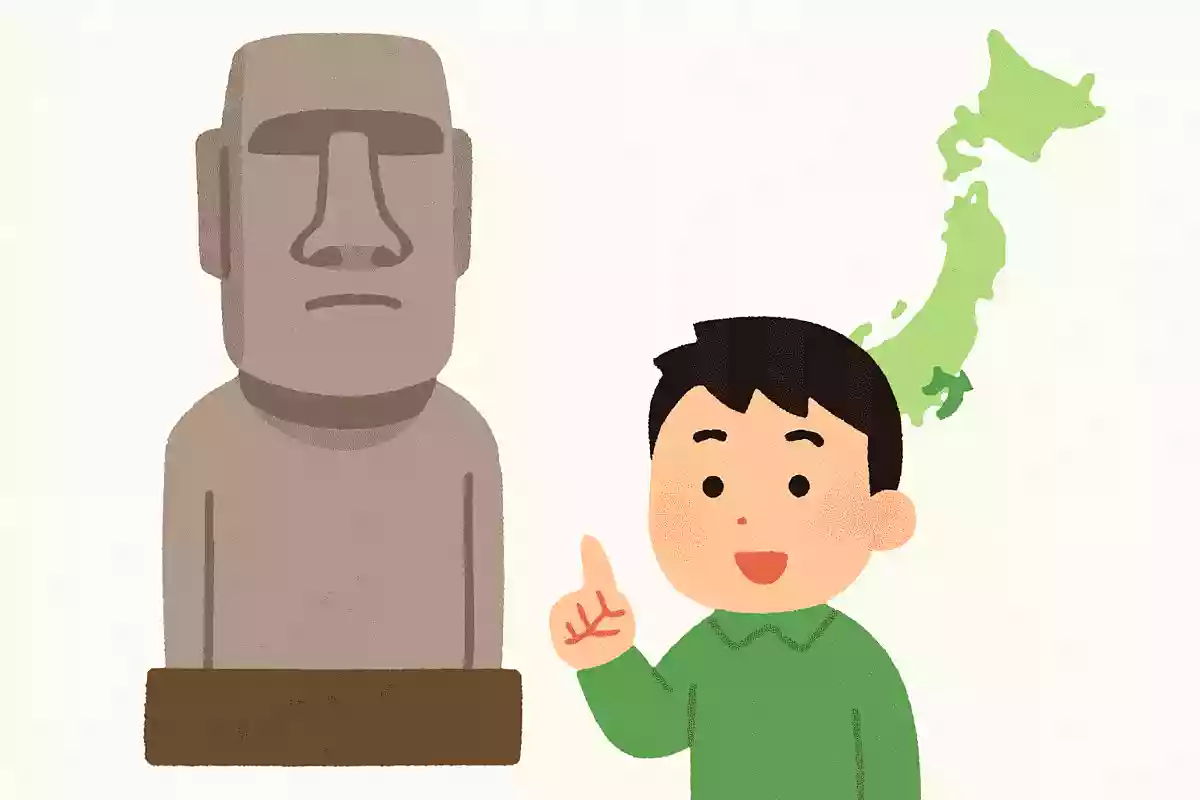
Easter Island, located in the Pacific Ocean and part of Chile, is famous for its moai statues, which are also beloved as mascots.
In Nichinan City, Miyazaki Prefecture, there are moai statues officially recognized by the Council of Elders on Easter Island itself.
Seven moai stand tall with the Pacific Ocean behind them, making it a spot where you can feel an exotic atmosphere without leaving Japan.
Each statue is said to be associated with a different blessing—academic success, financial fortune, marriage luck, overall fortune, romantic luck, health, and career—and touching them is believed to make wishes come true.