RAG Music - Quote Words I want to make my motto to always spur myself on. Words I want to make my motto that always inspire me 10 years as a kindergarten teacher / elementary school teacher / junior and senior high school teacher / childminder kepiko Graduated from Kunitachi College of Music, Faculty of Music (now: Department of Music Culture and Education, Early Childhood Music Education major). In elementary school, my homeroom teacher was Jun Kusaba, a game researcher. After graduating from university, I worked for 10 years as a kindergarten teacher and for 7 years as an after-school childcare instructor, then took a post as a music teacher at an international school in Singapore. In addition to music education, I also engaged in activities that shared Japanese culture, traditional games, and recreational play, working with many children. Afterwards, through freelance writing, planning, and editing work at Shogakukan, I met many delightful adults and experienced the joy of communicating and conveying ideas. Leveraging the perspective cultivated in educational settings and my experience as an editor, I aim to deliver practical information—focusing on fields related to music and children—that values both input and output. Hobbies include instruments, singing, handcrafts, toys, drawing, traditional play, the outdoors, books, DIY, and crafts. Special skill: spinning-top tricks.
A motto is something you keep close at hand or etch into your heart as a reminder to keep yourself in check.
It’s said that people used to choose them from proverbs, idioms, and four-character compounds, but in recent years many have adopted famous quotations from great figures as their mottos.
What matters is whether it serves as a compass for your life and something you can lean on.
So this time, I’ve put together a list of words and phrases you might want to use as your motto.
They’re drawn from a wide range of sources—historical figures, business leaders, athletes, and more—so be sure to take a look!
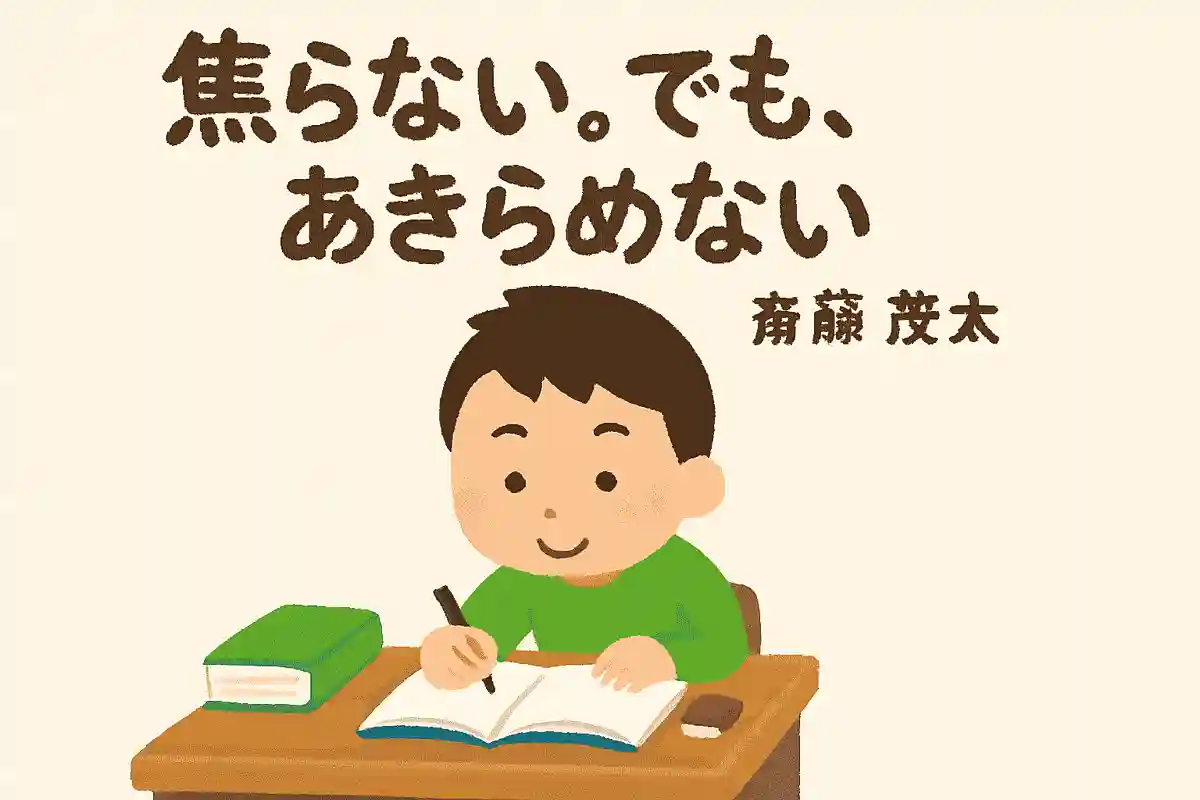
Table of Contents Words I want to make my motto that always inspire me The true value lies in the journey itself. Steve Jobs Where there’s a will, there’s a way. Abraham Lincoln Life is about just this one day—today. Dale Carnegie To succeed, always try as if it were your last chance. Phil Knight No success for those without dreams. Yoshida Shōin The attitude of striving not to betray yourself will manifest as results in the future. Yoshiharu Habu Smile the most when times are tough. Shinnosuke Abe The distance you’ve run won’t betray you. Mizuki Noguchi All phenomena are reflections of the mind. Kazuo Inamori Only one thing is needed: to believe you can do it. Anthony Robbins To see what is right and not do it is a lack of courage. Confucius You can just be yourself. Mother Teresa To conquer oneself is the greatest victory. Plato Achieve great things by accumulating small efforts. Ninomiya Sontoku Expectations aren’t something to meet, but to exceed. Shohei Ohtani Live as if you were to die tomorrow. Learn as if you were to live forever. Mahatma Gandhi If you don’t give up, there will always be a way. Always. Sakichi Toyoda A journey of a thousand miles begins with a single step. Laozi My enemy is, for the most part, myself. From Chūya Koyama’s “Space Brothers” If you worry about what you don’t have, you’ll waste what you do have. Ken Keyes Jr. Life doesn’t create dreams. Dreams create life. Shohei Ohtani I won’t burn out until I win the gold medal. Hina Hayata The mental strength to endure—to dig in with “One more step!” the very moment you think “I can’t go on”—cultivates an unbeatable power to overcome anything. Taihō Kōki If you’re going to think, think big. If you’re going to live, live big. It’s in the moments you decide that your destiny is shaped. Anthony Robbins You should have more faith in your talents and what you’ve done. Ichiro What I want to tell people around the world is to make an effort. If you put your heart into it, you can achieve anything. Cindy Ngamba A champion is defined not by how they act when they win, but by how they rise after they lose. Serena Williams What matters is not practice, but the passion for practice. Pelé Impossible is not a fact, but an opinion. Muhammad Ali There is no such word as ‘limit’ in my dictionary. LeBron James There is no absolute champion. A champion is always a challenger. Kosuke Kitajima Believe in the 1% chance, believe in yourself, and believe in what you’ve done. Yuto Horigome Doing things without changing what I aim for Ryo Ishikawa We read “failure” as “success.” Katsuya Nomura Life’s only failure is not to try. Lindsey Vonn It is not noble to be superior to others. Ernest Hemingway A professional never makes excuses, no matter what. Chiyonofuji Mitsugu It’s easy when you’re on the ascent and riding momentum. A person’s true worth is determined when they’re in a tight spot. Taihō Kōki One more step. I think this at all times: one more step. This moment is the most important. One more step. Saneatsu Mushanokōji People deserve praise or blame solely based on whether they have the perseverance to see things through. Leonardo da Vinci As you stretch yourself to broaden your horizons, it’s possible you’ll actually grow taller. That’s part of what makes life interesting. Saburō Shiroyama Sweat you shed never lies Chiyonofuji Mitsugu What we truly need is the courage to stand up for someone. Taro Yamamoto An indecisive leader can even be harmful. Yoshihide Suga I succeeded because I never made excuses and never allowed them. Florence Nightingale No dream is too big, and no challenge is too great. Why not give it a try? Do you have anything to lose? To live is not to breathe, but to act. Jean-Jacques Rousseau Without passion, no energy is born. Without energy, it’s the same as having nothing. To challenge yourself is to grow. LeBron James Don’t rush. But don’t give up. Shigeta Saitō Do not fear change. It is part of growth. Elon Musk Not being satisfied is the best technique for improving your ability. Wayne Gretzky If you believe in yourself, there are no limits. Cristiano Ronaldo Obstacles before you are opportunities. By facing difficulties, you can grow. Kevin Durant There is only one way to succeed: never give up. Jeff Bezos You only realize your own strength once you’ve overcome your anxieties and concerns. Serena Williams Knowledge is power. Francis Bacon As long as you keep challenging yourself, failure does not exist. Mark Zuckerberg Nothing is impossible. Muhammad Ali The person I aspire to be is myself. Yuzuru Hanyu If you stay focused, you can overcome any obstacle. Warren Buffett No matter how tough the situation, in the end the only thing that supports you is your ‘aspiration’ (your guiding purpose). Sanae Takaichi The moment you feel completely satisfied is, in other words, the moment you begin to decline. Eiichi Shibusawa A person’s youth ends when they stop dreaming. Kurata Hyakuzō Write it as failure, read it as growth. Katsuya Nomura killing two birds with one stone Once-in-a-lifetime encounter telepathy; tacit understanding (literally: ‘heart-to-heart communication’) friendly rivalry; mutual improvement through competition Forge ahead with courage Late bloomer a hard-fought struggle self-serving; putting one’s own interests first; bending things to one’s advantage being absorbed in something; being frantic; in a daze; wholeheartedly; with all one’s might battle-hardened; seasoned (literally: experienced in a hundred battles) Indomitable; unyielding (literally: ‘unbent by a hundred setbacks’) flexible; adaptable; responding appropriately to the situation self-praise Wind, Forest, Fire, Mountain Hardships are the best trials that forge me. Sanae Takaichi If you’re afraid of criticism, you can’t change anything. Sanae Takaichi Rather than expecting something from others, become the one who creates change. Sanae Takaichi An ideal dwells in a great soul, whereas ambition possesses a small one. Teizo Azuma If you truly have a sense of urgency, you should be able to make up your mind. Shinji Ishimaru I can say with confidence that I did everything I could. Shinji Ishimaru I’ve found what to do with my life. Shinji Ishimaru If we were just one minute earlier, we could save one more person. Calvin Coolidge Beneath mud and earth lies solid rock; above clouds and mist shines the sun. At the height of discontent, there is still fortune, nor is hope absent. Kanzo Uchimura If you don’t give up on yourself, there is no such thing as losing in life. Shigeta Saitō Those who accomplish great things are always bold adventurers. Charles de Montesquieu Effort opens every door. Jean de La Fontaine Heaven does not extend a helping hand to those who do not act for themselves. William Shakespeare To become the best in the world, you need world-class effort. Keisuke Honda Talent is something you let bloom; sense is something you polish!!! Toru Oikawa, Haikyu!! Rather than waiting for a miracle, stake everything and give it your all! Misato Katsuragi 'Neon Genesis Evangelion' If you can dream it, you can achieve it. Walt Disney You can’t change other people or the past, but you can change yourself and the future. Eric Berne The only people who never make mistakes are those who do nothing. Theodore Roosevelt ...to be continued Words I want to make my motto—phrases (41–50) that always spur me on Without passion, no energy is born. Without energy, it’s the same as having nothing. If you want to accomplish something, you need to pursue it with passion.
Without passion, you won’t feel motivated, and there’s no way you can keep running all the way to the goal.
That passion is the very energy that drives action.
If you can’t find passion, even exceptional talent or ability won’t be fully utilized.
If you want to achieve something great or live a fulfilling, wonderful life, please find something that ignites your passion.
expand_less Raise the rankingexpand_more lower
Words I want to make my motto—ones that always lift me up (51–60) To challenge yourself is to grow. LeBron James These are the words of LeBron James, one of the greatest all-around players in NBA history who has won multiple championships and MVP awards.
Having competed at the highest level for many years, he has continually set new challenges for himself.
In studying as well, facing unknown fields or difficult tasks can be unsettling, but that first step is the beginning of growth.
If you avoid challenges, nothing will change.
An attitude of tackling things without fear of failure greatly expands your knowledge and thinking skills.
It’s a quote that encourages growth, teaching us that by taking action, we can surely move forward.
expand_less Raise the rankingexpand_more lower
Don’t rush. But don’t give up. Shigeta Saitō These are the words of Shigeta Saito, a psychiatrist who has supported many people’s hearts and conveyed ways of living through numerous writings.
When we keep making an effort, there are moments when we want to rush the results, but impatience narrows our perspective.
On the other hand, if we stand still and take no action, no progress can be made.
In studying, what matters is maintaining composure while not stopping your steps.
Even small steps, if continued, will surely move you forward.
It’s a famous saying that teaches us the value of trusting your own pace and persevering with tenacity.
expand_less Raise the rankingexpand_more lower
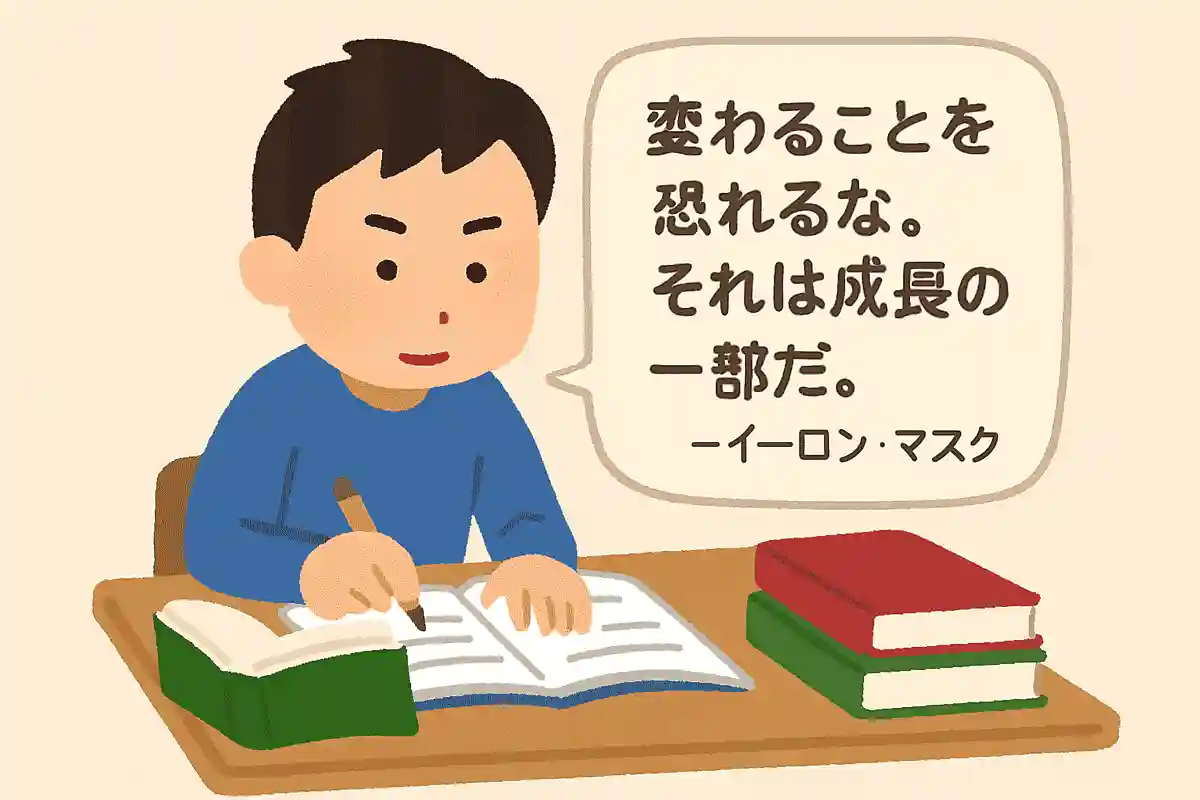
Do not fear change. It is part of growth. Elon Musk Elon Musk is an entrepreneur who has continued to take on fields many consider difficult, such as electric vehicles and space development.
What his approach conveys is that he values the courage to choose change over the comfort of staying the same.
In studying, too, it’s natural to feel anxious when you review your methods or tackle a new field, but that first step leads to growth.
You might fail, and the results may not be what you hoped.
Even so, it’s those who keep moving who can expand their possibilities.
These are words that believe in that forward-looking strength.
It’s a message that gently nudges anyone who wants to go just a little beyond who they are now.
expand_less Raise the rankingexpand_more lower
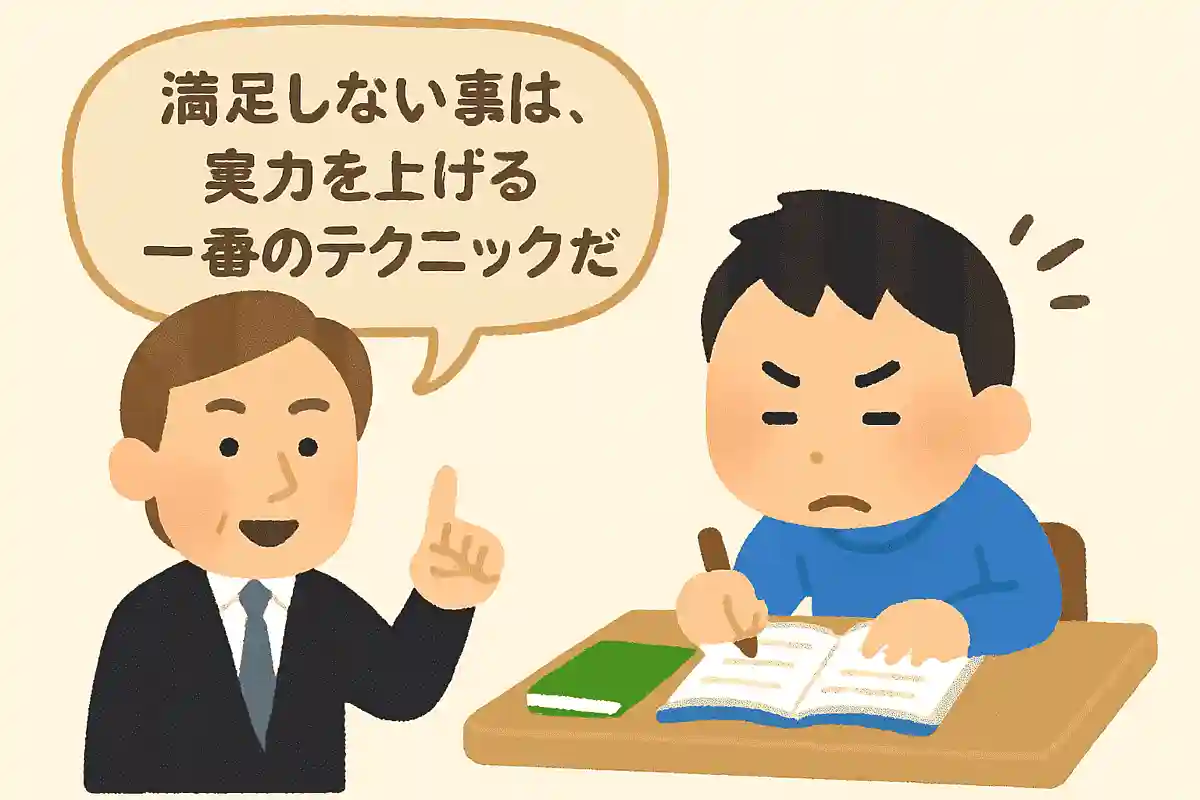
Not being satisfied is the best technique for improving your ability. Wayne Gretzky These are the words of Wayne Gretzky, hailed as a legend in ice hockey and the all-time leading scorer in NHL history.
They reflect his refusal to be satisfied with the status quo and his commitment to holding himself to consistently high standards.
If we focus only on what we’ve already accomplished, our growth—whether in study or otherwise—tends to stall.
By keeping our eyes one step ahead and continually seeking areas to improve, we hone our abilities.
A mindset that resists complacency isn’t about driving ourselves into a corner; it’s a force that expands our potential.
It’s an inspiring quote that teaches the importance of ambition and the will to improve.
expand_less Raise the rankingexpand_more lower
If you believe in yourself, there are no limits. Cristiano Ronaldo Cristiano Ronaldo has set numerous scoring records and won many titles on the world’s biggest stage.
Through strict self-discipline and relentless effort, he has always continued to believe in his own potential.
The moment you decide something is impossible for you, your learning and growth come to a halt.
Limits are not imposed by others; they are born from your own assumptions.
By believing in yourself and continuing to work hard, you can get closer to results beyond what you imagined.
This passionate quote highlights the importance of confidence that springs from within.
expand_less Raise the rankingexpand_more lower
Obstacles before you are opportunities. By facing difficulties, you can grow. Kevin Durant Words from Kevin Durant, who has experienced numerous scoring records and championships in the NBA.
Having survived in an intensely competitive world, he understands the meaning of hardship deeply.
When faced with a wall in your studies, many people want to avoid it—but that very wall can become a chance to grow.
By tackling difficult tasks, you cultivate your thinking and perseverance.
It’s often the tough situations, more than the smooth times, that help a person grow.
This quote presents a perspective that views obstacles positively and shifts our mindset toward growth.
expand_less Raise the rankingexpand_more lower