
Types of music genres

The famous saying goes, “There are only two kinds of music: good and bad.” That said, it’s often easier to start listening when music is categorized by genre.
Use this as a reference to help you discover new ‘good music.’
- What does the word “repezen” used by rappers mean?
- From street to classical: an overview of dance genres all in one place.
- Male singers with great voices: a collection of cool, seductive vocals
- From rock numbers to dance tunes! Cool songs of the Reiwa era
- Gen Z listeners, take note! Great songs that color the J-pop scene
- A catchy tune that sounds familiar
- Introduction! A collection of recommended masterpieces and standard numbers for jazz beginners
- Captivating in many styles and forms! Love songs in Japanese rap
- Now karaoke isn’t scary! Easy-to-sing songs recommended for the Yutori generation
- Band songs that get the crowd going by genre
- Masterpieces of Japanese fusion—From nostalgic classics to recent recommendations—
- [Gets you grooving] Upbeat Japanese songs. Tracks that make you feel happy.
- [By Genre] Perfect for Parties!! A Catalog of Karaoke Songs That Get Everyone Hyped
Types of Music Genres (21–30)
Digital cumbia

It’s a style of music that evolved Colombia’s traditional cumbia for the club scene by using electronic programming, led primarily by Argentine artists.
It became hugely popular in the late 2000s across the underground club scenes in Europe and the U.S., and it also drew attention in Japan!
Delta Blues
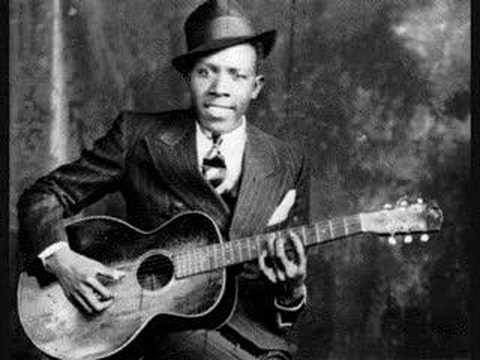
Among the blues genres, this is the one that gave birth to the blues itself, and most prewar blues fall under this Delta blues style.
It’s characterized by a solo singer accompanying themselves with a single acoustic guitar.
As the name suggests, it was discovered in the Mississippi Delta region, which is how it got its name.
Types of music genres (31–40)
Bairifanki

This is ghetto music born in the slums of Brazil.
It’s club music built on sampling and rap, featuring a cheap-sounding, electro-infused funk style.
It has now become one of Brazil’s most popular and representative genres!
EDM

A new colloquial term in American commercial music that emerged in the late 2000s refers to electronic dance music.
Its definition is complex and frequently debated, but it is characterized by a style aimed more at the mainstream.
Many works are structured by adapting pop—essentially popular song—into dance music that originated from the underground scene, such as house and techno.
One point to be careful about is that dance music does not equal EDM (electronic dance music).
What does that mean? Fundamentally, the two occupy different levels in the categorization hierarchy.
EDM is a subcategory within the broader definition of dance music.
So why did this confusion arise? The term EDM was verbalized by music media to actively drive commercial promotion.
As a result, it sparked an explosive boom and arguably left many people confused.
While it is difficult to define works clearly, this is similar to how sounds once called rock ’n’ roll eventually came to be called rock.
From the mid-2000s, large-scale festivals began to be held around the world.
One of the festivals that pioneered this movement was Ultra Music Festival.
It opened up a new target audience that had not previously engaged with dance music.
MPB

An abbreviation of Música Popular Brasileira, meaning Brazilian popular music, pronounced “Em Pê Bê.” Since the birth of bossa nova, Brazil’s popular music has been collectively categorized under this genre.
R&B
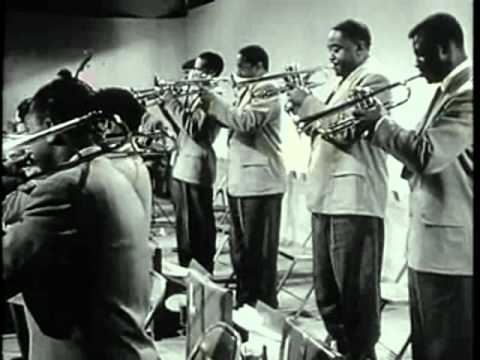
I think many people know it by its abbreviation, R&B.
Emphasizing rhythm and a sense of beat, it was born from a fusion of Black music such as blues, gospel, and jazz, developing as those genres evolved, so it contains a variety of elements.
Another characteristic is that the style back then is quite different from what it is today.
acid jazz
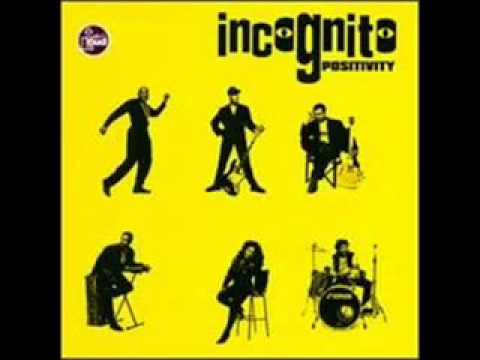
It’s a genre born under the influence of jazz-funk and soul jazz, originating in the UK club scene.
Think of it as danceable jazz music—beyond jazz, you can also feel elements of funk and hip-hop.