

The fiery soul and the roots of folk felt in Tsuyoshi Nagabuchi’s classic song

Tsuyoshi Nagabuchi continues to breathe a fiery soul into the Japanese music scene.
Since his 1977 debut, he has freely expressed profound messages through his powerful voice and moving lyrics.
The hope embedded in “Kampai” and “Himawari,” the heartrending feelings in “Gekiai,” and the deep love for “Family”—each song carries messages that continue to resonate with our lives.
Here, we present the gems of Tsuyoshi Nagabuchi’s music, forged as he has carved out new horizons with a vocal style often described as a cry from the soul.
- Tsuyoshi Nagabuchi Popular Songs Ranking [2026]
- Tsuyoshi Nagabuchi’s easy-to-sing songs: Recommended tracks for karaoke
- Karaoke Ranking of Popular Tsuyoshi Nagabuchi Songs [2026]
- [Tearjerker] Songs that make your heart tremble with tears & moving tracks with lyrics that touch the soul
- A Man’s Way of Life: Songs of Men. Masterpieces packed with manly valor and aesthetics.
- A classic of poignant, heartwarming songs. Recommended popular tracks.
- [A Life-Affirming Anthem] An Encouraging Song to Cheer You On
- Popular Japanese songs among men in their 60s: recommended masterpieces and classic tracks
- Classic songs that celebrate courage. Recommended popular tracks.
- Miyuki Nakajima’s Cheer Songs and Popular Tracks Ranking [2026]
- Great songs recommended for men. Masterpieces and popular Japanese songs that resonate with the heart.
- Tear-jerking songs recommended for men in their 50s: classic and popular Japanese hits
- Masterpieces by male artists known for their captivating high notes. Recommended popular songs.
The Fiery Soul and Roots of Folk Felt in Tsuyoshi Nagabuchi’s Classic Songs (1–10)
It’s nothing good.Nagabuchi Tsuyoshi

The lyrics, sung over a light, acoustic guitar backing and a simple 8-beat highlighted by distinctive piano tones, portray the unique conflicts and impatience of teenagers and continue to resonate with young people across generations.
Released as a single in 1987, “Rokuna Mon ja Nee” served as the theme song for the drama Oyako Zigzag, in which Tsuyoshi Nagabuchi himself starred.
With its ultra-famous chorus—practically beyond words—and the explosive moment where he shouts the title, it’s a masterpiece with immense impact.

CheersNagabuchi Tsuyoshi

Kanpai is a song created for a friend’s wedding and released as the title track of the third album.
In addition to the original version, it became a signature piece supported by listeners across generations, thanks to its inclusion in elementary school music textbooks and the many cover versions by various artists.
It’s a heartwarming number that guarantees a rousing group sing-along at karaoke after events.

JunkoNagabuchi Tsuyoshi

“Junko,” a masterpiece that defined Tsuyoshi Nagabuchi’s early career, was released as a single in 1980 and became a huge hit, topping the Oricon charts for eight consecutive weeks.
The lyrics—an unbroken stream of a heartbroken man’s bitter lament—are both achingly lonely and somehow a bit comical, while the wistful melody showcases Nagabuchi’s exceptional talent as a singer-songwriter.
Though the melody has a folky vibe, the sound arrangement bounces with a funk-like flair.
It’s also a karaoke staple, so be sure to master it and get the crowd going!
The fiery soul and the roots of folk felt in Tsuyoshi Nagabuchi’s masterpieces (11–20)
CLOSE YOUR EYESNagabuchi Tsuyoshi

It’s the theme song of the film “YAMATO,” and a very warm piece.
If you listen while thinking of someone dear to you, I think the song will resonate with you even more.
With its gentle, quiet tone, it might help you relax and fall asleep if you listen before bed—together with Tsuyoshi’s kind words.
Soap bubbleNagabuchi Tsuyoshi
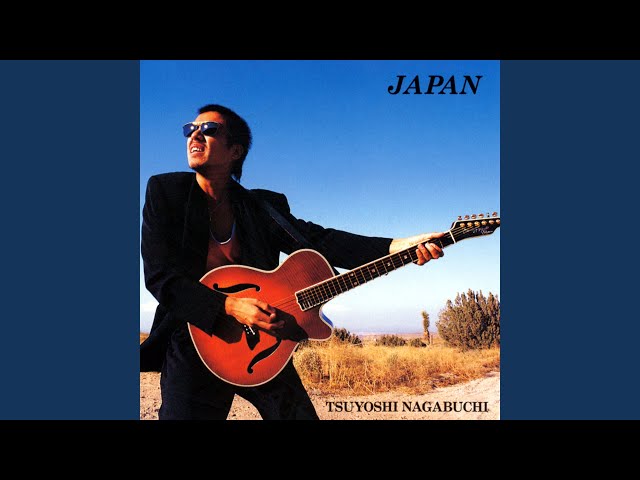
I think it has some similarities to “Tonbo,” but I might like this one more than “Tonbo” (lol).
I’m not really sure why, but this one just feels right, and when it gets to the chorus, I often find myself humming along.
Nagabuchi Tsuyoshi

This footage showing someone visiting a cemetery by motorcycle is an introductory commercial for Shingu Cemetery in Shingu Town, Fukuoka Prefecture.
Despite being only about 30 minutes from Fukuoka City, the video conveys that it’s a tranquil cemetery surrounded by nature.
And above all, the standout feature of this commercial is that Tsuyoshi Nagabuchi performs the CM song.
Unlike his usual wild vibe, his pure and straightforward singing voice leaves a strong impression.

bare faceNagabuchi Tsuyoshi

If you only know Tsuyoshi Nagabuchi as the passionate singer with a husky voice, you might be surprised when you hear a song like Sugao, where he sings beautiful melodies in a clear high tone.
It’s a track from his 1979 album Gyakuryū, which became his breakthrough in the early stages of his career.
The tune carries a folk-rock flavor steeped in a distinctly ’70s sense of melancholy.
And don’t forget to carefully read the lyrics, which are very characteristic of the ’70s: the perspective shifts from a woman in the first verse to a man in the second, giving it a diary-like, autobiographical narrative quality.