

Memorable Youth Songs: Looking Back on New Music Masterpieces from the 1970s–80s

New Music, which incorporated elements of folk and rock while remaining more approachable, captured the hearts of many.
GARO’s “Gakuseigai no Kissaten” and Kaguyahime’s “Kandagawa” gently portrayed the everyday lives of young people at the time, while Alice’s “Champion” and Masashi Sada’s “Kampaku Sengen” powerfully voiced down-to-earth feelings.
These classic songs that colored the memories of youth continue to resonate with many people even today.
Here, we present a selection of exquisite gems from the 1970s, woven with delicate lyrics and melodies.
- A collection of nostalgic hit songs and classics from the 70s
- Classic and hit Japanese pop songs from the nostalgic 80s
- Popular Showa-era pop. Timeless hit songs.
- Best City Pop Classics: Recommended Popular Songs [Timeless & Modern]
- A collection of nostalgic Japanese hit songs from the 1980s that still linger in our ears
- [Japanese Music] A Collection of Heart-Touching Hit Folk Songs from the 1970s
- [Recommended for people in their 70s] Classic nostalgic hits: A collection of youth songs
- [Spring Songs Recommended for People in Their 40s] Relive Your Youth! A Selection of Nostalgic Tracks
- Big Hits, Including New Standard Favorites! Best Hits of Popular J-POP Songs
- For people in their 50s: Songs that make you want to sing—perfect for driving
- [Standard] A Collection of Songs You Want to Listen to While Driving—Tunes You'll Find Yourself Humming
- Classic and hit kayōkyoku songs from the nostalgic 1960s
- Masterpieces that sing about various lives. Recommended popular songs.
Unforgettable Youth Songs: Revisiting New Music Classics from the 1970s–80s (1–10)
Lingering Snowiruka

A single released in November 1975.
The original song was included on a Kaguya-hime album, but Iruka’s cover became more famous, reaching No.
4 on the Oricon chart and selling 550,000 copies.
It remains a standard often sung at karaoke as a song that longs for spring.
Dream FlowerEn Hiroshi

This is Hiroshi En’s debut single, and he is still active as a TV personality today.
It was released in November 1978.
The song won the Grand Prix at both the Yamaha Popular Song Contest and the World Popular Song Festival, and was also used in a JAL commercial for its America campaign.
The chorus, which repeats the phrase “Tonde” (“Fly”), is particularly memorable.
The Day the Seagulls FlewWatanabe Machiko
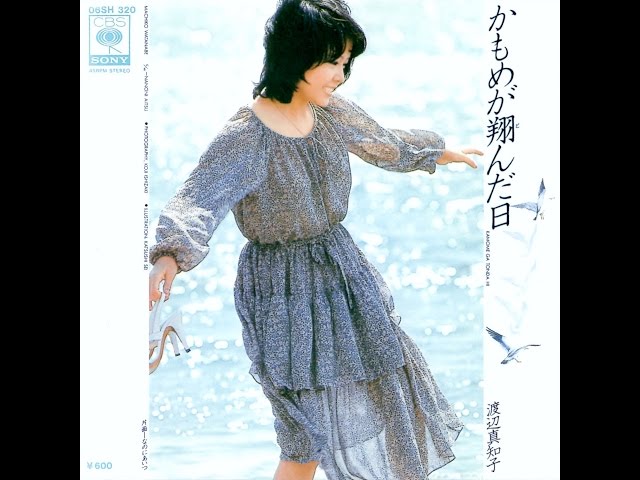
This was Machiko Watanabe’s second single, released in April 1978.
Expectations were high for her as a new-music female artist following in the footsteps of Yumi Matsutoya and Miyuki Nakajima, and she won the Best New Artist award at the Japan Record Awards that year.
Showcasing her outstanding vocal ability to the fullest, this song continues to be sung today.
It peaked at No.
5 on the Oricon charts and sold 460,000 copies.
Unforgettable Youth Songs: Revisiting New Music Masterpieces from the ’70s–’80s (11–20)
The Days of Rainbows and Sneakerschūrippu

It is a classic song that leaves a strong impression with its delicate portrayal of youthful love and transience.
The scene of two people embracing in rain-soaked sweatshirts and the tender sentiment of cherishing a pair of sneakers are depicted with gentle warmth.
The lyrics symbolically express the disconnect between a man and a woman, a sudden farewell, and the immaturity of not yet being able to become an adult, all imbued with the bittersweet ache of youth.
Released in 1979 by Tulip, the song drew attention on TV programs such as The Best Ten and Yoru no Hit Studio, gaining popularity as a piece in which folk and pop are beautifully harmonized.
Kazuo Zaitsu’s warm vocals and the beautiful melody will surely comfort those who wish to heal the pain of heartbreak or look back on their cherished memories.
Gather the Windhappiiendo

A gentle weaving of urban transformation and nostalgia, this is a quintessential coming-of-age song of the 1970s.
Created by Happy End in November 1971, it’s a gem in which Takashi Matsumoto vividly and poetically portrays Tokyo’s streets and the lives of its people.
Featured on the album Kazemachi Roman, the track wraps the city’s memories in delicate soundscapes crafted by Eiichi Ohtaki, Haruomi Hosono, and Shigeru Suzuki.
After being featured in the film Lost in Translation, it has been covered and cherished by many artists, including Akiko Yano and Hiromi Ohta.
It’s a song whose tender melody and storytelling resonate deeply—perfect for a calm afternoon or an emotionally stirring dusk.
contrailArai Yumi

The story of a boy drawn on a white slope reflects Yumi Arai’s inner landscape from her youth.
With a clear, crystalline voice and beautiful piano lines, she gently sings of a longing for the heavens and a parting from the earthly world.
Inspired by feelings for a classmate from her elementary school days, the piece takes flight on a fragile yet refreshing melody, brimming with the radiance of life and hope for liberation.
Released in November 1973 as the title track of the album “Hikōki Gumo,” it drew renewed attention in 2013 as the theme song for Studio Ghibli’s “The Wind Rises.” It is a gem of a song that tenderly supports those who have experienced the loss of someone dear, as well as young people standing at a crossroads in life.
First loveMurashita Kōzō

Kozo Murashita made his debut as a singer in 1979 after passing a CBS/Sony audition.
“Hatsukoi” (First Love) was his fifth single, released in 1983.
With lyrics and a melody that evoke a sense of nostalgia, it reached No.
3 on the Oricon charts and became a hit, selling over 500,000 copies.