

[Children's Songs] Cute songs recommended for childcare. List of popular nursery rhymes.


Kids love to sing!
Singing is a form of exercise, nurtures interest in language, and helps develop expressiveness and a sense of rhythm.
It’s also said that singing releases “happy hormones,” making it effective for relieving stress.
Bring plenty of music into daily life and sing freely together with your children.
This time, we’re introducing popular children’s songs we’d love you to sing and play with your kids!
We’ve collected everything from classic nursery rhymes passed down through the years to the latest hit songs.
You can search songs by category—animals, vehicles, food, and more—so you’re sure to find the perfect tune for your children.
If you add simple choreography or hand-play motions as well as singing, the kids will be thrilled!
Be sure to explore a variety of nursery rhymes and enjoy happy times with your children!
- [Childcare] Fun Songs for 2-Year-Olds to Sing! Recommended Song Collection
- Recommended for preschool recitals! Choral songs that 3-year-olds can adorably sing
- Get pumped with kids’ favorite songs! A memorable collection of classics that will make you want to sing along
- Choral songs that captivate 4-year-olds! A collection of heartfelt song ideas for junior kindergarten recitals
- Popular Songs Ranking for Toddlers
- Nursery rhymes to sing to your baby! Recommended songs enjoyable from 0 months
- [Hand Play] Popular with kids! A collection of trendy hand-play songs and nostalgic traditional children’s songs
- [For 1-year-olds] Fun Together! Recommended Songs and Hand Play Collection
- Get pumped with popular songs from “Okaasan to Issho”! A collection of timeless tunes everyone will want to sing together
- Ranking of Popular Children's Songs [2026]
- Childcare: Today's recommended fun songs
- [For 4-year-olds] Popular and classic songs to sing at recitals and seasonal events
- Fun to dance! A collection of dance songs for young children, recommended for childcare and sports day
Children’s Songs: Popular Nursery Rhymes (71–80)
The Do-Re-Mi SongSakushi: Osukā Hamāsutain 2-sei / Sakkyoku: Richādo Rojāsu

“Do-Re-Mi” is one of the iconic songs from the musical The Sound of Music, and in Japan, Peggy Hayama’s Japanese-lyric version has long been beloved.
From “Do” for donut and “Re” for lemon, the upbeat lyrics build to “Si” for happiness, paired with a catchy, easy-to-hum pop melody.
With choreography that matches the words, even little kids can have fun dancing along.
In recent years it’s also trended on TikTok and become popular across generations, so be sure to feature it!

Being human is niceSakushi: Yamaguchi Akari/Sakkyoku: Kobayashi Asei

As a heartwarming song that’s fun to sing, “Ningen tte Iina” is highly recommended.
It’s known as the ending theme of the anime Manga Nihon Mukashi Banashi.
In recent years, it has regained attention thanks to reruns and DVD releases.
The lyrics, which depict human life from the perspective of animals, are not only comforting but also offer a chance to rediscover the happiness found in everyday life.
When singing it as a group, try building excitement around the final phrase.

Tonton Tomato-chan
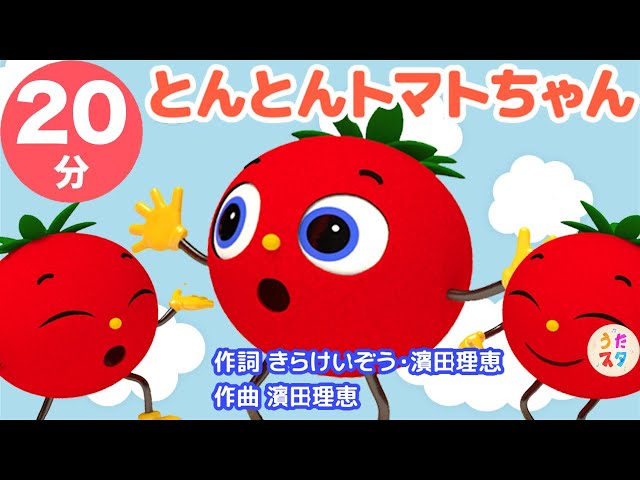
With its gentle vocals and refreshing melody, “Ton-ton Tomato-chan” is perfect as a July children’s song! Speaking of summer vegetables, there are tomatoes, cucumbers, and more.
Celebrating the tomato, which is delicious even in summer, “Ton-ton Tomato-chan” has a pleasant rhythm and is a nursery rhyme that even babies from 0 years old can enjoy.
Its comfortable tempo also makes it a relaxing song.
It’s also recommended to move your body to the music with kids while holding maracas or handmade instruments.
Have fun with it!

Mysterious PocketSakushi: Mado Michio / Sakkyoku: Watanabe Shigeru

“Fushigi na Pocket” is a fun song where cookies increase every time you pat your pocket.
It’s perfect for imaginative three-year-olds.
It’s also great to sing while actually patting your pocket.
If you use tools like an apron theater or paper puppets while singing, it can spark conversations with the children, such as, “What would you do if lots of cookies appeared?” They might also naturally learn how to count, like “one, two.” It’s a dreamy song where the cookies keep multiplying with just a tap.

Fruit TarōSakushi: Okuhara Yume / Sakkyoku: Bearuguraundo

“Kudamono Tarō” features fruit-themed characters who deliver fun songs and dances.
Lyrics are by Yume Okuhara and music is by Bearground.
With simple, easy-to-remember phrases about peaches, bananas, strawberries, and more, it’s perfect for use in early childhood settings.
Try dividing into parts and singing in turn, or perform gestures and dances that match the lyrics.
You could also wear outfits inspired by your assigned fruit.
Another idea is to create parody versions using the children’s favorite fruits.
Let’s get everyone excited with this nursery song that offers unique choreography and catchy tunes to enjoy with the kids!

Songs of Animals and Insects (71–80)
An animal song you'll want to copy!
Next, I’ll introduce some songs about animals that kids absolutely love. Children really enjoy imitating animals’ unique movements and sounds, don’t they? Let’s all become animals and have a blast together! Reference article:Nursery rhymes, folk songs, and children's songs about animals
Reference article:Children’s songs, folk songs, and nursery rhymes about insects
Animal and Insect Songs (1–10)
Crocodile family

What kind of family are crocodiles, anyway? This song features a crocodile family.
The crocodile father is shaving his beard, the mother is putting on makeup, and the older brother seems to be doing some strength training.
They don’t seem all that different from a human family, do they? With this song, you can pretend to be the crocodile family and have fun adding hand motions.
If you move your body energetically and express things humorously, it’s even more enjoyable.
Grown-ups, be sure to try the hand-play along with the children!
Tanuki of Fist Mountain

“Genkotsuyama no Tanukisan” is well known not only as a Japanese children’s song but also as a hand-play song.
Since the hand motions are simple, you can do it with small children, and it’s an easy tune to remember.
It’s also sung as a game for playing rock–paper–scissors.
