

[Children's Songs] Cute songs recommended for childcare. List of popular nursery rhymes.


Kids love to sing!
Singing is a form of exercise, nurtures interest in language, and helps develop expressiveness and a sense of rhythm.
It’s also said that singing releases “happy hormones,” making it effective for relieving stress.
Bring plenty of music into daily life and sing freely together with your children.
This time, we’re introducing popular children’s songs we’d love you to sing and play with your kids!
We’ve collected everything from classic nursery rhymes passed down through the years to the latest hit songs.
You can search songs by category—animals, vehicles, food, and more—so you’re sure to find the perfect tune for your children.
If you add simple choreography or hand-play motions as well as singing, the kids will be thrilled!
Be sure to explore a variety of nursery rhymes and enjoy happy times with your children!
- [Childcare] Fun Songs for 2-Year-Olds to Sing! Recommended Song Collection
- Recommended for preschool recitals! Choral songs that 3-year-olds can adorably sing
- Get pumped with kids’ favorite songs! A memorable collection of classics that will make you want to sing along
- Choral songs that captivate 4-year-olds! A collection of heartfelt song ideas for junior kindergarten recitals
- Popular Songs Ranking for Toddlers
- Nursery rhymes to sing to your baby! Recommended songs enjoyable from 0 months
- [Hand Play] Popular with kids! A collection of trendy hand-play songs and nostalgic traditional children’s songs
- [For 1-year-olds] Fun Together! Recommended Songs and Hand Play Collection
- Get pumped with popular songs from “Okaasan to Issho”! A collection of timeless tunes everyone will want to sing together
- Ranking of Popular Children's Songs [2026]
- Childcare: Today's recommended fun songs
- [For 4-year-olds] Popular and classic songs to sing at recitals and seasonal events
- Fun to dance! A collection of dance songs for young children, recommended for childcare and sports day
Winter Songs (1–10)
peta peta pettanko

This is a very fun hand-play song themed around mochitsuki, a traditional New Year’s custom.
Children love the motions of pounding and rolling mochi to the rhythmic sounds! It first aired as the “Song of the Month” in April 2004 on NHK E-TV’s “Okaasan to Issho,” with lyrics by Kanako Suzuki and music by Toji Akasaka.
It was also included on the album “Kodomo no Uta Best 25,” released in September 2004.
It uses lots of onomatopoeia and is easy to remember, so even little kids can imitate it right away.
The Ball and the Lord

A classic children’s song from the early Showa era, sung to a buoyant, lively rhythm.
With lyrics by Saijo Yaso and music by Nakayama Shinpei, it first appeared in the January 1929 issue of the magazine Kodomo no Kuni.
The song tells a unique story: a handball slips from a girl’s hands, jumps into a daimyo procession for the sankin-kotai, sets off for Kishu, and in the end turns into a mandarin orange.
It is very familiar in Wakayama Prefecture; in fact, it was once used as the onboard chime for the JR limited express Kuroshio to announce arrival at Wakayama Station.
As a New Year’s temari (handball) song, it’s perfect for enjoying with children while moving your bodies together.
The Snowman’s Magic

The fun of building a snowman—and the bittersweet feeling when it eventually melts—is a special experience unique to winter.
Broadcast as the January 2007 song on NHK’s “Okaasan to Issho,” this piece was performed by Yuzo Imai and Shoko Haida.
It was also included on the album “NHK Okaasan to Issho: Latest Best—Kimi no Koe,” released in October of the same year, and has been loved for a long time.
Listen to it at the end of winter, and you’ll surely find yourself eagerly awaiting spring.
Enjoy it slowly with your child as you picture the scenes together!
Winter’s Daughter, Rikka-RokkaWatanabe Kaori
You can picture a scene where pure white snow is dancing down from the sky.
This song originally aired on NHK Educational TV’s “Okaasan to Issho” as the “Song of the Month” for January 2014.
With a rhythmic, charming play of words, it lightly portrays a world of ice and snow.
How about listening to it on a snowy day indoors while moving your bodies together with your child? It will surely warm your hearts!
Christmas Where Angels SingShinzawa Toshihiko

On Christmas night, if you listen closely, you can hear angels singing…
This is a Christmas song that paints a quiet and mystical scene.
Lyrics and music are by Toshihiko Shinzawa, and it is performed by Satoko Yamano, who was active as the “singing sister” on NHK Educational TV’s Yukai na Concert.
It was included in the album “Christmas SONGS” released in September 2015 and produced as a sheet music book with CD for preschools and kindergartens.
It’s perfect for gently singing together as a parent and child while savoring the quiet feeling of Christmas night! It’s also recommended to incorporate puppet staging for Christmas party performances.
Enjoy the special atmosphere of this holy night together with your child.
Winter Songs (11–20)
Hey, Santa Claus grandpaSakushi: Yuasa Tonbo / Sakkyoku: Nakagawa Hirotaka

It’s a fun song that asks, from a child’s unique perspective, what Santa Claus did when he was little.
With lyrics by Tombo Yuasa and music by Hirotaka Nakagawa, the song is included on the album “Tonbo-sensei no Wakuwaku Shūkai” and has long been loved in early childhood education settings.
Its appeal lies in the easy-to-sing melody and gentle wording, and the piano accompaniment is arranged simply.
The lyrics, filled with warmth and anticipation for Santa, perfectly capture how children feel as they look forward to Christmas.
It’s ideal for Christmas events at kindergartens and nurseries, as well as for family time at home.
Sing it together, and you’re sure to make even more happy Christmas memories.
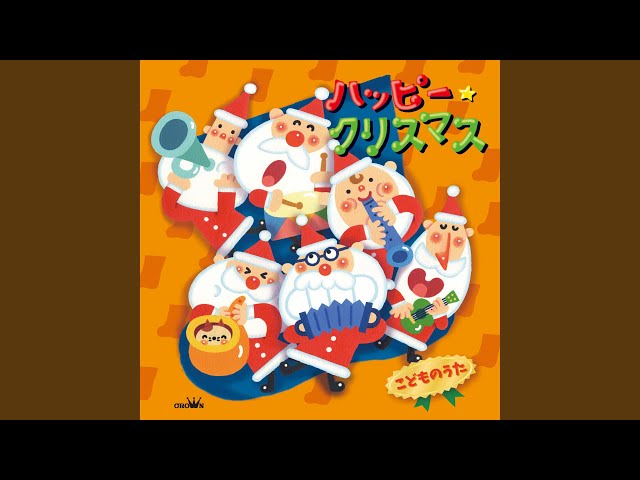
Happy Happy ChristmasBeibī Shāku to Pinkittsu

This Christmas song, sung by a beloved character adored by children around the world, was released on YouTube in November 2020 and was included in the December 2021 album “Pinkfong Baby Shark Special.” The lyrics convey the joy of eagerly awaiting Christmas and a warm message encouraging everyone to sing and have fun together.
With its bright, lighthearted melody and the easy-to-remember “doo doo doo” phrase repeated throughout, even young children can quickly sing along.
It’s a perfect song for singing and dancing with the whole family at Christmas gatherings or parties at home.