

Songs with titles starting with 'O' [Great for karaoke and shiritori!]

Songs with titles starting with “O” often feature unique names—like those using characters meaning “dance” or “gold,” as well as Osaka-themed songs.
They also tend to be great for getting everyone fired up when singing! I can’t think of many off the top of my head, so I want to look some up…
This is a list that might come in handy at such times: songs with titles that start with “O.” Use it when you’re wondering, “What songs start with ‘O’?” and also as a prompt for shiritori or when choosing tracks at karaoke.
- Vocaloid songs that start with 'O'
- Masterpieces with titles that start with 'A'
- Songs with titles that start with “wo.” Useful as hints for karaoke and shiritori!
- 2000s: A Collection of Hit Karaoke Classics
- A roundup of songs with titles starting with 'Da' (Dai-〇〇, Diamond, etc.)
- Songs with titles that start with 'Ke'
- Songs Men Want Women to Sing at Karaoke: Irresistible Tracks [2026]
- A compilation of Vocaloid songs with titles that start with 'wo' (を)
- Songs by Yoshimi Tendo, the songstress born in Osaka, that are easy to sing
- Songs with titles starting with “No” (Perfect for karaoke and shiritori!)
- Songs with titles that start with a number. Useful for karaoke or playlist selection.
- Cool If You Can Sing! Popular Karaoke Songs Recommended for Women
- Songs with titles that start with 'de'. Perfect as hints for karaoke or shiritori!
Songs With Titles Starting With 'O' [Great for Karaoke & Shiritori!] (451–460)
Woman of OnomichiKitajima Saburō

Saburo Kitajima’s classic “Onomichi no Onna” is marked by its delicate melody and instrumentation.
It features a relaxed tempo and, unusually for Kitajima’s songs, a vocal line with overall restrained volume.
That said, there are moments with expansive long tones, so care is needed.
It leans more toward kayōkyoku (Japanese pop ballad) than traditional enka, and in fact uses kobushi (melismatic ornamentation) only sparingly.
As a result, it’s a very singable piece for those who find enka’s characteristic vocal stylings challenging.

A Man’s LifeKitajima Saburō

A heartfelt, powerful song that reexamines the joys and sorrows of life and celebrates living with sincerity.
It carefully weaves together a half-life spent overcoming hardships and trials while valuing duty and truth.
Released by Saburo Kitajima in January 2011, this work conveys the sentiments of his more than 50-year career in show business with a mature vocal performance that deeply resonates with listeners.
While honoring the traditional flavor of enka, the song features contemporary arrangements that give it a profoundly moving quality that sinks into the heart.
It is a gem of a masterpiece to listen to when you stand at a crossroads in life or want to savor your gratitude toward someone important.
I’m heading to Tokyo.Yoshi Ikuzo

The song that catapulted Ikuzo Yoshi to nationwide fame, “Ora Tokyo sa Igu da.” It’s a signature comic song of the enka world, with charming lyrics that humorously depict country life.
While this piece is firmly categorized as enka, it doesn’t feature the elaborate kobushi—those complex pitch bends—typical of more traditional enka.
The Aomori dialect phrasing might take a bit of getting used to, but the song itself is quite easy to sing for an enka number, so it’s well worth adding to your repertoire.
drunk on menYoshi Ikuzo

Among Yoshikazu Ikuzō’s songs, the masterpiece “Otokoyoi” stands out for its especially powerful melody.
It’s a straight-up ‘man’s song,’ crafted with a consistently forceful melodic line throughout.
There are many shout-style sections where the voice is driven hard, but because the emphasis is on sheer power, you won’t find ornamentations that demand delicate control, like intricate kobushi runs.
Even the kobushi at the end of the chorus is essentially an extension of the vibrato, so the difficulty level is relatively low.
Gentlemen with a rich, gravelly voice should definitely consider adding this piece to their repertoire.
A Hazy Moonlit Nightshouka
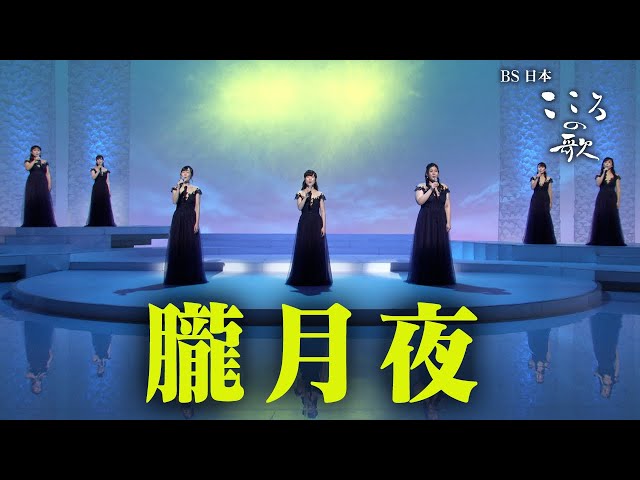
A song that beautifully portrays a spring evening depicts, with delicate nuance, a scene where the setting sun and haze spread over a field of rapeseed blossoms, and a pale moonlight floats in the sky.
Alongside the tranquil countryside, it gently embraces quintessential images of spring in Japan—the hues of the forest, people walking along rice-field paths, the croaking of frogs, and the tolling of bells.
Released in 1914 as a Ministry of Education school song, the work seamlessly marries lyrics by Tatsuyuki Takano with music by Teiichi Okano, and it has long been cherished in educational settings.
It has continued to be loved across generations, with Aiko Moriyama covering it in 2009 and Ai Nishida performing it on a program in June 2023.
As a song to hear on a calm spring evening, it offers a warmth that deeply touches the heart.
Songs with Titles Starting with “O” [Great for Karaoke & Shiritori!] (461–470)
Drowning loveDomura Riu

A heart-stirring song by Riu Domura that candidly captures the anxiety and loneliness born from thinking of someone, carried by a melodious sound.
It delicately portrays the fear of parting and the instability of emotions that arise precisely because of deep love for the other person.
Even while being conscious of the inevitable farewell that will come someday, the pure feeling of being unable to stop thinking about them pierces the heart.
Released in December 2020, the track later appeared as a remixed version on the album “Yakei,” and has been cherished as one of Riu Domura’s signature songs.
It’s a song that stays close to your heart when you can’t be honest about your feelings of love, or when your feelings for someone precious become so overwhelming that it hurts.
Osaka Love TourMasuiyama Daishirō / Hino Mika

This is a masterpiece of enka that evocatively portrays the romance between a man and a woman set against the rainy streets of Osaka’s Midosuji, Ebisubashi, and Dotonbori.
Released in December 1984 by Taishiro Masuiyama and Mika Hino, this duet showcases their distinctive voices in exquisite harmony.
Masuiyama’s sweet, whisper-like vocals blend beautifully with Hino’s clear, transparent singing, and the wistful melody resonates deeply in the heart.
It’s a song so charming that you’ll want to sing it together with someone special.