

[Song of Osaka] A selection of passionate, warm-hearted Osaka tunes


When you think of songs about Osaka, what tunes come to mind? While traditional local songs have become fewer, there are still many moving classics like Dreams Come True’s “Osaka LOVER” and Masaki Ueda’s “Kanashii Iro Yane.” From songs filled with the determination not to lose to Tokyo, to nostalgic hometown ballads, tracks that name-check local places, and even playful, humorous numbers—there’s a wide variety.
In this article, we’ve carefully selected “songs of Osaka” across a broad range of genres, from enka and kayōkyoku of the ’70s–’80s to recent J-pop.
We present masterpieces brimming with Osaka’s unique warmth and humanity, as well as passionate tales of love.
- Kansai-dialect Songs | A Kansai-born writer thoroughly explains their charm!
- [Local Songs] Recommended tracks packed with Japan’s nationwide classics and hometown pride
- Folk songs, children’s songs, and nursery rhymes of Osaka: the enduring spirit of our hometown carried on in song
- [Hyogo Songs] A Collection of Local and Love Songs Set in Hyogo
- The soul’s cry woven into Japanese elegies: unraveling supreme masterpieces that resonate with the heart.
- [Kyoto Songs] Masterpieces that sing about Kyoto — songs themed on the ancient capital. The enduring heart of our hometown passed down in song.
- Enka songs about Kobe: a collection of famous tracks celebrating the city's port and streets
- Breakup songs recommended for people in their 80s: a collection of classic tracks that capture heartbreaking feelings
- [Moving Songs] A collection of touching Japanese pop classics that are easy to sing at karaoke.
- Songs by Yoshimi Tendo, the songstress born in Osaka, that are easy to sing
- [Karaoke] Love songs that make you want to sing along. Heart-throbbing popular romance tracks
- Masterpieces that sing of love. Recommended popular songs.
- A Nationwide Compilation of Timelessly Beloved Railway Songs
[Osaka Songs] A selection of passionate, warm-hearted Osaka tunes (71–80)
Osaka Bitter-SweetRikuo

Rikuo sings with a mellow vibe while playing the piano.
It’s the kind of tune that would suit the moments before dawn or a sunrise.
He says he used to listen to songs set in the city when he was younger, and that influence shows now.
It somehow reminds me of “Kanashii Iro Yane,” so it’s a track I want to listen to closely.
Kawachi Otoko-bushiNakamura Mitsuko

This is a single released by Mitsuko Nakamura in 1989, an enka song that incorporates a Kawachi Ondo-style rhythm.
In the Kansai region, it is often used for Bon Odori, and sales increase in the summer.
It is one of Nakamura’s signature songs, having been performed as many as eight times on NHK’s “Kohaku Uta Gassen.”
City of RemnantsHikawa Kiyoshi

It was released in 2005 as Kiyoshi Hikawa’s ninth single.
The song, which portrays a man’s heartbreak set in Osaka, won the Grand Prix in the Enka/Kayōkyoku category at the Best Hits Kayōsai 2005.
It also earned Artist of the Year in the Enka/Kayōkyoku category at the 20th Japan Gold Disc Awards.
[Osaka Songs] A selection of passionate, big-hearted Osaka tunes (81–90)
Happy Osakanekoyasha

This is the debut song of the duo unit Yokoyama Entotsu and Yokoyama Minmin.
The coupling track is also a song called “My Hometown Osaka,” and both of them are dyed-in-the-wool Osakans.
The lyrics and music were written by Entotsu, and you can really tell how much he loves Osaka.
Should I head back to Osaka?Shōko

You can really feel the straightforward sincerity of an Osaka woman.
Shoko is from Hirakata.
Her background is impressive: after graduating from Tokyo University of Science, she debuted with this song.
She later represented Japan at the Manila International Music Festival.
She also formed the unit “Shoko & Radish.”
Tsuki no Hozenji YokochoFujishima Takeo
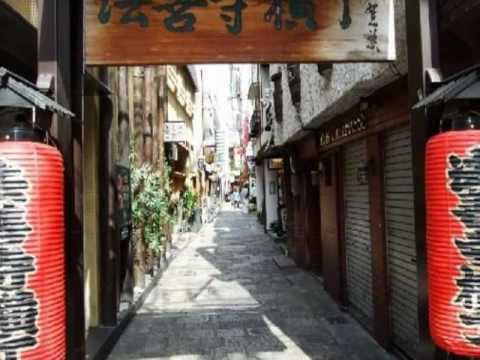
A longtime Osaka local standard, “Tsuki no Hōzenji Yokocho.” This was a massive 1960 hit by enka singer and Osaka native Taneo Fujishima.
With a melody steeped in wistfulness, it’s a highly narrative song that portrays a chef’s dreams and a love story.
Those who have trained in the culinary arts may find it especially moving.
The song’s setting, Hōzenji Yokocho—one of the most famous entertainment districts in Minami—also appears in many other Osaka songs.
The Kansai-dialect spoken lines, which were unusual at the time, perfectly evoke the flavor of Osaka.
Fujishima’s distinctive vocal style and rugged charm shine through, resonating with a heartfelt longing for his hometown.

Osaka RomanFuranku Nagai

Released in 1966 by Frank Nagai, the song that became a big hit, “Omae ni,” was actually the B-side of this track.
The lyrics are filled with scenes of Osaka, and the Osaka dialect makes it feel even more familiar.
As one of Frank Nagai’s signature songs, it continues to be sung today, especially in Osaka.