

![[Ultra-Advanced] Even challenging for advanced players! A curated selection of highly difficult piano pieces](https://i.ytimg.com/vi_webp/9jMNMPyVdU0/maxresdefault.webp)


The piano is an instrument that allows a single performer to play an enormous number of notes while skillfully using delicate motor skills in the fingertips and arms, interpreting the composer’s intent along with the notated instructions, and expressing the pianist’s own sensibilities.
There are many pieces that call for beautiful, nuanced expression, as well as passionate works where the keys are struck almost like a percussion instrument.
This time, we’ve selected and will introduce pieces from among the vast piano repertoire that are said to be difficult even for advanced players and professionals.
We’ve picked everything from famous works generally regarded as challenging to lesser-known pieces that may not dazzle in performance but are extraordinarily difficult.
Be sure to check them out!
- It’s so cool if you can play these on the piano! A selection of irresistibly charming masterpieces.
- [Masterpiece Classics] A special showcase of gem-like masterpieces so beautiful they’ll move you to tears
- Recommended for advanced players: Classical masterpieces to challenge at a piano recital
- For Advanced Players: Showstopping Classics to Play at a Piano Recital
- Rachmaninoff’s masterpieces. Recommended pieces by Rachmaninoff.
- Cool classical masterpieces. Recommended classical music.
- Piano Masterpieces: Surprisingly Easy Despite Sounding Difficult!? A Curated Selection Perfect for Recitals
- Classical piano masterpieces: legendary performances from around the world you should hear at least once
- Timelessly beautiful classical masterpieces. Recommended classical music.
- Beginner to Intermediate: Chopin pieces with relatively low difficulty. Recommended works by Chopin.
- François Couperin Popular Songs Ranking [2026]
- [Obituary] Hôko (Hiroko) Nakamura Passes Away: A Collection of Quotes from the International Pianist
- A masterpiece by Franz Liszt. Popular classical music.
[Ultra-Advanced] Even challenging for advanced players! A curated selection of highly difficult piano pieces (1–10)
Oriental Fantasy: IslameyMily Balakirev

Mily Balakirev, the composer known as the coordinator of the great Russian composers collectively called “The Five,” is highly praised for his leadership, yet many of his own compositions have faded from the repertoire today.
One of his few surviving works is the Oriental Fantasy Islamey.
Among numerous piano pieces, it is said to be one of the most difficult works ever written, boasting overwhelming difficulty in every aspect.

Grandes études de Paganini, S.141 No. 3 “La Campanella”Franz Liszt

When people hear “a difficult piano piece,” many probably picture La Campanella.
This work was composed by the great Franz Liszt, famous for leaving behind numerous piano pieces that demand transcendental technique.
Its difficulty is extremely high, and performing it solidly at a proper level is challenging even for advanced players.
In particular, the abundance of repeated notes and wide leaps on the keyboard is astounding, and on top of that, it requires a high degree of expressive ability.
If you can perform this piece well, you can proudly call yourself a skilled pianist without any problem.
English Country TunesMichael Finnissy
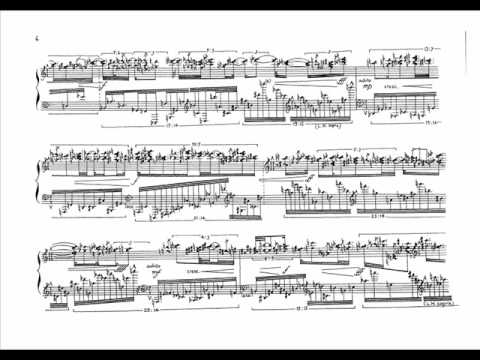
This large-scale work, consisting of eight movements, is a masterpiece of contemporary piano music that, while drawing on English folk songs, is reborn through complex and innovative arrangements.
Composed in 1977, it unfolds a vast sonic landscape of about 53 minutes, reminiscent of Liszt in its overwhelming range, interweaving meditative melodies with explosive passages.
Amid the interplay of bell-like sonorities and fierce keystrokes, polyphonic lines overlap to create an experience akin to exploring a universe of sound.
Among Michael Finnissy’s works, this piece combines technical difficulty with artistic depth, making it ideal for pianists seeking a challenge and for those eager to explore new possibilities of musical expression.
Mephisto Waltz No. 1, S.514 “Dance in the Village Inn”Franz Liszt

This is a devilish dance known as a tour de force of virtuosity that has left its mark on the history of piano performance.
Premiered in 1861, it depicts a seductive village tavern ball, captivating listeners from the outset with driving rhythms and powerful fifth-chord sonorities.
The middle section features delicate writing that imitates a nightingale’s song, offering a beauty that contrasts with the passionate waltz.
Arranged from an orchestral work for solo piano, it has been performed by world-renowned pianists such as Vladimir Ashkenazy.
With its innovative Romantic-era harmonic progressions and feverish technical demands, this piece is recommended for pianists aiming for a dazzling stage presence and for those who wish to take on the pinnacle of classical music.
8 Concert Etudes, Op. 40 No. 5: ScherzoNikolay Kapustin

A stylish piece built on the 12-bar blues form, it deftly weaves boogie-woogie rhythms with barrelhouse-style phrases.
Taken from Nikolai Kapustin’s signature album Eight Concert Etudes, its brief 2 minutes and 19 seconds brilliantly embody the fusion of classical and jazz.
The austere structural beauty of classical music and the vitality of jazz are superbly balanced, unfolding in one thrilling turn after another.
While technically demanding and calling for an improvisatory flair, the work captivates with its humor and exuberance.
It’s a recommended choice for ambitious performers eager to straddle both the classical and jazz worlds, as well as listeners seeking innovative music that transcends genre boundaries.
Chromatic Grand GallopFranz Liszt

Liszt’s masterpiece “Grand Galop Chromatique.” Along with “Mazeppa” and “Feux follets” from the Transcendental Études, it is renowned as one of Liszt’s most difficult works.
The trickiest passages are undoubtedly the rapid figures that use the 4th and 5th fingers.
On top of an awkward layout that makes your fingers feel like they’re about to cramp, it bombards you with wide leaps and octaves.
It’s a piece that even capable advanced players find hard to execute accurately.
Compared to other Liszt works, its performative impact is somewhat lower, and from an artistic standpoint it can receive modest evaluations; still, for those who love the sound of augmented triads and whole-tone scales, it’s a piece that will hit the spot.
The Flight of the BumblebeeRimsky-Korsakov-Cziffra

A torrent of sound: Georges Cziffra’s solo piano arrangement of a Rimsky-Korsakov orchestral work famed for its vivid, bear-like bounding motion.
Marked by relentless sixteenth-note repetitions and leaping octaves, it is a masterpiece that pushes finger independence and precision to the absolute limit.
Released on the EMI label in 1956, this recording channels the original’s vitality and speed through a single piano, thanks to Cziffra’s extraordinary technique and expressive power.
The virtuosic arrangement maximizes the piano’s potential and is ideal for advanced pianists seeking to test the boundaries of their technique, while its dazzling performance impact captivates audiences.