

[Piano Etudes] Recommended for Beginners! A Curated Selection of Easy, Playable Pieces

A vast number of beginner-friendly piano scores line the shelves of music stores and online shops.
“I want to start playing the piano, but where on earth should I begin?” Many people have this question and find it hard to take the first step.
In this article, we introduce recommended practice pieces for those who have just started learning the piano.
We’ve carefully selected easy, accessible pieces from a wide range of genres—perfect for complete beginners or those returning to the piano.
If you’re about to start practicing the piano, this is a must-read!
- [Beginner] Start Here: Classic Practice Pieces Recommended for Adult Piano Beginners
- Even beginners can play them easily on the piano! A curated selection of popular and latest J-POP songs.
- [Free Piano Sheet Music] Beginner-Friendly! Carefully Selected Pieces Available for Immediate Download
- Recommended for piano beginners! 10 sheet music picks that adults can enjoy too
- [Beginner] Recommended for adult piano beginners! Beautiful & stylish piano pieces
- [Piano Beginners] J-POP That Looks Hard but Is Surprisingly Playable [2026]
- [Beginner] Recommended Piano Pieces to Play at a Recital
- [Piano Pieces] Easy for Children to Play! A Roundup of Simple Classical Works
- Piano Masterpieces: Surprisingly Easy Despite Sounding Difficult!? A Curated Selection Perfect for Recitals
- [Easy to Play Even If You're Not Good with Both Hands!] Simple piano pieces for absolute beginners. Recommended piano songs.
- [Piano Sheet Music] Free downloads available! A roundup of easy-to-play pieces
- [For Piano Beginners] Play Right Now with Free Sheet Music! A Roundup of Recommended Practice Pieces
- A must-see for piano beginners! Recommended training videos that are great for basic practice
[Piano Etudes] Recommended for Beginners! A Curated Selection of Easy and Playable Pieces (31–40)
Noble and Sentimental Waltzes: Waltz No. 2, Assez lent (fairly slow), G minorMaurice Ravel

A work with an introspective atmosphere that feels like peering into the depths of the heart, it is included in Maurice Ravel’s suite Valses nobles et sentimentales.
There’s an anecdote that it was performed at a private concert in 1911 with the composer’s identity kept secret.
Within the gently flowing time, noble yet sentimental melodies emerge, as if quietly staying close to the listener’s heart.
The traditional waltz rhythm hides some unexpectedly piquant sonorities that seem to express unspoken, complex emotions.
It’s a perfect piece for those who want to learn about subtle changes in tone color and long-breathed phrasing.
The key is to play as if breathing, imbuing each note with intention so as not to break the work’s mysterious atmosphere.
Bling-Bang-Bang-BornDJ matsunaga
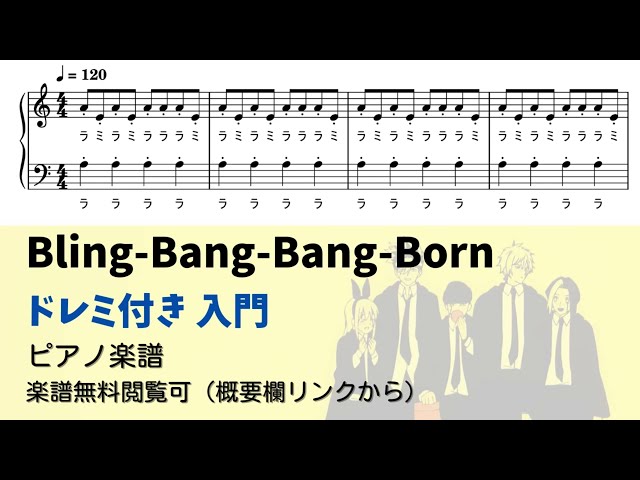
If you want to play anison and are a beginner at the piano, “Bling-Bang-Bang-Born” is highly recommended.
The song was composed by Creepy Nuts, a Japanese hip-hop duo consisting of DJ Matsunaga and R-Shitei, as the opening theme for the second season of the TV anime Mashle: Magic and Muscles, the “Divine Visionary Candidate Exam Arc.” Its catchy, driving rhythm is addictive and will stick in your head after just one listen.
Because the track is rap-style, it features many repeated melodies and rhythms.
Although it’s uptempo, once you can play one phrase, you’ll find it easier to handle the other repeated sections—another point in its favor.
After you can play it slowly without mistakes, try gradually approaching the original tempo.
You’ll be able to play it all the way through in no time!

Mysterious Adventureiketakeshi

Many people who want to play anime songs on the piano probably want to play “Makafushigi Adventure.” The manga and anime Dragon Ball, epitomized by Akira Toriyama, has now become a Japanese anime loved around the world.
When it comes to popular anime songs, many tracks from Dragon Ball are frequently mentioned, and alongside “CHA-LA HEAD-CHA-LA,” this “Makafushigi Adventure” is indispensable.
Even beginners who have just started playing the piano will be highly motivated if they love Dragon Ball.
The key to performing this piece is to clearly contrast the calm and the energetic parts.
After firmly taking the rest in “Tsukamō ze! DRAGON BALL,” let it flow into “Sekai de itto—.” Since the B melody repeats many of the same notes, practice so that it aligns well with the left-hand bass.
Once you can play it perfectly, your sheet-music battle power will surely exceed 530,000.
Odoru Pompoko RinOda Tetsurō

The manga and anime Chibi Maruko-chan, created by Momoko Sakura, is a beloved national anime representing Japan, alongside works like Doraemon and Sazae-san.
The song Odoru Pompokolin used in Chibi Maruko-chan is the series’ iconic first ending theme, and it energizes everyone who listens.
It’s a great anime song even for beginners who are just starting piano and still working hard to read sheet music.
Since it involves playing the same notes in rhythm and the bass line is simple, it’s easy to perform.
First, learn the rhythm of the original song’s vocals and try playing the notes along with it.
Little by little, memorize the positions on the keyboard and shape it into a performance.
Once you reach the chorus, you can just ride the groove and enjoy playing to the end.
When you get used to it, try playing along at the original tempo.
Fine On The OutsidePriscilla Ahn

Many listeners must have been moved by the crystalline vocals and acoustic resonance.
The theme song for the film “When Marnie Was There” is a deeply personal piece that Priscilla Ahn, its writer, created in 2005 based on her own experiences of loneliness during her girlhood.
While pretending to be fine on the outside, the protagonist Anna quietly carries a sense of isolation, and the song aligns with her feelings beautifully, striking straight to the heart.
The track is also included on the album “Just Know That I Love You.” To convey the bittersweet melody with rich emotion, the key is to begin playing with a soft, delicate touch.
By letting the quiet, hidden feelings surface in the sound, your performance will resonate deeply with listeners.
[Piano Etudes] Recommended for Beginners! A Curated Selection of Easy and Playable Pieces (41–50)
First workday of the yearHisaishi Joe


This is an unforgettable piece with a buoyant 4/4 rhythm that plays when the protagonist heads out for her very first job in Kiki’s Delivery Service.
A mandolin-like accompaniment intertwines with a charming, flute-like melody, carrying with it the exhilaration of soaring over European cityscapes and a feeling of hope.
The music captures the thrill of taking a new step, and the melody is so approachable that you’ll find it a joy to perform, as if stepping right into the world of the story.
When you play this piece, cherish a light, skipping rhythm.
As you imagine the heroine flying straight through the sky, add expressive nuance to your sound and perform—an ode that has been loved ever since the film’s 1989 release.
Someone at any timekōryū

This is the song that graces the ending of the 1994 film Pom Poko, with a melody that feels nostalgic and warm, resonating in the heart.
The acoustic, borderless sound—featuring instruments like the sanshin banjo—gently envelops the film’s finale.
The piece carries a message of not forgetting the places you hold dear even when you leave your hometown, and a hope that hardships can one day be overcome—echoing the raccoons’ story and touching the heart.
It’s a calm ballad, so the key is to play in a way that lets the melody sing.
Since the melody and accompaniment are clearly defined, it’s perfect for those who want to get used to playing with both hands.
Let the warm chords ring out carefully and try to express the original track’s comforting, embracing feel.