

[Piano Etudes] Recommended for Beginners! A Curated Selection of Easy, Playable Pieces

A vast number of beginner-friendly piano scores line the shelves of music stores and online shops.
“I want to start playing the piano, but where on earth should I begin?” Many people have this question and find it hard to take the first step.
In this article, we introduce recommended practice pieces for those who have just started learning the piano.
We’ve carefully selected easy, accessible pieces from a wide range of genres—perfect for complete beginners or those returning to the piano.
If you’re about to start practicing the piano, this is a must-read!
- [Beginner] Start Here: Classic Practice Pieces Recommended for Adult Piano Beginners
- Even beginners can play them easily on the piano! A curated selection of popular and latest J-POP songs.
- [Free Piano Sheet Music] Beginner-Friendly! Carefully Selected Pieces Available for Immediate Download
- Recommended for piano beginners! 10 sheet music picks that adults can enjoy too
- [Beginner] Recommended for adult piano beginners! Beautiful & stylish piano pieces
- [Piano Beginners] J-POP That Looks Hard but Is Surprisingly Playable [2026]
- [Beginner] Recommended Piano Pieces to Play at a Recital
- [Piano Pieces] Easy for Children to Play! A Roundup of Simple Classical Works
- Piano Masterpieces: Surprisingly Easy Despite Sounding Difficult!? A Curated Selection Perfect for Recitals
- [Easy to Play Even If You're Not Good with Both Hands!] Simple piano pieces for absolute beginners. Recommended piano songs.
- [Piano Sheet Music] Free downloads available! A roundup of easy-to-play pieces
- [For Piano Beginners] Play Right Now with Free Sheet Music! A Roundup of Recommended Practice Pieces
- A must-see for piano beginners! Recommended training videos that are great for basic practice
[Piano Etudes] Recommended for Beginners! A Curated Selection of Easy and Playable Pieces (41–50)
Village in MayHisaishi Joe


It’s a captivating piece with a buoyant melody that conjures up lush, green countryside scenes.
It’s that song from the 1988 film My Neighbor Totoro, played as the sisters, thrilled about their new life, appear on screen.
What’s wonderful about this piece is its brisk, jazz-like rhythm, which adds a stylish, cheerful touch to Japan’s tranquil landscapes.
When playing it on the piano, the key is to bring out a skipping, bouncy sense of rhythm.
If you play energetically and with joy, you’ll surely capture the piece’s sense of excitement.
Try to bounce lightly across the keys as if you were the story’s protagonist.
[Piano Etudes] Recommended for Beginners! A Curated Selection of Easy and Playable Pieces (51–60)
DepartureHisaishi Joe


This is an iconic piece from the film Kiki’s Delivery Service that brings to mind the scene where the heroine sets off for a new town.
The bright, refreshing melody played by the orchestra perfectly captures that thrilling feeling of taking a first step with hope—and just a touch of anxiety—in your heart.
Beloved since the film’s release in July 1989, this piece lifts your spirits just by listening.
Its friendly tune makes it a great recommendation for those taking on the piano as well! With a simple left-hand accompaniment arrangement to practice, it’s easier to grasp the buoyant rhythms in the right hand.
Try playing these hope-filled tones that herald the beginning of the story.
Sometimes, old storiesHisaishi Joe
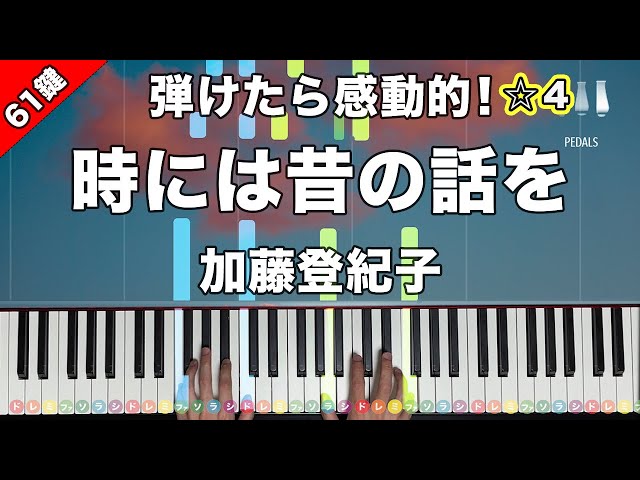

It’s a piece whose melancholy, chanson-like melody lingers in the heart, gracing the ending of the film Porco Rosso.
Originally created by Tokiko Kato in 1987, it was given a grand orchestral arrangement for the movie.
The lyrics warmly look back on days gone by, mirroring the protagonist Porco’s outlook on life and lending the story a deep afterglow.
This song also carries a heartwarming anecdote in which words from the lyrics inspired the studio’s name.
With its exquisitely beautiful melody line, even a simple accompaniment allows you to fully savor the song’s tender, bittersweet atmosphere.
It’s a piece I highly recommend to anyone who wants to immerse themselves in the story and perform with heartfelt emotion.
On a sunny dayHisaishi Joe
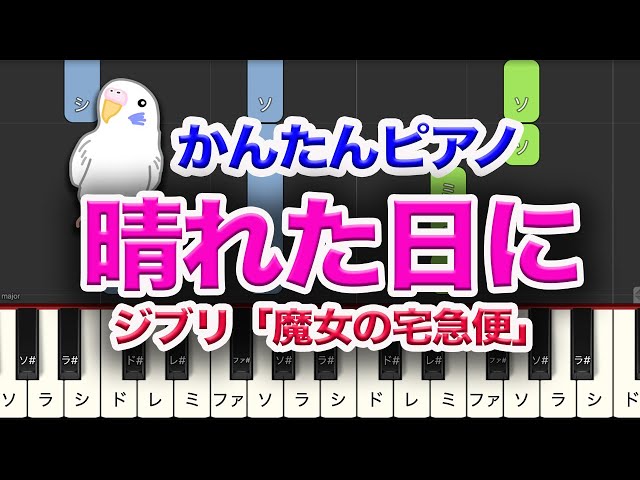
This buoyant waltz colors the scene in Kiki’s Delivery Service where the protagonist sets off with hope in her heart.
The melody, brimming with exotic flair from the accordion and mandolin, seems to capture the anticipation of entering a new world.
Although it was reportedly composed at a rapid pace to coincide with the film’s July 1989 release, the piece’s expansive, joy-filled lines betray none of that rush and are truly captivating.
Its steady, easy-to-grasp triple meter makes it a great recommendation for piano learners.
Start by playing the beautiful right-hand melody as if singing it, then add the simple accompaniment; you’ll find it leads smoothly to playing with both hands.
Main themehoshikatsu


This is the music from the film Only Yesterday that evokes memories from long ago, as if they spring vividly to life in the protagonist’s heart.
Released in July 1991, the film uses this beautiful melody to accompany the inner landscapes of a 27-year-old woman as she recalls her 10-year-old self.
Featured on the album Only Yesterday Original Soundtrack, the piece is characterized by a quiet, nostalgic tone centered on piano arpeggios.
With its relaxed tempo and gentle movement, it’s approachable even for those new to the piano.
Cherish the clear, shimmering resonance—as if fragments of memory are sparkling—and play each note with care.
Burgmüller 25 Etudes, Op. 100 No. 25 “La chevaleresque” (The Lady’s Ride)Johann Burgmüller

A dazzling and valiant piece that concludes the 1851-published album 25 Etudes, Op.
100.
The original title of this work means “chivalry,” and true to its name, it lets you feel like the dignified yet elegant hero of a story.
The staccato passages, like a horse stepping lightly, and the scales driving toward the climax make your heart dance just by listening.
In performance, the key is whether you can express the shifting scenes through dynamics and varied touch.
It’s a piece that invites you to imagine a narrative and enjoy discovering your own unique interpretation.
Polka from Album for ChildrenLouis Heinrich Köhler

Are you looking for a piece that will make you feel buoyant and joyful at a recital? This is a piece from the piano collection Kinder Album, Op.
210—a set of 30 works compiled in the 19th century for educational purposes.
Its lively polka rhythm conjures images of twirling around a ballroom.
It’s also ideal for learning to vary tone color—playing briskly with staccato and elegantly with legato.
With a brightness that brings smiles to listeners’ faces, it’s a recommended choice for children who want to develop expressive power and shine on stage at their recital.