

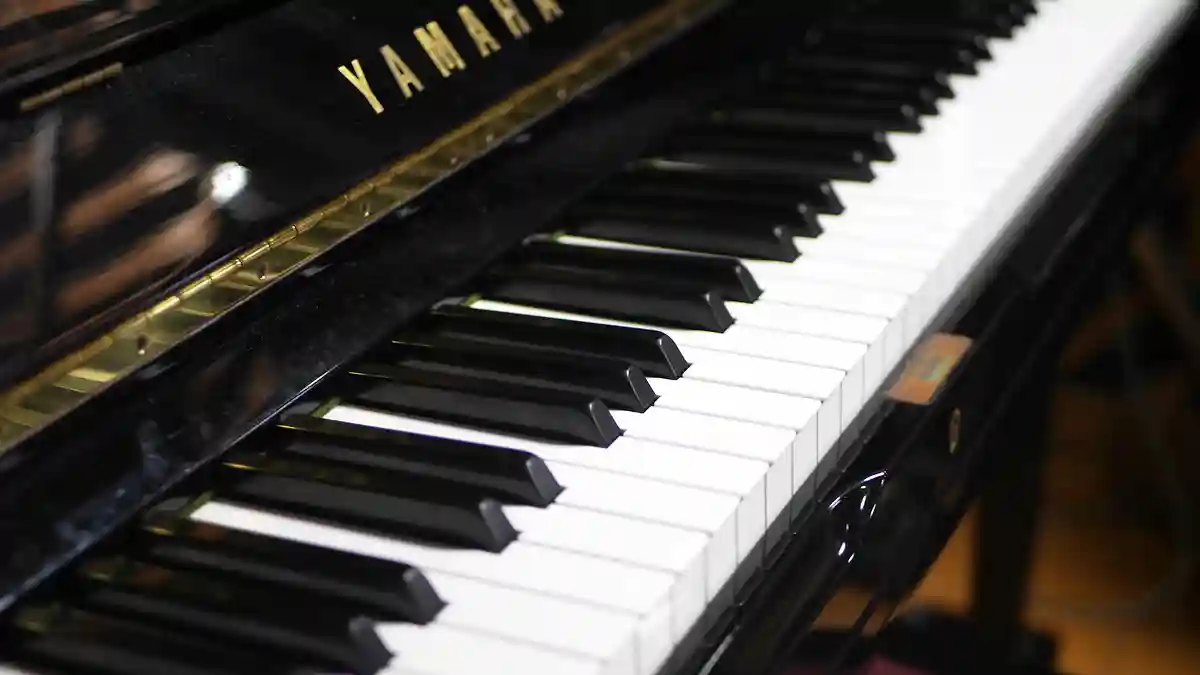

Relaxation is extremely important when playing the piano, but it’s not something you can master easily.
So how can you achieve relaxation? I’d like to share a few tips.
This time, we’ll talk about the “fingertips,” which are the very first thing you need for relaxation.
- [For Piano Beginners] 7 Tips to Move Your Fingers the Way You Want
- Basic fingerings for piano beginners
- [Piano/vocal] Super cool! Recommended songs you can breeze through
- Mastering quintuplets on the piano
- How can a beginner pianist learn to play chords easily?
- Tips for increasing your piano playing techniques
- 5 Tips to Avoid Getting Nervous at a Piano Recital
- Things to check before practicing the piano
- [Must-See for Beginners] How to Start Learning Piano on Your Own: A Clear, Step-by-Step Guide!
- [Piano Etudes] Recommended for Beginners! A Curated Selection of Easy, Playable Pieces
- Three key points beginners should know for singing while playing an instrument
- A must-see for piano beginners! Recommended training videos that are great for basic practice
- [Easy to Play Even If You're Not Good with Both Hands!] Simple piano pieces for absolute beginners. Recommended piano songs.
Introduction
When you play the piano, what do you find to be the most difficult?
Reading sheet music is hard, it takes time, and playing with both hands together is difficult.
Especially when you've just started playing the piano, there are all sorts of things to worry about.
But when I'm teaching my students, the thing I feel is the most difficult is 'relaxation'.
This isn’t something you can pick up instantly just by being told how; it requires quite a bit of patience. But if you keep at it, there will always come a moment when you suddenly feel, “Could this be it?”
If you can relax your muscles, playing the piano becomes much easier—and above all, the resonance of the sound will change!
It’s nothing but good things.
The key to relaxation is your fingertips! How should you use them?
It may surprise you, but it actually starts with training your fingertips.
Because the fingertips are the only parts that actually touch the piano keys, and if your fingertips aren’t firm, you can’t play the piano no matter how much you relax and let the rest of your hand go limp.
Relaxation comes from the fingertips.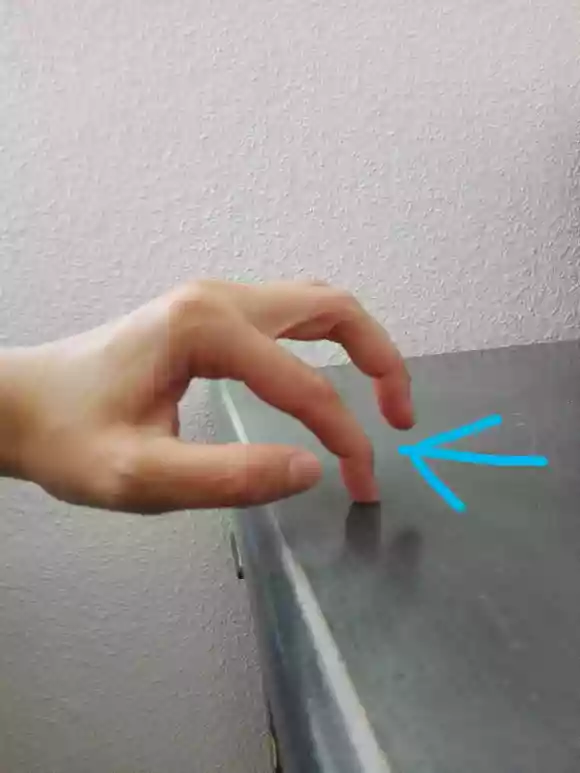
The joint marked with an arrow on the index finger in the photo is very important, and using this joint to play directly leads to playing with the fingertip (imagine using this joint to hook the key with the fingertip).
Keeping those in mind, try playing your own pieces slowly, one hand at a time.
It doesn’t have to be a song, either.
Even just one sound is fine.
Don't forget to change your fingers as well.
Play that trains/strengthens dexterity (finger skills)
Among the beginners, there are many young children, such as kindergarteners and elementary school students.
Here are some playful, finger-based activities—like games—that they can enjoy while training their fingertips.
Of course, adults who’ve gotten bored with piano practice are welcome to use it as a change of pace too (it’s played by two people)!
- Prepare one pencil (if you don't have one, a ballpoint pen or a mechanical pencil is fine. I didn't have a pencil on hand either, so I'm using a mechanical pencil in the photo).
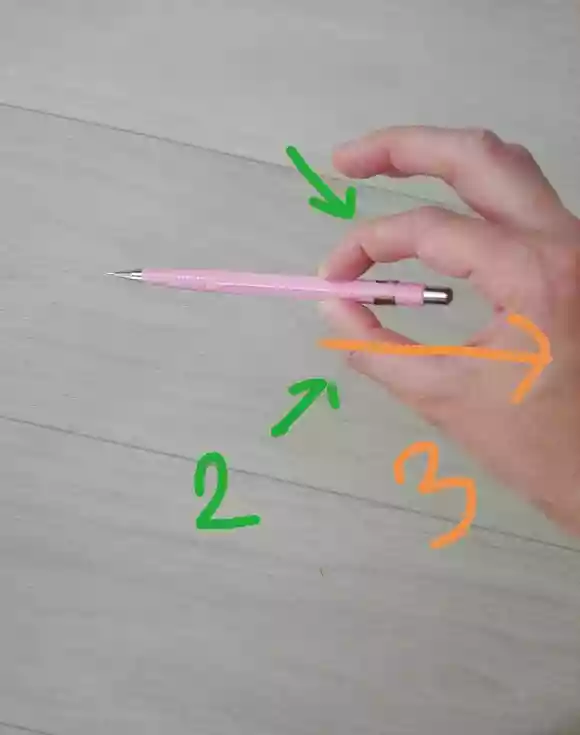
- As indicated in green, hold the pen with the joints we just discussed in mind, as if forming a circle with your index finger and thumb. The other person should hold the opposite end in the same way.
- Pull against your opponent in the direction of the orange arrow. It’s like a fingertip version of tug-of-war. You win if you take the pencil from your opponent!
- Please switch fingers—such as the middle finger and thumb, or the ring finger and thumb—and perform the same action with both your left and right hands.
The important thing is that we do it with the same finger and the same hand as each other.
Please avoid having one person use their right hand and the other their left hand, as that creates too great a handicap.
When playing, please be careful to avoid pricking your hands on the tip of the core or similar parts.
I think that’s how you’re training your fingertips in a playful way with your friends and family!
Summary
I talked a bit, taking a step back from the piano, about how to train the fingertips.
Once you’ve established the fundamentals of the fingertips, you can enter the stage of relaxing the wrist and arm for the first time.
The journey is a long one, but I’d be delighted if you took an interest in relaxation and read on.
See you next time!