

[For Elementary Schools] Recommended Exhibits and Recreational Activities for a Cultural Festival


One of the events elementary school students look forward to is the cultural festival.
Sometimes it’s held under a unique name like “Friendship Festival” or includes the school’s name as in “◯◯ Showcase.”
This article is perfect for an elementary school cultural festival!
It introduces activities and recreations that the whole class can enjoy together.
You’ll find a variety of ideas—from performances you can do in the classroom to recreations suited for larger spaces like the gym or school grounds.
If you’re having trouble deciding on an idea, feel free to use these as a reference.
- [For Kids] Fun Entertainment and Activities to Liven Up a Festival
- Unusual attractions you can do in a classroom for a cultural or school festival
- Cultural Festival: Ranking of Popular Booth Ideas
- [Elementary School Rec] Recommended Games and Performances for a Fun Party
- [Non-food] Cultural festival attractions: from classroom exhibits to stage events
- Games that liven up festivals. Ideas that children can enjoy.
- Performances that liven up an elementary school thank-you party! A collection of ideas everyone can enjoy
- Games that rival street festivals and variety shows!? Crowd-pleasers for school cultural festivals
- A roundup of recreational activities to liven up cultural and school festivals
- Festival booth menu items that can be served without cooking and without using fire
- [For Kids] Today's Recommended Recreation Idea Collection
- [For High School Students] A roundup of recommended attractions for the school festival
- Better than a theme park! Attractions perfect for school cultural festivals
[For Elementary Schools] Recommended Booths and Recreational Activities for Cultural Festivals (21–30)
Target shooting

How about setting up a target-shooting game that makes aiming fun? To do target shooting, you’ll need a shooter and targets.
For the shooter, try making one that can fire rubber bands or plastic bottle caps.
There are various types, like rapid-fire versions, so it could be fun to offer a variety.
As for the targets, try making them out of paper or cardboard.
A mechanism that knocks them down when hit would likely get everyone excited.
You could also add elements that boost the game’s appeal, such as bonuses and special scoring.

Paprika with body percussion

Let me introduce a performance you can do with nothing but your body: body percussion.
Body percussion is a performance where you treat your body like an instrument and keep rhythms to music.
Clap your hands, tap your abdomen, stomp your feet—there’s no set rule for how to create the rhythms, so try coming up with an expression that feels like you.
If you perform it to a popular song, everyone can enjoy it together, making it perfect for a thank-you party.
Performed by a large group, it creates a sense of unity and impact.
If you have the time, consider putting extra thought into vocals, choreography, and formations as well.

portable Shinto shrine (omikoshi)

A school festival is basically a celebration, right? So how about preparing a mikoshi, which is a staple of festivals? If everyone makes the mikoshi together, you’ll grow attached to it and get more enthusiastic.
You could also have multiple classes each make their own mikoshi and show off their unique designs.
And the best part of a mikoshi is carrying it together.
If possible, I’d love for everyone to chant and get lively.
By the way, there are simple mikoshi kits available for purchase online.
Challenge the bamboo dance

Why not try your hand at a bamboo dance that uses long bamboo poles? It originated as a traditional dance in places like the Philippines, but in Japan it’s also well known as a children’s activity.
The operators open and close four bamboo poles to a waltz-like three-beat rhythm, while the dancers step nimbly to avoid getting caught by the poles.
Because coordination between the operators and dancers is crucial, it’s a great recommendation for those looking for a party trick to perform with close friends or classmates.
Start by practicing with two poles, then increase the number once you’ve got the rhythm down.
Having multiple dancers raises the difficulty, but it also adds to the performance’s color and impact.
Double Dutch with two ropes
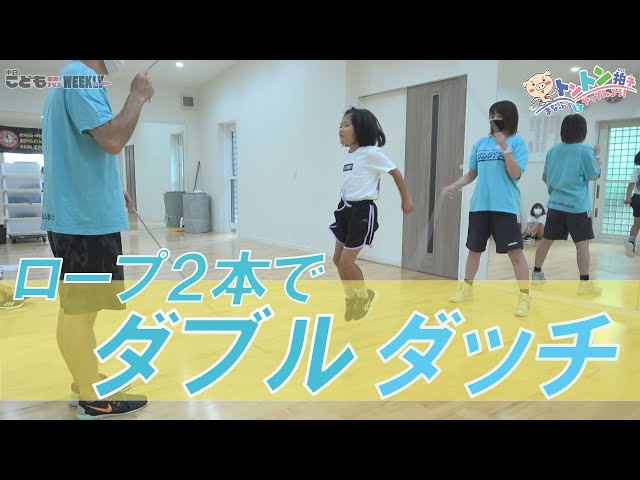
Double Dutch, which uses two ropes, has a different kind of dynamism from regular jump rope and really gets everyone excited! The turners swing each rope from the left and right, and the jumper goes in between, jumps, exits, and can even add tricks.
When entering, keep the rhythm as if you’re reaching to catch the rope, and step into the center between the ropes.
Jump lightly, just like with regular long-rope jumping.
When exiting, if you’ve jumped an odd number of times, exit diagonally opposite from where you entered; if you’ve jumped an even number of times, exit on the same side you entered.
Practice well while being careful not to get injured, and show off your skills!

Kendama performance

A kendama performance that unleashes a variety of tricks in sync with music.
It’s more challenging than simply performing kendama tricks, making it perfect for upper-grade elementary students who, over their long years in school, have learned to do many things.
Of course, kendama skills are essential, but it’s also important to decide which parts of the music each trick will match.
If there are formation changes, you also need to plan where to move and what to do with the kendama at that moment.
Kids who are good at kendama, kids who excel with music and dance—work together to create a single stage performance.
puppet show

One way to present a story is through puppetry.
While it’s similar to theater in that you perform roles, its distinctive feature is literally manipulating puppets while providing the voices.
Another highlight of puppetry is that you can enjoy the process of making the puppets.
Imagining the characters’ appearances from the story and creating the puppets stimulates your imagination.
It also brings out originality, which naturally fosters attachment and will likely make your performance more passionate.
Including the choice of which story to perform, have a lively discussion together.