

[Beginner-Friendly] Rachmaninoff’s Piano Pieces | A Curated Selection of Accessible Works!

Sergei Rachmaninoff, a legendary Russian composer and pianist, left an indelible mark on music history.
Not only were his dynamic performances—emanating from his towering figure of over two meters—remarkable, but his grand-scale works, including his piano concertos, continue to captivate people across generations.
Rachmaninoff’s piano pieces are generally quite difficult, so beginners and intermediate players may find them hard to approach.
However, in this article, we will highlight pieces by Rachmaninoff that are relatively less challenging—works that beginner and intermediate pianists can more easily take on.
While they may not be “easy” if you seek nuanced tone color through touch and deeper expression, you’ll discover a lot by learning to play through a single piece—and you’ll likely find joy in being able to perform it.
If you’re interested in Rachmaninoff’s works, why not give them a try?
- Piano Masterpieces: Surprisingly Easy Despite Sounding Difficult!? A Curated Selection Perfect for Recitals
- [Easier Level] Ravel’s Piano Pieces | A curated selection of easier works you can play smoothly!
- [For Adults] Recommended for Piano Recitals! A Curated Selection of Impressively Sounding Masterpieces
- [Intermediate Level] Cool Piano Pieces You Can Play [Great for Recitals Too]
- Rachmaninoff’s masterpieces. Recommended pieces by Rachmaninoff.
- [For Intermediate Players] Challenge Yourself! Recommended Masterpieces That Shine at Piano Recitals
- [Lower Difficulty] Recommended Piano Pieces by Franz Liszt [Intermediate]
- Lower difficulty: Not as hard as it sounds!? Debussy’s piano pieces
- [For Advanced Players] A Curated Selection of Classical Masterpieces to Tackle at Piano Recitals
- Beginner to Intermediate: Chopin pieces with relatively low difficulty. Recommended works by Chopin.
- [Intermediate Level] A curated selection of piano masterpieces featuring strikingly brilliant melodies!
- For Advanced Players: Showstopping Classics to Play at a Piano Recital
- [Low Difficulty] Recommended Tchaikovsky Piano Pieces [Intermediate]
[Easier] Rachmaninoff’s Piano Pieces | Carefully Selected Works That Are Easy to Tackle! (1–10)
Moments Musicaux, Op. 16 No. 3 in B minorSergei Rachmaninov

Moments musicaux, Op.
16 consists of six improvisatory, free-form pieces.
Among these six works—each brimming with the characteristically wistful lyricism of Sergei Rachmaninoff—No.
3 in B minor is known for being relatively accessible, making it a suitable challenge even for intermediate players.
However, simply placing the notes in order will not convey the depth inherent in this piece.
Perform it with care, savoring each melody line—laden with a heart-wrenching, profound sorrow—and each chord that enfolds it.

Salon Pieces Op. 10 No. 2: WaltzSergei Rachmaninov

Composed between 1893 and 1894, the Salon Pieces, Op.
10 is a collection of piano miniatures imbued with an elegant and refined atmosphere.
While many may associate Sergei Rachmaninoff’s works with a certain complexity, No.
2, “Waltz,” captivates with its clear, accessible character steeped in Romantic charm.
You can also enjoy the occasional Rachmaninoff-like harmonies that peek through, making it an excellent choice for those tackling his music for the first time.
Salon Pieces, Op. 10: No. 3, BarcarolleSergei Rachmaninov

The third piece from the collection Salon Pieces, Op.
10, which comprises seven short works of differing character.
While there are many famous Barcarolles by various composers—such as Frédéric Chopin and Pyotr Ilyich Tchaikovsky—Sergei Rachmaninoff’s Barcarolle stands apart: it is weighty, as though navigating through a storm.
The passages that seem to depict the swell of waves both large and small leave a strong impression.
It could be interesting to compare listening or performance experiences with other barcarolles.
[Easier Level] Rachmaninoff’s Piano Pieces | A Curated Selection of Accessible Works! (11–20)
Piano Concerto No. 2 in C minor, Op. 18, Movement ISergei Rachmaninov
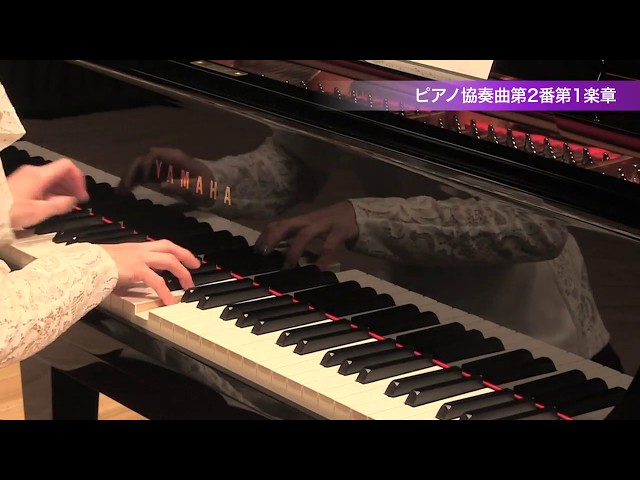
Sergei Rachmaninoff’s Piano Concerto No.
2 in C minor, Op.
18 is a signature piano work frequently heard in a variety of contexts, such as figure skating programs and as insert music in television and film.
Although it is known as an extremely difficult piece, its popularity has led to many published arrangements, so beginners and intermediate pianists can readily try it by choosing a score that suits their level.
In the first movement, the opening section can be performed as written in the original—so give it a try and enjoy playing as if you were performing with an orchestra.
10 Preludes, Op. 23 No. 5 in G minorSergei Rakhmaninov
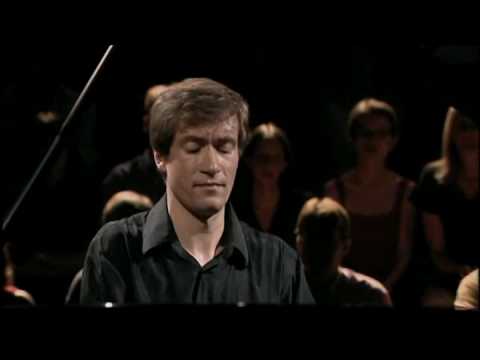
A striking piece marked by the contrast between a powerful, march-like rhythm and gentle lyricism.
In the first half, a tense melody unfolds, evoking the sternness of a military band.
Yet in the latter half, the music suddenly opens into a dreamlike realm with beautiful sonorities.
This ebb and flow of emotion is the work’s greatest allure.
It is a gem in which Rachmaninoff’s profound emotional expression and exceptional virtuosity are seamlessly fused.
To begin, practice slowly, focusing on firmly securing the octaves and chords.
Prelude No. 10 from 10 Preludes, Op. 23 in G-flat majorSergei Rakhmaninov

While it poses a bit of a challenge, it’s a piece well worth tackling.
Composed in 1903, this masterpiece continues to captivate listeners to this day.
A gentle melody emerges from quiet chords, enveloping the listener with a lullaby-like warmth.
In the middle section in particular, chromatic motion and a dialogue between the left and right hands bring out richer expression.
It’s a work Rachmaninoff himself loved, and when performed with feeling, it resonates deeply with the listener.
Highly recommended for those who want to savor the piano’s expressive power or spend a tranquil moment.
Lilac Op. 21-5Sergei Rachmaninov

Sergei Rachmaninoff, a great composer who epitomizes the late Russian Romantic era.
Among his many masterpieces, this is the one I especially recommend for the spring season.
Originally composed around April 1902 as a song, it was later arranged by Rachmaninoff himself for solo piano.
The worldview of the original lyrics—seeking happiness among clusters of lilac blossoms—is exquisitely rendered through the piano’s delicate touch.
The sparkling high register, like petals wet with morning dew, will draw listeners into the joys of spring.
Written during a blissful period just before his marriage, this work is truly perfect for anyone wishing to immerse themselves in an elegant and romantic springtime scene.