

Ranking of Popular Songs by Female Singer-Songwriters of the 1990s [2026]

This is a song list featuring hit and classic tracks by female singer-songwriters from the 1990s.
The 1990s were the era in Japan when music and CDs sold the most, with million-selling records coming one after another.
Alongside massive hits, many highly musical works were also produced that satisfied even dedicated music fans.
- Iconic ballads of 90s J-pop: nostalgic mega-hits and fan favorites
- A roundup of hit love songs from the ’90s
- Top 1980s Female Singer-Songwriters: Popular Songs Ranking [2026]
- Top Female Singer-Songwriters and Popular Songs of the 2000s [2026]
- Classic and hit J-pop songs from the nostalgic ’90s
- Nostalgic Yet Everlasting: Classic Hits by 1990s Idol Singers
- Tear-jerking J-pop from the ’90s. Hit songs and real tearjerkers.
- Cool Japanese female vocal
- Thrilling to Cool Showa-Era Tunes! Classic Songs from Female Singers and Artists of the Showa Period
- Looking back at the gem-like debut songs of female singers who debuted in 1990
- [Healing & Cool] Female Vocalists with Captivating Husky Voices
- A collection of nostalgic hits from the Heisei era: Let’s look back at iconic songs from the 1990s and 2000s.
- A 90s girls' band. A popular Japanese band.
Top Female Singer-Songwriters of the 1990s: Popular Songs Ranking [2026] (21–30)
Between the Sky and YouNakajima Miyuki21rank/position

Miyuki Nakajima is a singer-songwriter who holds the remarkable record of topping the singles chart across four different decades, from the 1970s to the 2000s.
Her 31st single, released as a double A-side with “Fight!,” came out in May 1994 as the theme song for the TV drama “Homeless Child,” which starred Yumi Adachi and became a social phenomenon.
Written from the perspective of the dog that appears in the drama, its sentimental story asks what it means to stand by someone rather than simply pity them.
Woven with her trademark powerful vocals, the number evokes scenes from the drama as you listen.
It’s an emotional song that’s sure to draw attention if you sing it at karaoke.
Jin jin jingle bellMoritaka Chisato22rank/position

A perfect song for the exciting Christmas season was released in December 1995 and quickly captured the hearts of many.
Written and composed by Chisato Moritaka herself, the track enjoyed great popularity, reaching No.
2 on the Oricon charts and No.
1 on CDTV.
It was also used in a commercial for Suntory Ice Gin, making it beloved across generations.
With a melody that epitomizes winter, it’s ideal for decorating for Christmas or adding sparkle to a special day with someone dear.
The clear vocals and lively tune are sure to warm your heart even in the cold season.
Every time you play it, it will make you look forward to the night of the 24th.
Even when I become an old ladyMoritaka Chisato23rank/position

Chisato Moritaka, who released numerous hit songs in partnership with composer Hideo Saito, is best known for one representative track: “Even If I Become an Old Lady.” It’s a song that even those who aren’t die-hard Moritaka fans can hum along to, with the distinctive accessibility of the ’80s and ’90s.
Covered by artists like misono and Nozomi Tsuji, it truly is a timeless classic passed down through the eras.
With this song, dads can have a blast singing karaoke together with their kids.
Also pay attention to the buoyant digital sound that was once dubbed Japanese Eurobeat!
Tonight is a Hearty PartyTakeuchi Mariya24rank/position

A classic yet fresh masterpiece by singer-songwriter Mariya Takeuchi, this smash-hit number truly lives up to its name as a party song.
Released in November 1995 as her 25th single, it’s packed with irresistible charm: its brisk rhythm and catchy pop melody are guaranteed to put listeners in a great mood.
It was also featured in Kentucky Fried Chicken’s Christmas campaign commercial, helping it become a beloved holiday staple.
The lyrics even include the phrase “Kimutaku,” and in a playful twist, Takuya Kimura himself performs the spoken line.
This track is perfect as background music for fun times with friends or for a Christmas party.
I can’t wait until ChristmasWatanabe Misato25rank/position
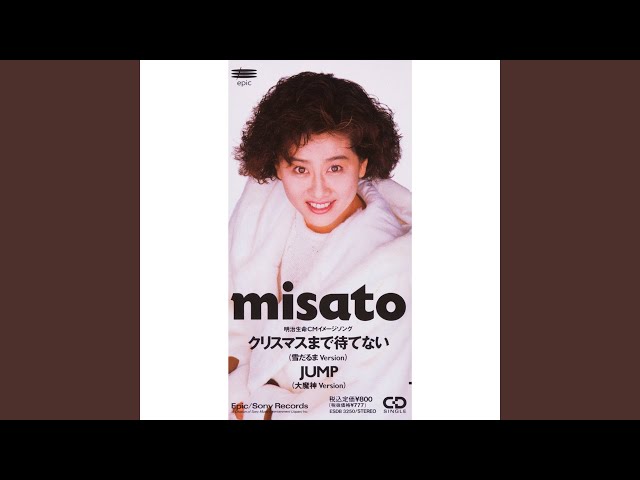
Misato Watanabe made her name known with the hit of her signature song, “My Revolution.” Known for her powerful vocal ability, she released “I Can’t Wait Until Christmas” in 1991.
Set at a winter ski resort, it tells the love story of two people.
The lyrics, filled with the desire to be happy with the one you love even before Christmas arrives, convey a sense of pure, innocent affection.
It’s a number that hints at the beginning of a passionate romance strong enough to blow away the winter chill.

The Boy Is MineBrandy&Monica26rank/position

A defining, searingly passionate R&B duet of the ’90s.
In this number, American singers Brandy and Monica spar over a single man, each declaring “He’s mine,” unleashing an energy that rivals the heat of summer.
Their vocal back-and-forth vividly captures the thrill of romantic gamesmanship and their unyielding emotions, pulling listeners straight into the heart of the drama.
Released in May 1998, the song appeared as a single from Brandy’s album “Never Say Never” and Monica’s album “The Boy Is Mine,” and it set a record by holding the No.
1 spot on the U.S.
charts for 13 consecutive weeks.
The music video also received high acclaim, winning at the Billboard Music Video Awards.
Perfect for amping up a summer drive or party, it’s a must for anyone craving dramatic R&B.
CountdownCocco27rank/position

This was Cocco’s striking major-label debut single, released in March 1997, and it’s also included on the album “Bougainvillea.” Twenty years after its release, in 2017, it became known for being performed on television for the first time on Music Station.
The lyrics depict the final moments of a man and woman whose love and hate have reached the extreme.
Set to a tense sound that feels like a countdown to ruin has begun, the protagonist’s raging emotions, as they force the other person to make an ultimate choice, are sure to shake listeners to their core.
On nights when you feel overwhelmed by inescapably complex emotions, it might be nice to immerse yourself in this one-of-a-kind world.
Movin’ on without youUtada Hikaru28rank/position

This is Hikaru Utada’s second single, released in February 1999 while the shock of her debut had yet to fade.
Set to an up-tempo dance sound, the mature lyrical worldview—unbelievable for a 15-year-old—once again left the public in awe.
The lyrics depict a firm resolve to end a relationship and set out alone.
The faint sorrow that seeps through beneath that bold attitude is the part that tightens your chest.
The song was a lead single from the classic album First Love and became her first Oricon No.
1 hit.
It was also well known as a Nissan commercial song.
The Talent for LoveKawamoto Makoto29rank/position

The debut song produced by the eccentric Yasuyuki Okamura brings out a rhythmic, up-tempo, and uniquely charming vibe.
Being able to present one’s own style so decisively right from the start surely speaks to real talent.
A Midsummer Night’s DreamMatsutōya Yumi30rank/position

Singer-songwriter Yumi Matsutoya, who topped album sales in six consecutive decades from the 1970s through the 2020s and continues to evolve her musical style, remains a defining figure.
Her 24th single, “A Midsummer Night’s Dream,” used as the theme song for the TV drama “Darenimo Ienai” (Can’t Tell Anyone), became her first million-selling single and a major hit.
Its passionate lyrics and melody, carried by a Latin beat, still feel fresh and timeless today.
It’s a signature song of Yumi Matsutoya that colored 1993 alongside the drama.
