

Bartók Béla Popular Song Ranking [2026]

Béla Bartók was a classical musician who worked energetically, including researching folk music rooted in regions stretching from Eastern Europe all the way to Algeria in Africa.
He is known both as a piano teacher inheriting the musical traditions of countries like Germany and Austria, and for collecting and analyzing folk music as an academic discipline (ethnomusicology).
This time, we present a ranking of Bartók’s popular pieces—why not immerse yourself in music that is Western yet deeply traditional?
- A masterpiece by Franz Liszt. Popular classical music.
- Arnold Schönberg Popular Songs Ranking [2026]
- Elgar’s masterpiece. Popular classical music.
- Jean Sibelius Popular Songs Ranking [2026]
- Bedřich Smetana Popular Songs Ranking [2026]
- César Franck Popular Songs Ranking [2026]
- Mily Balakirev Popular Songs Ranking [2026]
- John Cage Popular Song Ranking [2026]
- Olivier Messiaen Popular Songs Ranking [2026]
- Dmitri Kabalevsky Popular Song Rankings [2026]
- Johann Burgmüller Popular Song Rankings [2026]
- Dmitri Shostakovich Popular Songs Ranking [2026]
- Pablo de Sarasate Popular Song Rankings [2026]
Bartók Béla Popular Songs Ranking [2026] (11–20)
No. 153 from Mikrokosmos: Six Dances in Bulgarian RhythmBartók Béla15rank/position
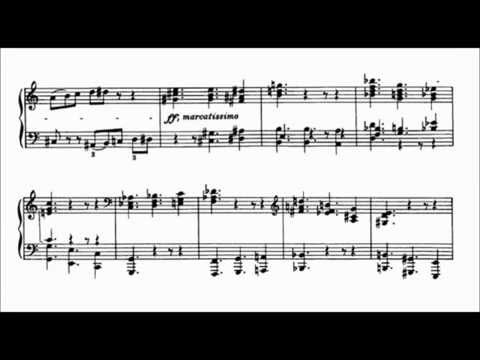
An upbeat and cool piece for solo piano, packing a 3+3+2 rhythmic structure and an unforgettable melody into just over a minute and a half—simple yet filled with a mysterious sense of exhilaration.
It’s the very last piece in the etude collection called “Mikrokosmos.”
Romanian Folk DancesBartók Béla16rank/position

Bartók, a Hungarian composer who epitomizes the 20th century, displayed his talent as a pianist from an early age and eventually immersed himself in the study of folk music.
His Romanian Folk Dances, composed in 1915, is a piano suite of six pieces based on Romanian folk songs from the Transylvania region.
Vividly depicting the characteristics of folk dance, this work ambitiously weaves Romanian folk elements into the framework of Western music.
Its irregular rhythms, modes, and strikingly simple melodies are especially memorable.
It’s highly recommended not only for those interested in folk music, but also for piano learners, as it is popular as a study piece.
For Children, Volume I, No. 1: “Children at Play”Bartók Béla17rank/position

One piece from Bartók’s piano collection For Children, composed between 1908 and 1909, “Children at Play,” is characterized by a lively, cheerful melody based on Hungarian folk songs.
It portrays children’s innocence and energy, and serves as an educational work through which performers can learn elements and techniques of folk music.
Combining artistry with approachability, this piece is an ideal choice for children learning the piano.
OutdoorsBartók Béla18rank/position

Bartók, the Hungarian composer who epitomizes the 20th century.
Among his vast body of work, one collection that continues to captivate many is the piano suite Out of Doors.
In this work, five evocative scenes brimming with exotic color are skillfully painted in sound.
Its striking rhythms and sonorities fire the listener’s imagination: the vigor of With Drums and Pipes, the elegance of the Barcarolla, the incisiveness of the Musettes, the mystery of The Night’s Music, and the urgency of The Chase.
These masterful pieces, suffused with Bartók’s distinctive harmonies and pianism, achieve a splendid fusion of Western art music and Hungarian folk tradition.
Their originality and artistic depth are sure to enchant not only classical music aficionados but music lovers of every stripe.
Funeral March BB 31Bartók Béla19rank/position

Béla Bartók, one of the leading composers of the 20th century born in Hungary, emerged as a notable pianist from an early age while establishing his unique musical voice through the study of folk music.
The “Funeral March” from Bartók’s early symphonic poem Kossuth, composed in 1903, is known as a work that expresses his patriotism and political convictions.
Dedicated to Lajos Kossuth, a hero of the Hungarian independence movement, the piece shows the influence of Liszt and Strauss while already hinting at Bartók’s distinctive, folk-inspired musical language.
It is a highly recommended piece for anyone interested in the richly national Hungarian sound.
Dance of the SwineherdBartók Béla20rank/position

Motivated by Hungarian folk dances from the album For Children, this piece is one that especially highlights a boy’s cool, striking presence when performed.
The combination of lively, rhythmic keystrokes and a bouncy melody captivates the audience every time it’s played.
Although originally released in 1908 as an educational piano work, it also possesses a stage-ready brilliance and dynamism.
Because it is based on dances actually performed in rural Hungary, rhythm and expressiveness are essential.
It’s an ideal piece for a boy who has just awakened to the charm of the piano to cultivate his musicality through performance.
Bartók Béla Popular Songs Ranking [2026] (21–30)
stomping danceBartók Béla21rank/position

Béla Bartók, the great Hungarian composer.
Active from the 1900s to the 1930s, he gained popularity for his musical style that incorporated folk music.
At first he focused on Eastern European folk music, but in his later years he also engaged with African music.
His “Foot-Stomping Dance” is a piece based on Romanian folk music, finished with an Arabian flavor.
The notes are easy even for beginners, so if you want to impress with a romantic piece, be sure to give it a try.
