

Bartók Béla Popular Song Ranking [2026]

Béla Bartók was a classical musician who worked energetically, including researching folk music rooted in regions stretching from Eastern Europe all the way to Algeria in Africa.
He is known both as a piano teacher inheriting the musical traditions of countries like Germany and Austria, and for collecting and analyzing folk music as an academic discipline (ethnomusicology).
This time, we present a ranking of Bartók’s popular pieces—why not immerse yourself in music that is Western yet deeply traditional?
- A masterpiece by Franz Liszt. Popular classical music.
- Arnold Schönberg Popular Songs Ranking [2026]
- Elgar’s masterpiece. Popular classical music.
- Jean Sibelius Popular Songs Ranking [2026]
- Bedřich Smetana Popular Songs Ranking [2026]
- César Franck Popular Songs Ranking [2026]
- Mily Balakirev Popular Songs Ranking [2026]
- John Cage Popular Song Ranking [2026]
- Olivier Messiaen Popular Songs Ranking [2026]
- Dmitri Kabalevsky Popular Song Rankings [2026]
- Johann Burgmüller Popular Song Rankings [2026]
- Dmitri Shostakovich Popular Songs Ranking [2026]
- Pablo de Sarasate Popular Song Rankings [2026]
Bartók Béla Popular Songs Ranking [2026] (21–30)
Romanian Folk DancesBartók Béla22rank/position

A dance for piano, a piece meant for dancing.
In this set of Romanian Dances, No.
6 in particular is lively and energetic.
With its light, quick rhythm, you’d have to be quite energetic to dance to it.
I’ve heard it was also used on the TV show “Before After.”
Four Piano Pieces, BB 27Bartók Béla23rank/position
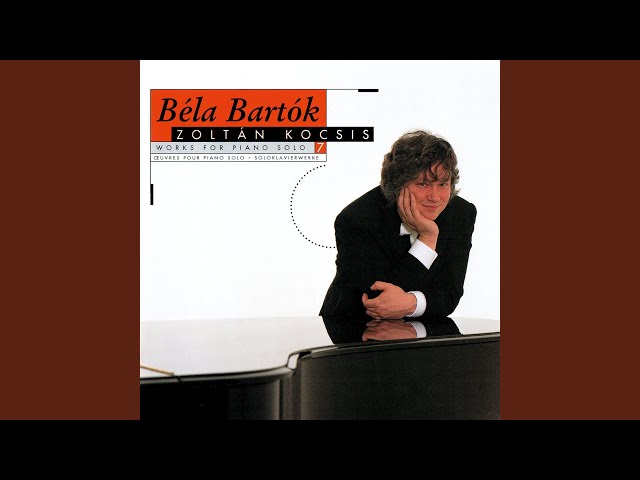
Béla Bartók, the great 20th-century composer born in Hungary.
From childhood he showed talent as a pianist and, through his research into folk music, established a distinctive style.
Composed in 1903, Four Piano Pieces, BB 27 is a collection brimming with the young Bartók’s diverse musical ideas.
Beginning with an etude for the left hand, followed by a Fantasia and a Scherzo, each piece has its own character.
In every work, Bartók’s characteristic sense of harmony and rhythms reminiscent of Hungarian folk songs leave a strong impression.
Although the set demands advanced technique, its passionate, profound expression is deeply compelling.
It’s a thrilling collection that suggests new possibilities for piano music.
Scherzo (Fantasy)Bartók Béla24rank/position

Béla Bartók, a leading composer of the 20th century and also a folklorist, wrote Scherzo (Fantasia) as one of his early works.
While tinged with a Romantic hue, it conveys a sense of rhythmic tension and the influence of folk music.
Comprising three sections, the piece showcases Bartók’s characteristic sense of tonality, intricate rhythms, and masterful orchestration throughout, vividly reflecting his musical exploration and maturation.
It is a distinguished work that highlights Bartók’s uniqueness—an essential listen for any classical music enthusiast.
Sonatina BB 69 Sz 55Bartók Béla25rank/position

Béla Bartók, one of the great composers of the 20th century born in Hungary.
He was active as a pianist from a young age and later became known for his deep immersion in ethnomusicological research.
This piece is a solo piano work that Bartók composed under strong influence from Romanian folk music, featuring unique elements that imitate the sound of bagpipes and the growl of a bear.
The difficulty level is not high, so why not enjoy performing it while savoring its distinctive, richly folkloric melodies? It is also recommended for those who wish to experience a sense of exoticism through music.
Romanian Folk Dances: Fast DanceBartók Béla26rank/position
This piece is one of the six short works in Béla Bartók’s Romanian Folk Dances, based on Romanian folk music.
Its highly original musicality and distinctive scales make it perfect for a recital stage where you want to wow the audience with a striking performance! All six pieces are extremely intriguing, so be sure to give them a listen.
It’s wonderful—and fun—that we can hear the regional dances of the time through the piano works the composer left behind.
If you play while imagining what the dances were like and what costumes they wore, your performance will likely become even more expressive.

Suite Op.14 BB 70 Sz 62Bartók Béla27rank/position

Composed in 1916 by the great Hungarian composer Béla Bartók, the Suite, Op.
14 is a four-movement piano suite that weaves in influences from Romanian and Arabic music.
From the rhythmically driven first movement, which exploits the piano’s percussive qualities, to the second movement employing an unusual twelve-tone technique, it is a typically bold Bartók work.
Though it demands advanced performance technique, its richly folkloric colors and unique musical ideas make it a must-hear piece for classical music fans.