We introduce the masterpieces of Franz Liszt, who was born in Hungary and was active across Europe, including Germany and Austria.
From the works of Liszt—renowned as a pianist and also a composer for famous pieces such as La Campanella and Liebesträume—we present recommended and representative masterpieces, including not only piano works but also symphonic pieces performed by orchestra.
Please enjoy the many wonderful masterpieces by this composer, known as the “Magician of the Piano” for the anecdote that he could sight-read and master any piece.
Franz Liszt’s masterpieces. Popular classical music (1–10)
Concert Paraphrase on RigolettoNEW!Franz Liszt
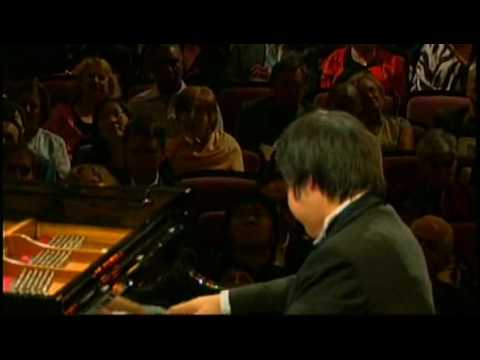
Nobuyuki Tsujii plays Liszt’s Rigoletto, Paraphrase de concert, S434
Highly recommended for those who want to showcase advanced technique and expressive power at a piano recital is the Concert Paraphrase on the Quartet from Act III of Verdi’s opera Rigoletto.
Published around 1860, this piece is renowned as a representative example of Liszt’s art of transcription.
It recreates, on a single piano, the complex structure in which the emotions of four characters intersect, in a vividly three-dimensional manner.
Blending beautiful melody with dazzling virtuosity, it demands delicate control of tone color and a vocal, cantabile approach.
It is a dramatic and compelling masterpiece suited not merely to agile fingers, but to performers with rich musicality and the expressive power to evoke the opera’s scenes.
Mephisto Waltz No. 1 (The Dance in the Village Inn), S.514Franz Liszt
Liszt – Mephisto Waltz No. 1, S. 514 [André Laplante]
Franz Liszt, a composer representing the Romantic era, was born in the Kingdom of Hungary of the Austrian Empire on October 22, 1811.
He made his performance debut at age nine and became so popular across Europe that the phenomenon was called “Lisztomania.” This work was composed under the inspiration of the poet Nikolaus Lenau’s epic poem Faust and depicts a scene in a tavern where peasants gather.
The opening chords built on stacked fifths are striking, showcasing Liszt’s innovative harmonic sensibility.
With the high level of technical difficulty and wide expressive range characteristic of the man known as the “magician of the piano,” it has become an important repertoire piece for pianists to demonstrate their prowess.
Grandes études de Paganini No. 3 in G-sharp minor “La Campanella,” S.141/3, R.3bFranz Liszt
Nobuyuki Tsujii - Liszt: Paganini Étude No. 3, La Campanella (2009 Van Cliburn International Piano Competition) [WIDE]
Completed in 1851, this piece is based on the third movement of Paganini’s Violin Concerto No.
2.
Franz Liszt, a leading composer of the Romantic era, was inspired by Paganini’s performances and resolved to become “the Paganini of the piano.” The result was this very work.
Its bell-like high-register sonorities leave a strong impression, and it pushes piano virtuosity to the extreme.
With leaps spanning as much as a fifteenth, it is a formidable piece that tests a performer’s skill.
It’s recommended not only for classical music enthusiasts but also for those interested in the possibilities of piano performance.
Each listening reveals something new—an exhilarating piece that sets the heart dancing.
Fountains of the Villa d’Este, No. 4 from Années de pèlerinage, Third Year, S.163/R.10eFranz Liszt
Liszt: Années de pèlerinage, Third Year, S.163 No. 4 “Les jeux d’eaux à la Villa d’Este”
This is a work composed in the late years of Franz Liszt, renowned as a master of the Romantic era.
It takes as its subject the fountains of the Villa d’Este in Italy, expressing the flow of water and the play of reflected light through delicate arpeggios.
Written shortly before his death in 1886, the piece showcases Liszt’s consummate artistry and is said to have influenced later Impressionist music.
With a performance time of about 7 minutes and 30 seconds, its tranquil yet richly expressive character makes it ideal for moments when you wish to calm the mind.
Although technically demanding, its beautiful melodies that evoke the movement of water are sure to captivate not only classical music enthusiasts but a broader audience as well.
Franz Liszt Symphonic Poem “Les Préludes” — Karajan/Philharmonia Orchestra
This is a symphonic poem by Franz Liszt, known as the magician of the piano.
Liszt studied music in Vienna, made his performance debut at the age of nine, and later gained such popularity on concert tours across Europe that it was dubbed “Lisztomania.” This work is a symphonic poem based on Shakespeare’s Hamlet, expressing Hamlet’s inner conflicts and the drama among the characters through music.
Although completed in 1858, it did not receive its premiere until July 2, 1876, eighteen years later.
Liszt’s symphonic poems are intended to depict stories and images through music, making full use of the power of the full orchestra.
It is recommended for those interested in music inspired by literary works.
Kissin Liszt Spanish Rhapsody – Liszt Rhapsodie Espagnole – Evgeny Kissin
Franz Liszt, born in 1811 in Hungary, was known as a virtuoso pianist and was called the “magician of the piano.” This work is a dazzling piece that incorporates the allure of Spanish music and was completed in 1845.
It strongly reflects elements of flamenco and the folia, combining rhythmic dance sections with lyrical passages.
Technically demanding, it calls for Liszt’s signature brilliant performance techniques.
The piece conveys impressions from Liszt’s visit to Spain during his performance tours, expressing an understanding of and respect for a different culture.
It is recommended not only for classical music enthusiasts but also for anyone who wants to enjoy passionate music.
“Consolation,” No. 3 from Three Concert Études, S.144/R.5Franz Liszt
Hamelin plays Liszt – Un Sospiro [HIGH QUALITY]
A collection of piano pieces dedicated to List’s younger uncle, Eduard.
It consists of three pieces titled “Sorrow,” “Lightness,” and “Sighs.” Among them, the third piece, “Sighs,” is especially notable for its graceful, romantic melody and wide-ranging arpeggios.