

A masterpiece by Franz Liszt. Popular classical music.

We introduce the masterpieces of Franz Liszt, who was born in Hungary and was active across Europe, including Germany and Austria.
From the works of Liszt—renowned as a pianist and also a composer for famous pieces such as La Campanella and Liebesträume—we present recommended and representative masterpieces, including not only piano works but also symphonic pieces performed by orchestra.
Please enjoy the many wonderful masterpieces by this composer, known as the “Magician of the Piano” for the anecdote that he could sight-read and master any piece.
- Franz Liszt Popular Song Ranking [2026]
- [Masterpiece Classics] A special showcase of gem-like masterpieces so beautiful they’ll move you to tears
- Brahms's masterpieces. Popular classical music.
- Gabriel Fauré | Introduction to His Famous and Representative Works
- Popular classical piano pieces. A collection of masterful performances by Japanese pianists.
- Robert Schumann | Introduction to his famous and representative works
- Dvořák’s masterpiece. Popular classical music.
- [Violin] A curated selection of beloved classic masterpieces and popular pieces that continue to be cherished across eras
- A poignant classic masterpiece. Recommended classical music.
- Sibelius’s famous piece. Popular classical music.
- Jacques Ibert Popular Song Ranking [2026]
- A masterpiece by Richard Strauss. Popular classical music.
- Masterpieces by Franz Schubert: Sparkling classical works left by the King of Song. Recommended classical music.
Franz Liszt’s masterpieces. Popular classical music (1–10)
Traveler’s Album Part I: Impressions and Poems “Psalms”NEW!Franz Liszt

Composed based on travel experiences in Switzerland in the late 1830s, this short piece closes Part I of the complete edition published in October 1842.
It is built on a hymn melody by a 16th-century composer and exudes a calm, meditative atmosphere.
Unlike brilliant works that demand flashy virtuosity, it is characterized by prayerful, gentle chords and a beautiful melody.
Because the technical hurdles are relatively low, it is an ideal piece for those looking to take a small step up and challenge themselves with deeper expressiveness.
Imagine the solemn, pure tone that resonates through a church, and play carefully with inward emotion.
Traveler’s Album Part II: The Blossoms of Alpine Melodies 7c. Allegro pastoraleNEW!Franz Liszt

“7c.
Allegro pastorale,” included in Part II, “Flowers of the Alps,” of the piano collection Album d’un voyageur, is said to depict in music Franz Liszt’s experiences and the natural scenery he encountered while traveling through Switzerland.
It appears in one of his early collections published in Paris in 1840, and it later served as the prototype for the third piece of the celebrated Années de pèlerinage, Première Année: Suisse.
With a pastoral character and a light sense of forward motion, the piece calls less for transcendental virtuosity than for nuanced control and cantabile phrasing.
Cherish a transparent sonority and flexible breathing of tempo as you spin a simple melody that evokes the nature of the Alps.
Poetic and Religious Harmonies No. 2 “Ave Maria”NEW!Franz Liszt

Published in 1853 as the second piece of the large piano cycle Harmonies poétiques et religieuses, this work is a quiet, profound music of prayer that emerged as Liszt transcribed his choral piece of the same name for solo piano.
Rather than dazzling technique, it calls for sustained legato, resonant harmonies, and a vocal, devotional character to be realized at the keyboard.
Among Liszt’s works, which are famed for transcendental virtuosity, it is relatively approachable, yet it demands the expressive power to suggest the words of prayer on a textless instrument.
It is a hidden gem, perfect for those seeking inner depth or wishing to encounter a different side of Liszt.
Franz Liszt’s masterpieces: Popular classical music (11–20)
G minor – Molto agitato, No. 6 from the 48 Etudes for Practice in All Major and Minor KeysNEW!Franz Liszt

This solo piano piece was composed by the 15-year-old Franz Liszt in 1826 as part of his grand plan for a set of 48 etudes.
Its appeal lies in a dramatic character that conveys youthful, restless energy and the raw tension unique to minor keys.
Compared to his later monumental works, the score is relatively simple and concise, making it perfect for those who want to take a step up into a more passionate sound world.
While it demands a fast tempo and intense emotional shifts, don’t let it become mere finger exercise—let the feelings welling up from your heart resonate fully through the sound!
F major – Allegro sempre legato, No. 3 from 48 Etudes for the Practice of All Major and Minor KeysNEW!Franz Liszt

A beautiful étude in F major with a bright, gentle resonance, published in 1826.
It is included in the album Étude en douze exercices, S.136, a set of twelve pieces that would later develop into the Transcendental Études.
For a work by Franz Liszt, its performance time is relatively short at about two minutes and thirty seconds, but it is a miniature rich in lyricism that goes far beyond mere finger exercises.
Rather than sharp attacks or flashy leaps, it calls for continuous, singing phrasing that keeps the melody connected.
It’s the perfect piece for those who want to refine their sense of smooth legato before tackling works that demand dazzling technique.
Try to keep the tone soft while maintaining finger independence as you play.
E-flat major – Allegro grazioso, No. 9 from 48 Exercises for the Practice of All Major and Minor KeysNEW!Franz Liszt
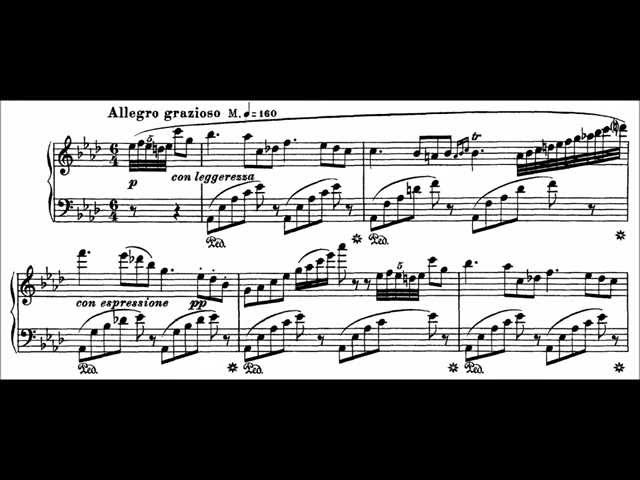
Etude No.
9 from Franz Liszt’s early set composed in 1826 is a significant milestone that foreshadows his later masterpieces.
Marked by flowing, graceful melodies and an improvisatory sense of timing, its warm sonority in A-flat major creates a romantic atmosphere.
Rich with elements for refining expression—such as delicate right-hand ornamentation and flexible tempo—it offers deep musicality that goes far beyond mere finger exercise.
It’s an ideal piece for those who wish to let a singing melody shine rather than showcase flashy technique.
Be mindful of pedal usage and the shifting harmonies as you savor the dreamlike world painted by the young genius.
Hungarian Rhapsody No. 17NEW!Franz Liszt

This is a late work by Franz Liszt, composed in 1884.
Unlike his earlier rhapsodies, which are often bold and flamboyant, it exudes a concise, shadowed, and distinctive atmosphere.
While it retains the contrast between slow and fast sections, the stripped-down ornamentation and highly concentrated development are striking.
Folk-inflected sonorities meld beautifully with Liszt’s characteristic introspective expression, packing a complex aesthetic into a short duration.
Even if you’re not yet ready for the large-scale works that demand transcendental virtuosity, this is a piece I highly recommend to anyone wishing to experience the depth of Liszt’s unique musicality.
Try performing it while savoring the nuances of tone.