


Robert Schumann | Introduction to his famous and representative works

Composer Robert Schumann, regarded as a romantic successor to Beethoven and Schubert, left works across a wide range of genres, from symphonies to choral music.
His output has so far been particularly noted for piano pieces and lieder.
Skillfully blending both Classical and Romantic styles, he produced many lyrical, romantic works unlike those of any other composer.
Here, we’ve picked out some of Schumann’s masterpieces and signature pieces.
Be sure to listen to Schumann’s works, which left a profound influence on later composers.
Robert Schumann | Introducing Famous and Representative Works (1–10)
KreislerianaRobert Schumann
Composed in just four days in 1838, this work is a fantasy for solo piano consisting of eight movements.
It is named after Johannes Kreisler, the fictional conductor created by E.T.A.
Hoffmann.
The music expresses emotions that sway between fierce passion and calm, joy and sorrow, symbolizing Schumann’s own duality.
It also reflects his feelings for his beloved Clara and presents a unique world that showcases Schumann’s creativity and innovation.
Exemplifying the essence of Romantic music, this piece is highly recommended for anyone wishing to savor Schumann’s art.
Piano Concerto in A minorRobert Schumann
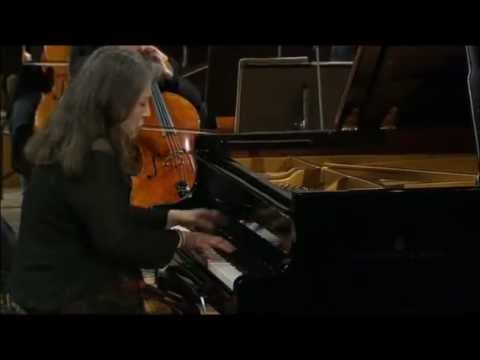
Schumann’s only piano concerto.
The first movement begins with a plaintive oboe melody right from the opening and flows at an overall unhurried pace.
The second movement is marked by a very charming staccato motif.
The third movement is in a stately triple meter, and the piece culminates with the piano and percussion building to a rousing conclusion.
It is still widely performed today and stands as one of Schumann’s masterpieces, combining lyricism with expressive power.
Symphony No. 1 in B-flat major “Spring”Robert Schumann

Composed between January and February 1841, this is Schumann’s first symphony.
It was premiered by the Leipzig Gewandhaus Orchestra under the baton of Mendelssohn.
The subtitle “Spring” is said to have been taken from the first image that came to the composer’s mind after writing the piece.
Characterized by rich harmonies and lyrical melodies, it is a work that audiences find approachable.
Scenes from ChildhoodRobert Schumann

It is one of the representative piano pieces composed by Schumann.
Among them, No.
7, “Träumerei,” is especially renowned and has been featured in many contexts.
It is said that he completed the piece under the lingering influence of a line from a letter to his wife, Clara: “At times you seem like a child.”
Adagio and AllegroRobert Schumann

Composed in 1849, this work for horn and piano is divided into two parts—Adagio and Allegro—each showcasing a different character.
With a very wide range, it is a challenging piece for horn players.
It is a popular piece that is also often performed on cello, oboe, or viola.
Piano Quintet in E-flat majorRobert Schumann

A chamber work composed by Schumann in 1842.
Scored for the novel combination of piano and string quartet, it showcases Schumann’s Romantic sensibility to the fullest.
From the powerful, radiant first movement and the poignantly tinged second, to the lively third and the brilliant finale, the piece displays a wide range of expression.
Dedicated to his wife Clara, it is also said to have been sight-read by Mendelssohn.
A masterpiece brimming with emotional depth and poetic beauty, it captures the very essence of Romantic music.
Symphony No. 4 in D minorRobert Schumann

This is Schumann’s last symphony, presented as a gift for his wife Clara’s 22nd birthday.
It was composed in 1841 and was the second to be written in order, but because its revised version was published later than the others, it came to be designated as Symphony No.
4.
The four movements are performed without a break, and the entire work forms a large, single movement centered on the theme of the first movement.