

Pick up Beethoven’s famous and representative works!

Ludwig van Beethoven created innovative music that served as a bridge from the Classical to the Romantic era, leaving a profound influence on later generations.
His music is passionate yet rich in beautiful melodies, and it conveys a sense of essential depth, as if pursuing things to their very core.
There are many masterpieces that everyone has heard at least once, such as “Fate” (Symphony No.
5) and “Für Elise.”
In this article, we’ve picked out some of Beethoven’s famous and representative works.
Why not immerse yourself in the music of Beethoven, one of the great composers?
[Beethoven] Pick Up His Famous and Representative Pieces! (1–10)
Piano Sonata No. 26, Op. 81a “Les Adieux” First MovementNEW!Ludwig van Beethoven
A towering work in the classical repertoire, Piano Sonata No.
26 in E-flat major, Op.
81a “Les Adieux,” First Movement.
Composed against the backdrop of Archduke Rudolph—Beethoven’s patron—having fled during the French army’s invasion of Vienna in May 1809, the piece assigns the syllables “Le-be-wohl,” meaning “farewell,” to the three chords heard in the opening Adagio, imprinting the music with profound anxiety and hesitation over parting.
In the Allegro’s main section, surging emotions unfold with dynamic rhythms, demanding not only technical command but also a deeply psychological approach.
It is a masterpiece highly recommended for those who wish to further broaden their expressive range.
Piano Sonata No. 17, Op. 31 No. 2 “Tempest,” First MovementNEW!Ludwig van Beethoven

Among piano sonatas, Ludwig van Beethoven’s Piano Sonata No.
17 in D minor, Op.
31, No.
2 “Tempest,” First Movement, possesses a uniquely tense atmosphere.
Published around 1803, this work captivates with its inner conflicts and dramatic developments that transcend the Classical framework.
Its structure, alternating between stillness and impulse, gives the impression of repeated questioning and eruption.
It demands control over expressive depth and subtle tempo fluctuations, making it ideal not only for technical mastery but also for those wishing to deepen their musical interpretation.
It is a masterpiece whose impact matches its difficulty, so be sure to check it out.
Piano Sonata No. 26, Op. 81a “Les Adieux” Third MovementNEW!Ludwig van Beethoven

The third movement of Ludwig van Beethoven’s masterpiece, Piano Sonata No.
26, Op.
81a.
Composed between 1809 and 1810, this work depicts the joy of reunion with someone once separated.
From the outset, rapid passages and leaping figures brilliantly convey the exhilaration of meeting again.
The overall difficulty is extremely high, demanding fast, even touch and clear articulation.
It’s not just about playing quickly; expressing the emotion of joy with natural breathing and a sense of structure is essential.
This piece is perfect for those who want to make an overwhelming impression at a recital.
Give it a try.
Turkish March from the incidental music for the play The Ruins of AthensNEW!Ludwig van Beethoven

An exotic march by Ludwig van Beethoven that conjures up the image of soldiers approaching in step from afar.
Composed in February 1812 as incidental music for the play The Ruins of Athens, written for the public occasion of opening a theater in Hungary.
Its brilliant, dignified melody—at once bright and buoyant in rhythm yet imbued with strength—leaves a strong impression.
The dramatic arc, beginning softly and gradually building in power, makes it a perfect piece for upper elementary school children whose expressive abilities are rapidly blossoming.
Keep a steady tempo with the left hand, and play the right hand accurately so the notes don’t tumble, aiming to convey a resolute character.
Violin Sonata No. 9 “Kreutzer”Ludwig van Beethoven
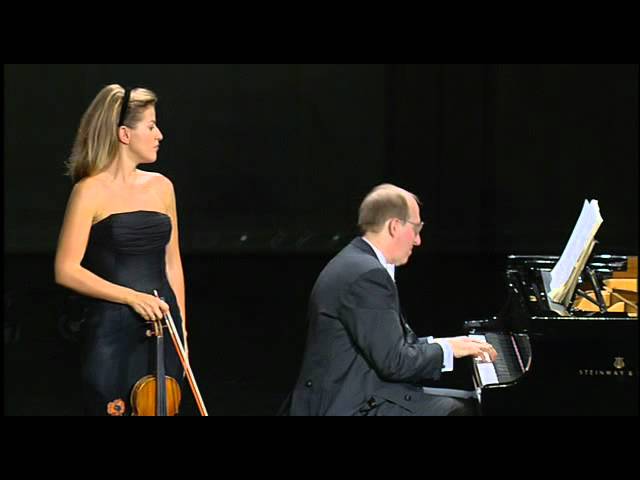
It is called “Kreutzer” because it was dedicated to the French composer and violinist Rodolphe Kreutzer.
It is as popular as the violin sonata “Spring.” It is said to have been written several years after he lost his hearing.
Symphony No. 5 in C minor, Op. 67 “Fate”Ludwig van Beethoven

When it comes to Beethoven’s music, this is probably the first piece that comes to mind for many people.
It didn’t originally have the title “Fate”; it was added later because Beethoven himself described the opening motif as “fate knocking at the door.” Comprising four movements, it begins with a passage that evokes a slight sense of fear and unease, and concludes with a bright and resplendent tone that conveys a feeling of hope.
Piano Concerto No. 5 “Emperor”Ludwig van Beethoven

Among Beethoven’s piano concertos, this grand work boasts the greatest scale in both performance length and instrumentation.
Though the title “Emperor” was not given by Beethoven himself, it feels apt given the music’s stately character and majestic structure.
It remains one of his most frequently performed and highly popular works today.