

Pick up Beethoven’s famous and representative works!

Ludwig van Beethoven created innovative music that served as a bridge from the Classical to the Romantic era, leaving a profound influence on later generations.
His music is passionate yet rich in beautiful melodies, and it conveys a sense of essential depth, as if pursuing things to their very core.
There are many masterpieces that everyone has heard at least once, such as “Fate” (Symphony No.
5) and “Für Elise.”
In this article, we’ve picked out some of Beethoven’s famous and representative works.
Why not immerse yourself in the music of Beethoven, one of the great composers?
- Mozart: An Introduction to His Signature and Popular Works
- Classical music by Japanese composers. Recommended classical music.
- Timelessly beautiful classical masterpieces. Recommended classical music.
- Cool classical masterpieces. Recommended classical music.
- [For Piano Recitals] Simple yet Cool Classical Pieces
- [Masterpiece Classics] A special showcase of gem-like masterpieces so beautiful they’ll move you to tears
- Debussy’s masterpiece. Popular classical music.
- Beethoven: A selection of gem-like masterpieces that are easy to play on the piano
- [Tchaikovsky] Pick up famous and representative pieces!
- Masterpieces by Franz Schubert: Sparkling classical works left by the King of Song. Recommended classical music.
- [Orchestra] Introducing famous and popular pieces
- J.S. Bach | Introducing Famous and Representative Works
- [Violin] A curated selection of beloved classic masterpieces and popular pieces that continue to be cherished across eras
[Beethoven] A selection of famous and representative works! (141–150)
Christ on the Mount of OlivesLudwig van Beethoven

This is an oratorio by Germany’s universally known musical titan, Ludwig van Beethoven.
Yet it is rarely performed and remains little known.
The work portrays Christ’s prayer on the Mount of Olives and his subsequent arrest; it was composed in 1803 and premiered in Vienna.
At the same concert of Beethoven’s own works, what would later become his landmark pieces—the First and Second Symphonies and the Third Piano Concerto—also received their premieres.
At the time, however, it was this oratorio that achieved success.
When it was revived in 1825, Beethoven’s conversation books note that each revival played to full houses, indicating how warmly it was received by contemporary audiences.
It is an oratorio I recommend, offering insight into Beethoven’s tastes and the trends among listeners of his day.
Sonatina No. 5, 1st MovementLudwig van Beethoven

Sonatina No.
5, composed by Beethoven between 1796 and 1798.
The first movement, written in sonata form in C minor, contrasts forceful phrases with quiet ones and is built on distinctive rhythms and melodies.
The juxtaposition of short, fragmentary motifs with long, lyrical lines heightens its dynamic, impulsive effect.
This work is one of the representative pieces of Beethoven’s early period and an energetic composition that foreshadows his later Pathetique Sonata and Fifth Symphony.
It is known as an important part of the piano learner’s repertoire, so consider taking it on for competitions.
Sonatina No. 5, Movement I in G majorLudwig van Beethoven

The piece Sonatina No.
5, 1st movement is a popular choice for recitals and is well known as a Beethoven work suitable for beginners to intermediate players.
It follows an A-BA-BA-C form, and the most challenging section is the A part.
When finishing each phrase and moving to the next, the rebound can cause the sound to become too strong.
Because of this, you must always be mindful of keeping your fingers relaxed.
If you pay attention to the nuance and dynamics in the concluding C part, the piece will really shine—give it a try.

Sonatine No. 5, Movement II in G majorLudwig van Beethoven

Beethoven’s famous piece, Sonatina No.
5, Second Movement.
Written in 6/8 time and structured in an AA–BA–BA–C form, it’s suitable for beginners to intermediate players.
The way it’s perceived changes greatly depending on how well you convey the sense of meter.
By firmly placing the weight on the first note of each measure, the pulse becomes stronger—keep that in mind.
Other sections aren’t particularly difficult, so it’s recommended for beginners who want to develop their sense of rhythm.
Be sure to check it out.
Sonatina No. 6, Movement I in G majorLudwig van Beethoven

The piece known as Sonatina No.
6, said to have been composed by Beethoven in his youth.
This time, we’ve selected the first movement.
It’s a lively work that requires a certain level of finger dexterity, but in reality it’s not particularly difficult; if you use slurs and staccatos appropriately, even beginners can play it without trouble.
If anything, memorization is the harder part.
Be sure to study the score carefully and practice while deepening your understanding.
Sonatina No. 6, Movement IILudwig van Beethoven

Beethoven’s famous piece “Sonatina No.
6, Movement II,” written in rondo form.
Like the first movement, its structure is somewhat complex, but the performance difficulty is low, and it is frequently played at piano recitals.
Although it isn’t particularly challenging overall, pedal control and staccato can be tricky spots.
Bringing out clear contrasts in the sound will make the piece shine.
The ending also calls for a degree of improvisatory feeling, making it recommended for beginners who want to enjoy learning the piano.
Cello Sonata No. 3 in A major, Op. 69Ludwig van Beethoven
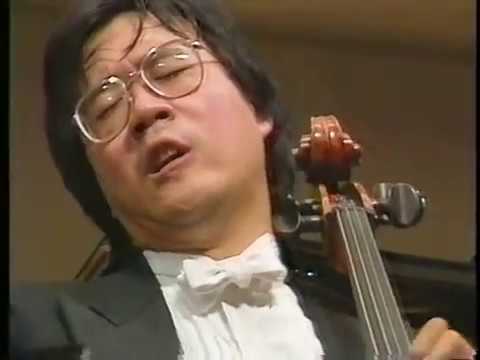
Cello Sonata No.
3, Op.
69 from the collection of cello sonatas composed by Ludwig van Beethoven.
The set consists of Sonatas Nos.
1 through 5, and this third sonata is the most famous.
Hailed as a masterpiece often called the “New Testament of the cello,” it is considered an essential repertoire piece for many cellists.
Minuet in CLudwig van Beethoven

A piece everyone has heard at least once: “Minuet in G.” While the melody is famous, the title isn’t widely known by the general public.
Written in 3/4 time, it has no specific tempo marking, but it’s commonly performed at a lively pace.
It follows an A-A-B-A form, so once you can play the A section, you’ve essentially mastered half the piece.
Since the B section differs greatly in character from the A section, aim for a natural transition when moving between them.
Violin Sonata No. 5 “Spring”Ludwig van Beethoven
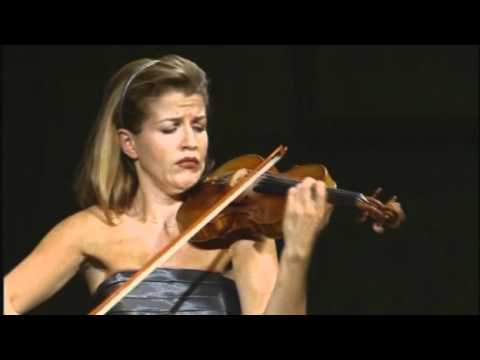
Next, let me introduce a famous violin masterpiece by the “Saint of Music,” Beethoven.
Even those not very familiar with classical music may have heard this violin sonata somewhere at least once.
It remains beloved today and is performed as one of the greatest masterpieces for violin.
Violin Concerto in D major, Op. 61Ludwig van Beethoven

Ludwig van Beethoven, a German composer known as one of the most important musicians in history.
He is extremely famous in Japan as well.
While the fact that he was deaf often draws attention, Beethoven’s true appeal lies above all in his flawless compositions, which can be called the culmination of Classical-era music.
His Violin Concerto is one of his most popular works for the instrument and has been performed by many renowned violinists up to the present day.