

J.S. Bach | Introducing Famous and Representative Works

The songs that are popular today—across not only classical music but also pop and jazz—are deeply influenced by past composers.
Among them, classical music is often called the foundation of music, and it’s no exaggeration to say that Johann Sebastian Bach, known as the “Father of Music,” was one of the figures who laid that very groundwork.
Bach’s music, while carrying a religious hue, is characterized by philosophical depth and intricately refined structure down to the finest details, with melodies of exceptional beauty.
Please take a look into the world of Johann Sebastian Bach, one of the greatest composers in history.
J.S. Bach | Introducing Famous and Representative Works (1–10)
Goldberg Variations, BWV 988J.S.Bach
Johann Sebastian Bach, a composer who epitomizes the Baroque era.
Known as the “father of music,” he composed this set of variations in 1741.
Written for a two-manual harpsichord, the work consists of an aria and 30 variations, each variation structured in two sections with repeats.
Every third variation employs a canon, with the interval progressively widening—a distinctive feature.
Bach’s fascination with mathematics and numerology is evident throughout, ensuring the listener never grows weary.
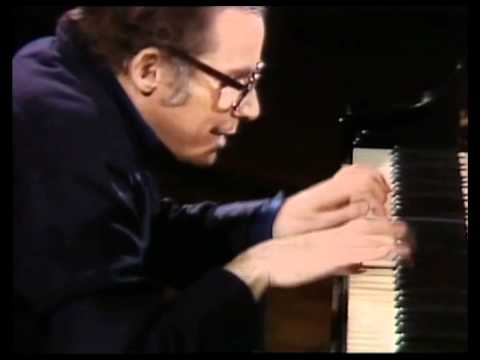
Performances on the piano are just as common as on the harpsichord, and Glenn Gould’s 1955 recording greatly contributed to the work’s popularity.
Highly recommended for anyone interested in Bach’s music.
Little Fugue in G minorJ.S.Bach

This work is a masterpiece in which a complex structure—seemingly gathering the very essence of Baroque music—fuses with beautiful melody.
Employing the form of a fugue, it develops a single subject through repeated entries across various voices, as if we were listening to a dialogue of sounds.
While grounded in a minor key, the sound world woven through masterful counterpoint draws the listener in.
Believed to have been composed between 1703 and 1717, this piece—where Bach’s technique and creativity come to full fruition—possesses a universal appeal and is a work that powerfully conveys Bach’s genius.
St Matthew Passion, BWV 244J.S.Bach
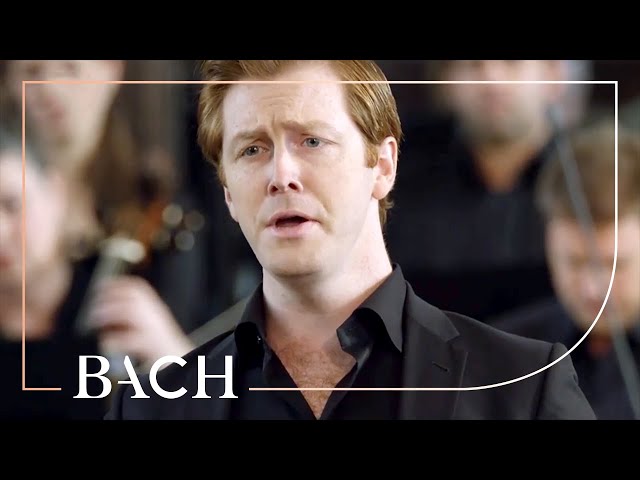
Johann Sebastian Bach’s masterpiece, the St Matthew Passion, is a monumental work depicting the Passion of Christ.
Based particularly on the Gospel according to Matthew, it is constructed from scriptural passages, accompanied recitatives, arias, and more, creating profound emotion through its rich musicality.
Premiered in April 1727, the work fell into obscurity after Bach’s death, but was revived in 1829 by Mendelssohn, prompting its reappraisal.
While treating a religious subject, it brilliantly expresses human emotions and inner conflicts.
Concerto for Two Violins in D minor, BWV 1043J.S.Bach

A concerto for two violins composed by Johann Sebastian Bach around 1730.
It was written for the Collegium Musicum in Leipzig, where Bach served as music director.
The work is characterized by a structure in which the two violins engage in an equal dialogue; the second movement in particular, with its graceful and deeply expressive melody, is beloved by many.
Consisting of three movements, the first features a fugue-like theme that recurs throughout, while the third unfolds with rapid, energetic development.
Showcasing Bach’s masterful counterpoint, this piece is recommended not only for classical music enthusiasts but also for those interested in musical structure.
It continues to be cherished by many performers and orchestras today.
Mass in B minor, BWV 232J.S.Bach

Johann Sebastian Bach’s Mass in B minor, a work he devoted his life to creating, is a monumental piece that can be called the culmination of his sacred music.
Believed to have been completed around 1749, it follows the Catholic Mass structure while incorporating Lutheran interpretation, resulting in a distinctive expression.
Bach’s contrapuntal mastery is on full display, beautifully fusing rigorous formal elegance with profound religious sentiment.
Born of Bach’s deep faith and musical genius, the work radiates a universal appeal that resonates through prayer and praise to God.
It’s highly recommended not only for those interested in classical music but also for anyone wishing to experience the depth of sacred music.
Polonaise, No. 2 from Orchestral Suite No. 2 in B minor, BWV 1067J.S.Bach
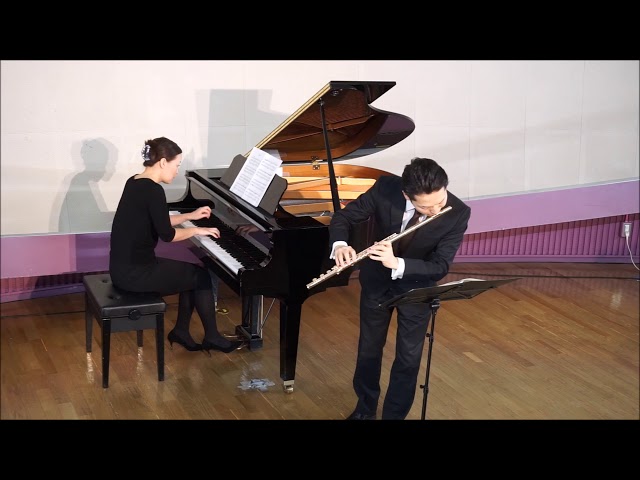
A work by Johann Sebastian Bach, a towering and indispensable figure in the history of classical music, in which the flute plays a gracefully prominent role.
The contrast between the stately triple-meter stride and the later variations, where the flute’s delicate, agile virtuosity comes to the fore, is particularly captivating.
Its taut yet refined elegance in B minor and its inward brilliance are fully showcased, revealing a balanced beauty the more you listen.
This noble, beautiful melody is perfect for those who want to leisurely enjoy a cup of tea on a quiet holiday afternoon!
Toccata and Fugue in D minor, BWV 565J.S.Bach

An organ work composed by Johann Sebastian Bach.
You’ve probably heard its opening melody at least once.
A hallmark of Baroque music, this piece overwhelms listeners with its two-part structure: a powerful toccata followed by a meticulously crafted fugue.
The organ’s majestic resonance filling a church can feel like hearing the voice of God.
Yet, for a Bach composition, its structure is unusually simple, leading some to suggest it might be by another composer.
There’s also a theory that it was originally written for violin and later arranged for organ, making it a masterpiece shrouded in mystery.
Be sure to listen to this work, a classic that stands out in music history.