

J.S. Bach | Introducing Famous and Representative Works

The songs that are popular today—across not only classical music but also pop and jazz—are deeply influenced by past composers.
Among them, classical music is often called the foundation of music, and it’s no exaggeration to say that Johann Sebastian Bach, known as the “Father of Music,” was one of the figures who laid that very groundwork.
Bach’s music, while carrying a religious hue, is characterized by philosophical depth and intricately refined structure down to the finest details, with melodies of exceptional beauty.
Please take a look into the world of Johann Sebastian Bach, one of the greatest composers in history.
- J.S. Bach | Introducing Famous and Representative Works
- J.S. Bach Popular Songs Ranking [2026]
- [Masterpiece Classics] A special showcase of gem-like masterpieces so beautiful they’ll move you to tears
- Handel’s Masterpieces | A Comprehensive Introduction to His Popular Works
- [Baroque Music] A Curated Selection of Timeless Masterpieces and Famous Works
- Vivaldi’s masterpiece. Popular classical music.
- Today's Classics: Recommended classical music and great performances to listen to today
- Popular classical piano pieces. A collection of masterful performances by Japanese pianists.
- Cool classical masterpieces. Recommended classical music.
- [Quartet] Masterpieces and Popular Pieces for String Quartet
- François Couperin Popular Songs Ranking [2026]
- Masterpieces of Ballet Music: Introducing Classic Favorites
- Pick up Beethoven’s famous and representative works!
J.S. Bach | Introducing Famous and Representative Works (11–20)
Cantata “My Heart Is Full of Sorrow,” BWV 21J.S.Bach

A cantata composed by Johann Sebastian Bach around 1713.
Depicting profound spiritual anguish and its overcoming, the work is in two parts and consists of eleven movements.
The first part, quoting words from the Psalms, expresses the sufferings of life and a sense of loneliness as if abandoned by God.
The second part portrays salvation through God’s mercy, and beautifully captures the moment of healing from suffering, notably through a duet for soprano and bass.
It is regarded as one of the most grandiose among Bach’s early cantatas, skillfully rendering in music the psychological drama that moves from anguish to redemption.
Chaconne, the 5th movement from Violin Partita No. 2 in D minor, BWV 1004, for solo violinJ.S.Bach

Among the works Bach left for solo violin, this piece is one of the most famous.
The Partita No.
2 consists of five movements, the last of which is the Chaconne.
Spanning about 15 minutes, this monumental movement boasts striking melodies, compelling development, and superb architecture, and it can be regarded as one of the greatest masterpieces of the Baroque era.
From the dark, mournful tone in D minor to passages in D major filled with hope, its rich musical expression captivates the listener.
Technically demanding, it is a piece many violinists aspire to play.
Johannes Brahms and Ferruccio Busoni arranged it for solo piano as well, and those versions are also wonderful—do give them a listen.
St John Passion, BWV 245J.S.Bach
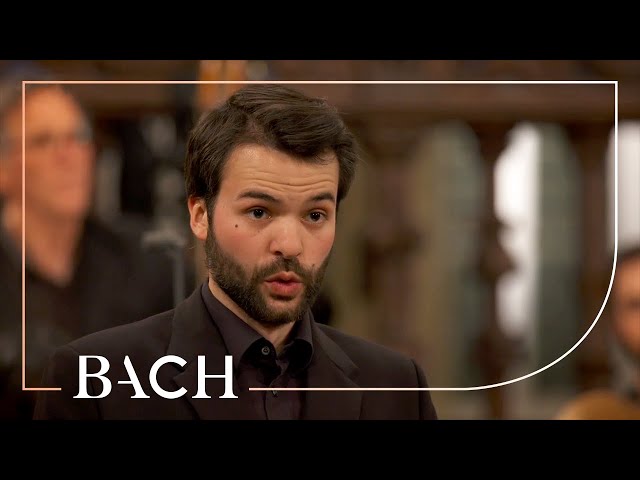
Alongside the St.
Matthew Passion, this work is equally beloved.
The tenor, called the Evangelist, narrates the story while reciting passages from the Bible.
Since it tells the story of Jesus’s Passion, it’s a piece I highly recommend listening to while following along with the text.
Italian Concerto in F major, BWV 971J.S.Bach

A work for solo harpsichord composed by Johann Sebastian Bach and published as part of the Clavier-Übung II.
It is characterized by vividness and lightness influenced by the Italian concerto form.
Consisting of three movements, each presents a distinct musical character.
Through indications of forte and piano, it imitates the contrasting instrumental groups of a concerto, realized by using a two-manual harpsichord.
Popular even during Bach’s lifetime, it was praised by the critic Scheibe as “the greatest and finest concerto to be played on a single instrument.” Its bright and lively melodies, beautiful lyricism, and brilliant rhythms are captivating; it is widely performed on piano and harpsichord and is so popular that it is often arranged for other instruments as well.
Brandenburg Concerto No. 5, BWV 1050J.S.Bach

Composed around 1720 by Johann Sebastian Bach, this work is groundbreaking in the way it brings the harpsichord to the fore as a solo instrument.
The Brandenburg Concertos comprise six pieces, and among them, the Fifth features the flute and violin as solo instruments as well, making it particularly striking even within the set.
The bright, courtly atmosphere of the first movement, the melancholic mood of the second, and the resplendent return in the third movement unfold as if expressing the joys and sorrows of life.
Showcasing Bach’s musical genius and originality to the fullest, this piece is highly recommended for anyone wishing to savor classical music more deeply.
Chromatic Fantasia and Fugue in D minorJ.S.Bach

The chromatic fugue subject defines the character of the entire piece.
The sections where you can freely vary the tempo are where the performer can really showcase their skill.
Because it uses chromaticism, it exudes an overall strange and mysterious atmosphere.
Bach himself also used this piece for lessons.
J.S. Bach | Introducing Famous and Representative Works (21–30)
Chorale Prelude “Wachet auf, ruft uns die Stimme,” BWV 645J.S.Bach
This is an arrangement for organ of the famous chorale that appears as the fourth movement in the cantata of the same name, “Wachet auf, ruft uns die Stimme,” BWV 140.
It is well known as the first piece in the collection of organ chorales known as the Schübler Chorales, and it is cherished as a model for composing organ chorales.