

Pick up Beethoven’s famous and representative works!

Ludwig van Beethoven created innovative music that served as a bridge from the Classical to the Romantic era, leaving a profound influence on later generations.
His music is passionate yet rich in beautiful melodies, and it conveys a sense of essential depth, as if pursuing things to their very core.
There are many masterpieces that everyone has heard at least once, such as “Fate” (Symphony No.
5) and “Für Elise.”
In this article, we’ve picked out some of Beethoven’s famous and representative works.
Why not immerse yourself in the music of Beethoven, one of the great composers?
- Mozart: An Introduction to His Signature and Popular Works
- Classical music by Japanese composers. Recommended classical music.
- Timelessly beautiful classical masterpieces. Recommended classical music.
- Cool classical masterpieces. Recommended classical music.
- [For Piano Recitals] Simple yet Cool Classical Pieces
- [Masterpiece Classics] A special showcase of gem-like masterpieces so beautiful they’ll move you to tears
- Beethoven: A selection of gem-like masterpieces that are easy to play on the piano
- [Orchestra] Introducing famous and popular pieces
- [Violin] A curated selection of beloved classic masterpieces and popular pieces that continue to be cherished across eras
- Debussy’s masterpiece. Popular classical music.
- Masterpieces by Franz Schubert: Sparkling classical works left by the King of Song. Recommended classical music.
- J.S. Bach | Introducing Famous and Representative Works
- [Tchaikovsky] Pick up famous and representative pieces!
[Beethoven] Pick Up His Famous and Representative Pieces! (1–10)
Allegro and Minuet, Movement I: Allegro con brioLudwig van Beethoven

The first movement of Ludwig van Beethoven’s duets, a beloved and rare chamber-music scoring complete with just two flutes.
While drawing on the instrument’s lightness and agility, this masterpiece conveys forward drive by passing around short motifs.
It was composed in August 1792, just before Beethoven moved from Bonn to Vienna.
It was not published during his lifetime; instead, it was passed down through an autograph manuscript bearing a dedication to a friend.
Rather than dazzling virtuosity, the work emphasizes a well-synchronized dialogue between the two players and a pure, refined tone, making it ideal for those who want to savor the poised ensemble style of the Classical era.
Allegro and Minuet, Movement 2: Minuet assai, AllegrettoLudwig van Beethoven

The second movement, “Allegro and Minuet in G major, WoO 26,” is a duet said to have been composed by Ludwig van Beethoven in August 1792.
Written for two flutes, this warm piece is believed to have been a gift from the young composer to a close friend.
Within the light, graceful triple-time dance, the way the two flutes exchange melodies as if side by side is truly captivating.
Rather than dazzling virtuosity, it calls for tightly synchronized, pure harmonies, allowing one to fully savor the beauty of the ensemble.
It’s a piece I especially recommend to those who wish to be soothed by the flute’s characteristically clear and bright timbre.
Für EliseLudwig van Beethoven

The piece that is commonly recognized as being written by Beethoven for a woman named Elise is actually said to have been for a woman named Therese.
Beethoven’s handwriting was so messy that the transcriber apparently misread it as ‘Elise.’ For those learning piano, it’s surely a piece you’d want to try playing at least once.
It’s a simple yet beautiful composition.
[Beethoven] A Selection of Famous and Representative Works (11–20)
Piano Sonata “Les Adieux” No. 26, Op. 81aLudwig van Beethoven

The piece weaves in the story of Beethoven’s friend, Archduke Rudolph, who fled Vienna to avoid the invasion by Napoleon’s army.
The title “Les Adieux” (“Farewell”) was given by Beethoven himself.
Each movement has a subtitle: the first is “Farewell,” the second “Absence,” and the third “Return.”
Symphony No. 6 in F major, Op. 68 “Pastoral”Ludwig van Beethoven

Beethoven’s Symphony “Pastoral,” completed in 1808, is a masterpiece that expresses love and reverence for nature through music.
Comprising five movements, it vividly depicts the tranquility and beauty of the countryside and scenes from nature.
Particularly notable is the second movement, with string motifs that imitate flowing water and woodwind timbres that evoke the songs of the nightingale, quail, and cuckoo.
The fourth movement offers a strikingly realistic portrayal of a thunderstorm, overwhelming the listener.
The work embodies Beethoven’s desire for a peaceful state of mind amid nature.
Highly recommended for those who wish to experience the beauty of nature through music.
Symphony No. 9 in D minor, Op. 125 “Choral”Ludwig van Beethoven
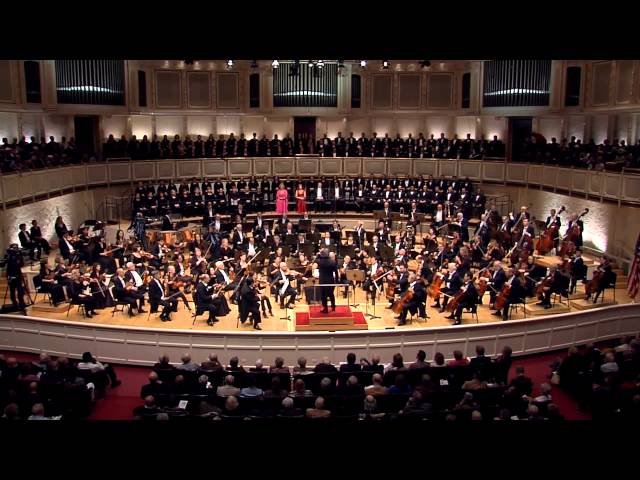
Beethoven’s Symphony No.
9, composed in his later years, is one of the most famous works in the history of music.
It is widely known as the “Ninth.” Among its four movements, the “Ode to Joy” sung in the fourth movement is truly overwhelming.
Many people may have heard just this choral section.
Based on a poem by Schiller, the lyrics carry a universal message that celebrates human love and harmony, continuing to move people’s hearts to this day.
By the time of its premiere in Vienna in May 1824, Beethoven had already lost his hearing.
Even so, his passion for music never waned, and he created this masterpiece, which remains beloved to this day.
Piano Sonata No. 23 in F minor, Op. 57 “Appassionata”Ludwig van Beethoven

It is such a monumental work that it is often counted among Beethoven’s three great piano sonatas, and it is also considered the finest of his piano sonatas.
As the title suggests, from beginning to end it is entirely passionate—a piece that evokes the image of flames blazing and roaring.