

Pick up Beethoven’s famous and representative works!

Ludwig van Beethoven created innovative music that served as a bridge from the Classical to the Romantic era, leaving a profound influence on later generations.
His music is passionate yet rich in beautiful melodies, and it conveys a sense of essential depth, as if pursuing things to their very core.
There are many masterpieces that everyone has heard at least once, such as “Fate” (Symphony No.
5) and “Für Elise.”
In this article, we’ve picked out some of Beethoven’s famous and representative works.
Why not immerse yourself in the music of Beethoven, one of the great composers?
- Mozart: An Introduction to His Signature and Popular Works
- Classical music by Japanese composers. Recommended classical music.
- Timelessly beautiful classical masterpieces. Recommended classical music.
- Cool classical masterpieces. Recommended classical music.
- [For Piano Recitals] Simple yet Cool Classical Pieces
- [Masterpiece Classics] A special showcase of gem-like masterpieces so beautiful they’ll move you to tears
- Beethoven: A selection of gem-like masterpieces that are easy to play on the piano
- [Orchestra] Introducing famous and popular pieces
- [Violin] A curated selection of beloved classic masterpieces and popular pieces that continue to be cherished across eras
- Debussy’s masterpiece. Popular classical music.
- Masterpieces by Franz Schubert: Sparkling classical works left by the King of Song. Recommended classical music.
- J.S. Bach | Introducing Famous and Representative Works
- [Tchaikovsky] Pick up famous and representative pieces!
[Beethoven] Picking Up Masterpieces and Signature Works! (21–30)
Piano Sonata No. 32 in C minor, Op. 111Ludwig van Beethoven

This work, Beethoven’s final piano sonata, consists of two contrasting movements.
The first movement is intense and passionate, expressing inner conflict.
In contrast, the second movement begins with a serene theme and, with each variation, ascends to profound spirituality.
Completed in 1822, the piece is a masterpiece that can be called the culmination of Beethoven’s creative output.
Its innovative expression, transcending traditional forms, had a significant impact on later musicians.
It’s a highly recommended piece for those who wish to experience life’s struggles and spiritual heights through music.
Horn Sonata in F major, Op. 17Ludwig van Beethoven

The duo for horn and piano that Beethoven composed in 1800 was written for the celebrated horn player Giovanni Punto.
The premiere by Beethoven and Punto took place on April 18, 1800, in Vienna.
Consisting of three movements, it emphasizes performance techniques that make use of the horn’s natural harmonics.
The first movement is swift and powerful, the second has a serene atmosphere, and the third is bright and rhythmic.
The work beautifully fuses the horn’s sonorous timbre with Beethoven’s virtuosic musical expression, making it highly recommended for those who want to savor the charm of the horn and the pleasures of chamber music.
String Quartet No. 14 in C-sharp minor, Op. 131Ludwig van Beethoven

Beethoven’s String Quartet No.
14 in C-sharp minor, Op.
131, composed in 1826, is a masterpiece from his final years.
Although it consists of seven movements, it has a distinctive form in which they are performed continuously without pause.
From the desolate melody of the first movement, through the bright and lively theme of the second, to the powerful, march-like character of the final movement, Beethoven’s creativity and innovation are on full display.
Schubert is said to have remarked upon hearing it, “After this, what is left for us to write?” Its profound expression and structural ingenuity continue to move many listeners even today.
Piano Sonata No. 30 in E major, Op. 109Ludwig van Beethoven

Beethoven’s late work, Piano Sonata No.
30, is beloved by many renowned pianists for its profound musicality and technical demands.
Comprising three movements, it offers a wide range of expression: a fantastical, flexible first movement; a resolute second movement; and a third movement built on a theme with six variations.
Completed in 1820, it was not readily accepted by audiences of the time, but today it is cherished by many music lovers and performers as a masterpiece.
It’s a highly recommended piece for those who wish to experience Beethoven’s creativity and innovation.
Piano Sonata No. 21 in C major, Op. 53 “Waldstein”Ludwig van Beethoven

Composed between 1803 and 1804, this work is a masterpiece representing his middle period.
It was dedicated to Count Ferdinand von Waldstein, which is why it is known as the “Waldstein.” With a powerful and passionate first movement, a brief second movement of emotional depth, and a bright, dynamic third movement, it is an innovative piece that opened new horizons in piano music.
Although Beethoven was already troubled by declining hearing at the time, his passion for music never waned, and one can sense the strong will with which he overcame adversity.
It is a highly recommended piece for anyone interested in the development of piano music.
Symphony No. 5 in C minor, Op. 67Ludwig van Beethoven
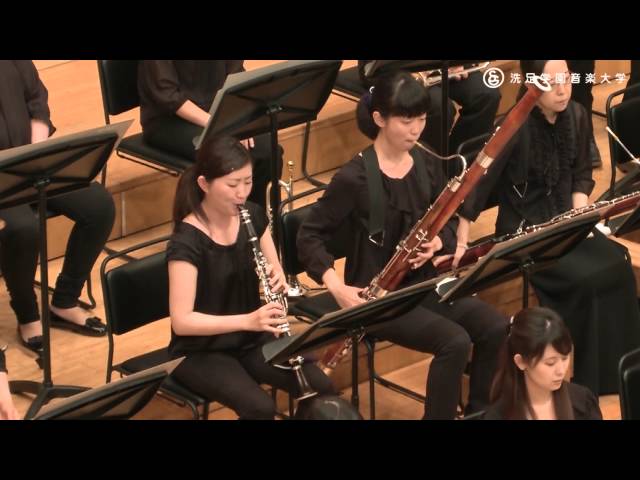

This is a commercial introducing Docomo’s pricing plan, Docomo mini.
It emphasizes that by using various bundle discounts, a 4GB plan can be used for as low as 880 yen.
It’s memorable for featuring Beethoven holding a smartphone, and it uses a parody song set to Symphony No.
5 in C minor, Op.
67, commonly known as “Fate,” as the background music.

Piano Concerto No. 5 “Emperor” Movement II: AdagioLudwig van Beethoven

The second movement of Beethoven’s Piano Concerto No.
5 “Emperor” is a gem in which profound emotion resides within serenity.
Between the heroic first movement and the dynamic finale, time seems to drift gently as if in a dream.
The soft strains of the strings, the delicate dialogue of the woodwinds, and the piano’s singing melodic lines tenderly envelop the listener’s heart.
Played during a diploma-conferral scene or as a recessional, it will fill the moment with hope for a new journey and gratitude for the days gone by.