

Robert Schumann | Introduction to his famous and representative works

Composer Robert Schumann, regarded as a romantic successor to Beethoven and Schubert, left works across a wide range of genres, from symphonies to choral music.
His output has so far been particularly noted for piano pieces and lieder.
Skillfully blending both Classical and Romantic styles, he produced many lyrical, romantic works unlike those of any other composer.
Here, we’ve picked out some of Schumann’s masterpieces and signature pieces.
Be sure to listen to Schumann’s works, which left a profound influence on later composers.
- Robert Schumann | Introduction to his famous and representative works
- [Masterpiece Classics] A special showcase of gem-like masterpieces so beautiful they’ll move you to tears
- Robert Schumann Popular Song Ranking [2026]
- Brahms's masterpieces. Popular classical music.
- Gabriel Fauré | Introduction to His Famous and Representative Works
- Bedřich Smetana Popular Songs Ranking [2026]
- Masterpieces by Gustav Mahler. Popular classical music.
- Mendelssohn’s Masterpieces | Popular Classical Music
- Cool classical masterpieces. Recommended classical music.
- J.S. Bach | Introducing Famous and Representative Works
- Masterpieces of the Romantic Era: A sweeping introduction to soul-stirring, celebrated gems!
- Pick up Beethoven’s famous and representative works!
- Classical Masterpieces: Recommended Works You Should Hear at Least Once
Robert Schumann | Introducing Famous and Representative Works (31–40)
Piano Concerto, First MovementRobert Schumann
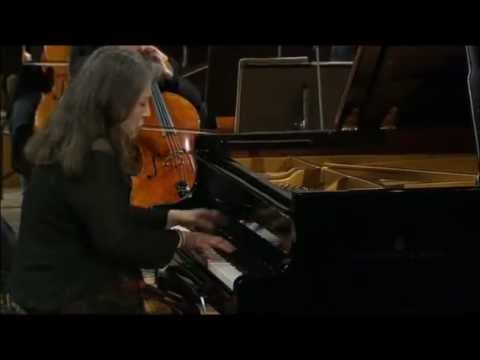
This is the only piano concerto that Schumann completed.
While he composed many piano pieces and songs, around this time he also began working on various orchestral works, including his four symphonies.
The first movement was finished first, and the second and third movements were completed four years later.
At times the piano takes on an accompanying role to the orchestra or trades melodies with it, reflecting Schumann’s approach of treating the piano as one of the orchestral instruments.
Symphony No. 2 in C majorRobert Schumann
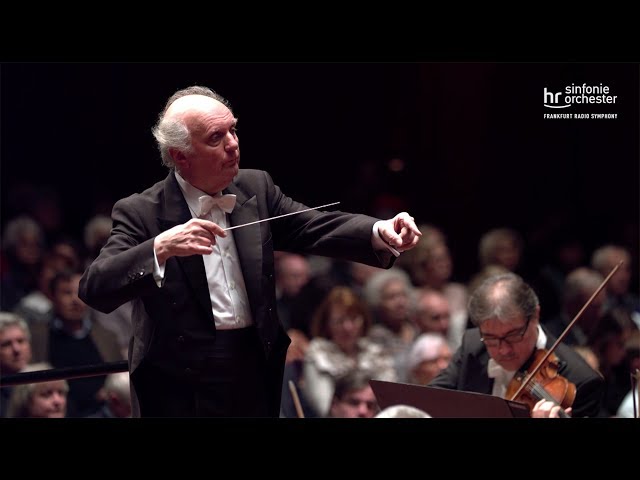
Composed in 1845–1846, it was premiered by the same conductor and orchestra as the First Symphony.
It is dedicated to King Oscar I of Sweden.
In a letter to Mendelssohn dated September 1845, he wrote that “a trumpet in C major is resounding in my head,” indicating that the work was likely begun around that time.
Scenes from Childhood No. 1: Of Foreign Lands and PeoplesRobert Schumann

Many people have probably heard it at least once.
This piece is a classical work composed by Schumann.
Its gentle, calm melody evokes childhood memories and soothes and relaxes the listener.
Symphony No. 1 “Spring”Robert Schumann

As the subtitle “Spring” suggests, this is Schumann’s first symphony, bright and radiant.
It consists of four movements; the first opens abruptly with a resplendent brass fanfare that can truly be called nature’s cry announcing the arrival of spring.
The premiere was well received, and Schumann…
“Butterflies,” Op. 2: No. 10, “Unmasking the Mask”Robert Schumann

An early piano suite by Robert Schumann, captivating for its thrilling melodies and delicate expression.
Comprising just twelve short pieces, this work is a small collection of stories that musically depicts a masked ball.
Written in 1831, it reaches its dramatic climax in No.
10, vividly portraying the moment when masks are exchanged.
Inspired by literature, the music offers a world rich in Romantic lyricism while remaining accessible to beginners.
It’s perfect for those who have just started the piano or who want a sense of accomplishment with short pieces.
Since it isn’t technically demanding, it’s also ideal for honing expressive skills.
Robert Schumann | Introducing Famous and Representative Works (41–50)
Kreisleriana, Op. 16 No. 7Robert Schumann

This piece is marked by its intensely passionate and dramatic expression.
Its rapid tempo combined with the key of C minor grips the listener from the start.
Though it lasts only about two minutes and thirty seconds, it distills Robert Schumann’s inner turmoil and passion.
The repeated arpeggios with fierce accents heighten the tension, and the contrast with the fugal middle section is striking.
Composed in 1838, it dates from a period when Schumann was suffering under opposition to his marriage to Clara Wieck.
It fully showcases the Romantic era’s hallmark richness of emotional expression, and it is a work that tests both pianistic technique and interpretive depth.
A masterpiece recommended for anyone seeking the profound emotional impact of classical music.
Symphony No. 4, Movement IRobert Schumann

Schumann completed his Symphony No.
1 between January and February 1841, and in March he composed works including an overture and the piece that would become the first movement of his Piano Concerto.
Furthermore, starting in June, he began composing the symphony later designated as No.
4, which he presented as a gift to his wife Clara on her birthday, September 13.