

A masterpiece by Franz Liszt. Popular classical music.

We introduce the masterpieces of Franz Liszt, who was born in Hungary and was active across Europe, including Germany and Austria.
From the works of Liszt—renowned as a pianist and also a composer for famous pieces such as La Campanella and Liebesträume—we present recommended and representative masterpieces, including not only piano works but also symphonic pieces performed by orchestra.
Please enjoy the many wonderful masterpieces by this composer, known as the “Magician of the Piano” for the anecdote that he could sight-read and master any piece.
- Franz Liszt Popular Song Ranking [2026]
- [Masterpiece Classics] A special showcase of gem-like masterpieces so beautiful they’ll move you to tears
- Brahms's masterpieces. Popular classical music.
- Gabriel Fauré | Introduction to His Famous and Representative Works
- Popular classical piano pieces. A collection of masterful performances by Japanese pianists.
- Robert Schumann | Introduction to his famous and representative works
- Dvořák’s masterpiece. Popular classical music.
- [Violin] A curated selection of beloved classic masterpieces and popular pieces that continue to be cherished across eras
- A poignant classic masterpiece. Recommended classical music.
- Sibelius’s famous piece. Popular classical music.
- Jacques Ibert Popular Song Ranking [2026]
- A masterpiece by Richard Strauss. Popular classical music.
- Masterpieces by Franz Schubert: Sparkling classical works left by the King of Song. Recommended classical music.
Franz Liszt’s masterpieces: Popular classical music (11–20)
Years of Pilgrimage, Year 1: Switzerland, No. 1 “The Chapel of William Tell”NEW!Franz Liszt

The first piece that opens the collection published in June 1855, inspired by travels in Switzerland.
It is a symbolic work praising a founding-legend hero, featuring a grand design that moves from a solemn depiction of a quiet chapel interior to a leap toward heroic action.
In performance, it is important to skillfully evoke the effect of a horn echoing through the mountains by means of weighty chordal sonorities and delicate tremolos.
Unlike a flashy, highly virtuosic showpiece, this is a work you can savor by lingering over the depth of each note and the shifting harmonies as you play.
It is recommended for those who wish to let a rich tone resound at their own pace while imagining the majestic natural landscapes and the powerful figure of the hero that Franz Liszt depicts.
Years of Pilgrimage, First Year: Switzerland, No. 7 ‘Pastorale’NEW!Franz Liszt

A collection of nine piano pieces that express impressions of Swiss nature and literature through music, Années de pèlerinage, Première année: Suisse.
Among the pieces that had become established by around 1855, the seventh is a beautiful miniature that seems to depict a tranquil morning scene.
Lines describing a morning landscape from a long poem by the English poet Byron are appended, and a fresh atmosphere filled with light and air unfolds.
Liszt’s works may have a reputation for being demanding, but this piece is short—about four minutes—and technically approachable, which is part of its appeal.
Avoid excessive exaggeration and try to play with supple phrasing, as if painting the scene.
Years of Pilgrimage, First Year: Switzerland, No. 9 “The Bells of Geneva”NEW!Franz Liszt

A beautifully drawn nocturne that captures the quiet afterglow felt at the journey’s end, it closes the album “Années de pèlerinage, Première année: Suisse.” It is grounded in experiences from a stay beginning in 1835 and has a history of repeated revisions before its publication in 1855.
The distant tolling of bells in the night’s stillness and the calm atmosphere by the water are exquisitely expressed through gentle harmonies and a singing melody.
Rather than dazzling technique, this work calls for delicate control of sonority.
Careful pedal use to produce a clear, transparent tone without muddiness is key.
It is an ideal piece for those who wish to linger over soothing, poetic lines rather than tackle turbulent passages.
Years of Pilgrimage, Second Year: Italy, No. 3 ‘Canzonetta by Salvator Rosa’NEW!Franz Liszt

The third piece from Franz Liszt’s piano collection Années de pèlerinage, Second Year: Italy, bearing a title that means “little song.” In sharp contrast to the ponderous preceding piece, it features a bright, sprightly melody and is highly approachable.
Published in 1858, it carries the name of the 17th-century artist Salvator Rosa, though the lyrics Liszt included are attributed to Giovanni Bononcini.
Among Liszt’s works it is relatively short and not hard to follow note-wise, but the key is to play it while preserving the poise of an old-fashioned song and a light, witty humor.
It’s a perfect choice for those who want to hone their expressiveness with Liszt’s music!
Years of Pilgrimage, Third Year, No. 2: “The Cypresses of the Villa d’Este I: Elegy”NEW!Franz Liszt

This work is a quiet yet deeply contemplative solo piano piece composed in 1877, inspired by a famed tree at the Villa d’Este near Rome.
It unfolds an introspective world rich in chiaroscuro—one reached in the twilight years of a Romantic master renowned for dazzling virtuosity.
As the title “Lament” suggests, the hesitant harmonic progressions and the weight of the lower register eloquently convey unspoken emotions of loss and prayer.
Since it does not require flashy transcendental technique, it is recommended for those who wish to focus deeply on chordal resonance and tone color.
Why not savor its profound sonorities in silence, imagining the landscapes and inner visions beheld by the composer in old age?
Years of Pilgrimage, Third Year, No. 3: Funérailles sur deux Cyprès des Jardins d’Este II: ElegyNEW!Franz Liszt

The third piece from the 1877 piano collection Années de pèlerinage, Third Year, inspired by the garden vistas of the Villa d’Este near Rome.
An elegy themed on the cypress—regarded in the West as a symbol of mourning—it is imbued with profound sorrow and prayer.
Dark, somber harmonies centered on E minor unfold, and the weighty bass and ambiguous harmonies gradually evoke an intractable sense of loss.
Rather than dazzling virtuosity, it calls for control of phrasing space and sustained tension.
Why not broaden your expressive range as you engage with the introspective world of Liszt’s late style?
Franz Liszt’s masterpieces: Popular classical music (21–30)
Years of Pilgrimage, Third Year, No. 7 ‘Lift Up Your Hearts’NEW!Franz Liszt
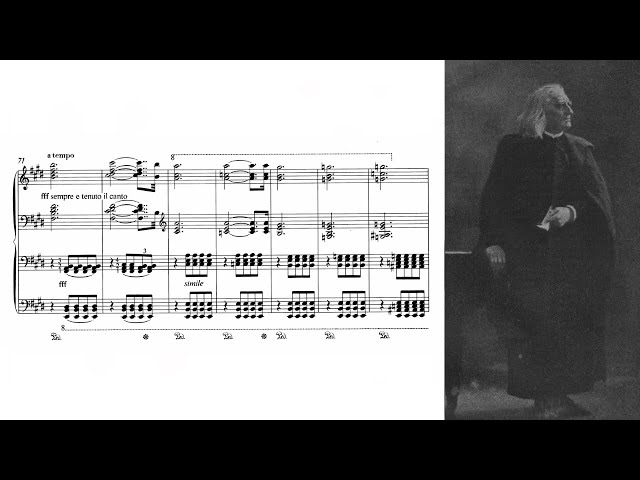
This is the seventh piece placed at the end of Années de pèlerinage, Third Year, a work whose title bears the prayerful phrase “Lift up your hearts.” It is characterized by a concentrated sonority that seems to reflect the spiritual world of Liszt in his later years as he turned toward religious profundity.
It is said that he repeatedly revised the piece until it reached its final form, culminating in its publication in 1883.
Unlike the dazzling works filled with unrelenting virtuosity, this piece is relatively short, about three minutes.
It possesses a quiet strength that, through sorrow and prayer, gently turns the heart upward.
Because it allows the listener to savor the resonance of chords and the layering of sounds within a brief span, it is a highly recommended piece for those who wish to focus on the very timbre of the piano.