

A masterpiece by Franz Liszt. Popular classical music.

We introduce the masterpieces of Franz Liszt, who was born in Hungary and was active across Europe, including Germany and Austria.
From the works of Liszt—renowned as a pianist and also a composer for famous pieces such as La Campanella and Liebesträume—we present recommended and representative masterpieces, including not only piano works but also symphonic pieces performed by orchestra.
Please enjoy the many wonderful masterpieces by this composer, known as the “Magician of the Piano” for the anecdote that he could sight-read and master any piece.
- Franz Liszt Popular Song Ranking [2026]
- [Masterpiece Classics] A special showcase of gem-like masterpieces so beautiful they’ll move you to tears
- Brahms's masterpieces. Popular classical music.
- Gabriel Fauré | Introduction to His Famous and Representative Works
- Popular classical piano pieces. A collection of masterful performances by Japanese pianists.
- Robert Schumann | Introduction to his famous and representative works
- Dvořák’s masterpiece. Popular classical music.
- [Violin] A curated selection of beloved classic masterpieces and popular pieces that continue to be cherished across eras
- Masterpieces by Franz Schubert: Sparkling classical works left by the King of Song. Recommended classical music.
- A masterpiece by Richard Strauss. Popular classical music.
- Mozart: An Introduction to His Signature and Popular Works
- A poignant classic masterpiece. Recommended classical music.
- Sibelius’s famous piece. Popular classical music.
Franz Liszt’s masterpieces. Popular classical music (91–100)
Hungarian Rhapsody No. 2 in C-sharp minorFranz Liszt

Franz Liszt, a composer who produced many extremely challenging works.
Among his compositions, the Hungarian Rhapsody No.
2 in C-sharp minor is known as one of the most difficult.
In particular, the Friska section is famously demanding: beyond the rapid passages, it requires blisteringly fast octaves.
It’s a piece that even excellent conservatory students struggle to perform, but if you want to experience Liszt’s works that demand transcendental virtuosity, by all means give it a try!

Hungarian Rhapsody No. 5, “Heroic Elegy,” S.244/5 in E minorFranz Liszt

Hungarian Rhapsody No.
5 in E minor, S.244/5, “Héroïde-élégiaque,” was created by Franz Liszt in 1847.
The piece is influenced by Hungarian folk music and Romani music.
Characterized by a melancholy, lingering melody, it is structured to evoke the tale of a tragic hero.
Comprised of three sections where sorrow and hope intersect, it demands deep emotional expression while being relatively modest in technical difficulty.
It is an ideal choice for those looking to enhance expressive piano playing or to take on a work by Liszt.
Hungarian Rhapsody No. 6Franz Liszt

Liszt’s masterpiece inspired by his homeland of Hungary, Hungarian Rhapsody No.
6.
While No.
2 is often said to be the most difficult to perform, No.
6 is also exceptionally challenging.
It is unquestionably among the hardest even within the advanced repertoire.
With its particularly wide octave stretches, this piece demands power, speed, and precision.
Although extremely difficult, it is highly effective in performance, making it tremendously enjoyable for listeners as well.
Be sure to check it out.
Prelude and Fugue on the Name B-A-C-HFranz Liszt

A piece that radiates the commanding presence of the pipe organ.
Its solemn resonance and sacred atmosphere leave a strong impression.
Composed by Franz Liszt between 1855 and 1856, this work pays homage to Bach by using the notes B-A-C-H as its main theme.
It exploits a wide range from low to high registers and demands virtuosic performance with dense chords and arpeggios.
There are both organ and piano versions, each deeply satisfying to hear.
Why not surrender yourself to the overwhelming waves of sound reverberating through a church or concert hall? It’s a piece that lets you fully savor the allure of classical music.
Grandes études de Paganini, S.141 No. 3 “La Campanella”Franz Liszt

La Campanella, the third piece from Transcendental Etudes after Paganini S.141, is known as a notoriously difficult work.
A masterpiece by Franz Liszt, it is striking for its highly challenging, intricate structure and performance impact worthy of its difficulty.
One of its great attractions is the dramatic, grandiose playing that emerges toward the end.
Thanks to its highly accessible melody, even those uninterested in classical music are likely to be moved.
Not only the performance but also the sheet music itself leaves a strong impression, so if you can read music, be sure to take a look at the score as well.
Grandes études de Paganini, S.141 No. 3 “La Campanella”Franz Liszt
When it comes to Franz Liszt’s works with the highest difficulty, many people probably think first of the Grandes études de Paganini, S.141 No.
3 “La Campanella.” It’s for ultra-advanced players and is renowned for its overwhelming difficulty.
There are, of course, other challenging pieces, but few high-difficulty works achieve as much dramatic performance impact as La Campanella.
It’s a hellish piece for performers, but for listeners, it’s a supreme masterpiece.
Grandes études de Paganini No. 3 “La Campanella”Franz Liszt
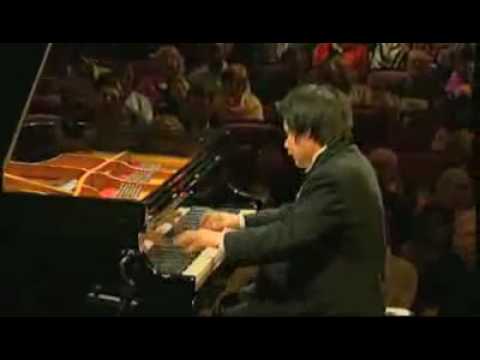
When it comes to famous piano pieces by the Hungarian composer Franz Liszt, “La Campanella” immediately comes to mind! It’s also well known through performances by Ingrid Fujiko Hemming.
The title means “The Little Bell,” and it’s a masterpiece that many classical pianists dream of playing at least once.
The famous opening phrase features very wide leaps and demands precise touch.
Although it’s an extremely difficult piece, with persistent practice you can gradually bring it together.
Why not build your skills steadily and patiently, and master this challenging work?
