

A masterpiece by Franz Liszt. Popular classical music.
We introduce the masterpieces of Franz Liszt, who was born in Hungary and was active across Europe, including Germany and Austria.
From the works of Liszt—renowned as a pianist and also a composer for famous pieces such as La Campanella and Liebesträume—we present recommended and representative masterpieces, including not only piano works but also symphonic pieces performed by orchestra.
Please enjoy the many wonderful masterpieces by this composer, known as the “Magician of the Piano” for the anecdote that he could sight-read and master any piece.
Playlist
| A masterpiece by Franz Liszt. Popular classical music. | |||
|---|---|---|---|
| show_chart | Title | Playlist | Review |
| 1east | Concert Paraphrase on RigolettoFranz Liszt |  play_arrow play_arrow | Liszt arrangement, Rigoletto piano paraphrase |
| 2east | Mephisto Waltz No. 1 (The Dance in the Village Inn), S.514Franz Liszt |  play_arrow play_arrow | A masterful work depicting a peasant festival by (Pieter) Bruegel. |
| 3east | Grandes études de Paganini No. 3 in G-sharp minor “La Campanella,” S.141/3, R.3bFranz Liszt |  play_arrow play_arrow | List of difficult piano concertos |
| 4east | Fountains of the Villa d’Este, No. 4 from Années de pèlerinage, Third Year, S.163/R.10eFranz Liszt |  play_arrow play_arrow | A late work by Liszt. It depicts water and light with a fountain motif. Influenced the Impressionists. |
| 5east | Symphonic Poem “Hamlet,” S.104/R.421Franz Liszt |  play_arrow play_arrow | Symphonic Poem Hamlet by Liszt |
| 6east | Rhapsodie espagnole, S.254/R.90Franz Liszt |  play_arrow play_arrow | Liszt’s magnificent masterpiece of Spanish musical fusion |
| 7east | “Consolation,” No. 3 from Three Concert Études, S.144/R.5Franz Liszt |  play_arrow play_arrow | Three Romantic Melodies: A Piano Trio Collection |
| 8east | Traveler’s Album Part I: Impressions and Poems “Psalms”Franz Liszt |  play_arrow play_arrow | Music of prayer rooted in a trip to Switzerland |
| 9east | Traveler’s Album Part II: The Blossoms of Alpine Melodies 7c. Allegro pastoraleFranz Liszt | 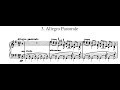 play_arrow play_arrow | Liszt’s piano piece depicting Alpine scenery |
| 10east | Poetic and Religious Harmonies No. 2 “Ave Maria”Franz Liszt |  play_arrow play_arrow | A list of prayer music, masterpieces that require expressiveness |
| 11east | G minor – Molto agitato, No. 6 from the 48 Etudes for Practice in All Major and Minor KeysFranz Liszt |  play_arrow play_arrow | Liszt's youthful Etudes Opus |
| 12east | F major – Allegro sempre legato, No. 3 from 48 Etudes for the Practice of All Major and Minor KeysFranz Liszt | 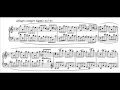 play_arrow play_arrow | Liszt's Elegant Etude |
| 13east | E-flat major – Allegro grazioso, No. 9 from 48 Exercises for the Practice of All Major and Minor KeysFranz Liszt |  play_arrow play_arrow | Hone your musicality with Liszt’s études |
| 14east | Hungarian Rhapsody No. 17Franz Liszt |  play_arrow play_arrow | A concise, shadowed rhapsody from Liszt’s late period |
| 15east | Years of Pilgrimage, Year 1: Switzerland, No. 1 “The Chapel of William Tell”Franz Liszt |  play_arrow play_arrow | The opening piece of Liszt’s Swiss Années de pèlerinage |
| 16east | Years of Pilgrimage, First Year: Switzerland, No. 7 ‘Pastorale’Franz Liszt |  play_arrow play_arrow | Expressing a morning scene with Liszt’s piano piece |
| 17east | Years of Pilgrimage, First Year: Switzerland, No. 9 “The Bells of Geneva”Franz Liszt |  play_arrow play_arrow | Nocturne depicting the end of a journey in Switzerland |
| 18east | Years of Pilgrimage, Second Year: Italy, No. 3 ‘Canzonetta by Salvator Rosa’Franz Liszt |  play_arrow play_arrow | A piece from Liszt's collection of light, lively piano works |
| 19east | Years of Pilgrimage, Third Year, No. 2: “The Cypresses of the Villa d’Este I: Elegy”Franz Liszt |  play_arrow play_arrow | A deeply contemplative piano piece inspired by Rome’s famed trees |
| 20east | Years of Pilgrimage, Third Year, No. 3: Funérailles sur deux Cyprès des Jardins d’Este II: ElegyFranz Liszt |  play_arrow play_arrow | Liszt composition, an elegy themed on cypresses |
| 21east | Years of Pilgrimage, Third Year, No. 7 ‘Lift Up Your Hearts’Franz Liszt |  play_arrow play_arrow | Liszt's late religious works |
| 22east | Transcendental Etude in F major “Landscape” Poco adagioFranz Liszt |  play_arrow play_arrow | Liszt’s practice piece. A quiet song with depictions of nature. |
| 23east | Hungarian Rhapsody No. 2, S/G 244, R 106Franz Liszt |  play_arrow play_arrow | A masterpiece by Liszt, rooted in Hungarian folk songs |
| 24east | Symphonic Poem “Prometheus,” S.99 / R.416Franz Liszt |  play_arrow play_arrow | Liszt's symphonic poem Prometheus |
| 25east | From “Two Legends”: 1. Saint Francis of Assisi Preaching to the Birds, S.175 / R.17Franz Liszt |  play_arrow play_arrow | Liszt’s Religious Masterpiece, Saint François |
| 26east | Symphonic Poem “The Battle of the Huns,” S.105 / R.422Franz Liszt |  play_arrow play_arrow | Liszt’s majestic symphonic poem |
| 27east | Scherzo and March in D minor, S.177 / R 20Franz Liszt |  play_arrow play_arrow | Liszt’s challenging piece “Scherzo and March” |
| 28east | Symphonic Poem “Tasso, Lament and Triumph,” S.97/R.413Franz Liszt |  play_arrow play_arrow | Liszt’s symphonic poem Tasso, characterized by melancholy and grandeur |
| 29east | Dante Symphony, S.109/R.426Franz Liszt |  play_arrow play_arrow | A symphony influenced by Dante’s Divine Comedy |
| 30east | Dark Cloud S.199 / R78Franz Liszt |  play_arrow play_arrow | Liszt’s innovative piano compositions |
| 31east | Piano Concerto No. 1 in E-flat major, S.124 / R.455Franz Liszt |  play_arrow play_arrow | Liszt’s magnum opus: a dialogue between piano and orchestra |
| 32east | Transcendental Étude No. 4 “Mazeppa,” S.139/4, R.2bFranz Liszt |  play_arrow play_arrow | Liszt composition, a fiercely virtuosic piano piece |
| 33east | Years of Pilgrimage, Second Year: Italy — After Reading DanteFranz Liszt |  play_arrow play_arrow | A dramatic piano piece inspired by Dante’s Divine Comedy |
| 34east | Liebesträume No. 3Franz Liszt |  play_arrow play_arrow | Arrangement of Liszt’s famous songs into piano pieces |
| 35east | Etude of Supreme Virtuosity No. 5: Will-o’-the-WispFranz Liszt |  play_arrow play_arrow | Liszt's Transcendental Étude “Will-o’-the-Wisps” |
| 36east | Three Concert Études No. 3 in D-flat major “Un sospiro”Franz Liszt | 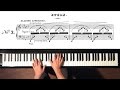 play_arrow play_arrow | Liszt's graceful arpeggio piece |
| 37east | Years of Pilgrimage, Third Year, No. 3 ‘Funeral March’Franz Liszt |  play_arrow play_arrow | A memorial piece imbued with Liszt’s sorrow |
| 38east | Liebesträume No. 3: ‘O Lieb, so lang du lieben kannst’ S.541 / R.211Franz Liszt |  play_arrow play_arrow | A three-piece work subtitled “Three Nocturnes” pi… |
| 39east | Totentanz, S.126/R.457Franz Liszt |  play_arrow play_arrow | A heavy composition that uses the melody of Dies Irae |
| 40east | Faust Symphony, S.108 / R.425Franz Liszt |  play_arrow play_arrow | Liszt's Faust Symphony |
| 41east | Symphonic Poem “Orpheus,” S.98 / R.415Franz Liszt |  play_arrow play_arrow | Overture by Gluck, inspired by an Etruscan vase |
| 42east | Consolation (Solace) S.172/R.14Franz Liszt |  play_arrow play_arrow | A collection of gentle and elegant piano miniatures |
| 43east | The Legend of Saint ElizabethFranz Liszt |  play_arrow play_arrow | Franz Liszt’s The Legend of Saint Elizabeth |
| 44east | Symphonic Poem “Ideals,” S.106 / R.423Franz Liszt |  play_arrow play_arrow | A symphonic poem based on a poem by Schiller |
| 45east | DedicationFranz Liszt |  play_arrow play_arrow | A masterpiece of Schumann’s music arranged for piano by Liszt |
| 46east | Play of WaterFranz Liszt |  play_arrow play_arrow | Ravel’s Jeux d’eau is a masterpiece that depicts the flow of water. |
| 47east | Fantasia and Fugue on the Name B-A-C-H, S.260/S.529Franz Liszt |  play_arrow play_arrow | Piano Arrangements on Bach Themes |
| 48east | Piano Sonata in B minor, S.178/R.21Franz Liszt |  play_arrow play_arrow | Brahms’s Piano Sonata |
| 49east | Hungarian Rhapsody No. 2 in C-sharp minor, S.244-2Franz Liszt |  play_arrow play_arrow | The pia—who composed numerous extremely challenging pieces requiring virtuosic technique… |
| 50east | Reading Dante: Sonata-FantasiaFranz Liszt |  play_arrow play_arrow | A famous Liszt piece depicting scenes of hell |
| 51east | Spanish Rhapsody, S.254Franz Liszt |  play_arrow play_arrow | Fran..., who left behind numerous pieces that require virtuoso-level technique |
| 52east | Spanish Rhapsody, Op. 254Franz Liszt | play_arrow | They are known for creating devilishly difficult pieces… |
| 53east | Mephisto Waltz No. 1, S.514 “Dance in the Village Inn”Franz Liszt | play_arrow | Introduction to Liszt’s Passionate Waltz Pieces |
| 54east | Rapsodie espagnoleFranz Liszt | play_arrow | Collecting indigenous music such as folk songs, and then… |
| 55east | Poetic and Religious Harmonies No. 7 “Funérailles,” S.173/R.14Franz Liszt |  play_arrow play_arrow | Composed by Liszt. Inspired by the poetry of Lamartine. |
| 56east | La CampanellaFranz Liszt |  play_arrow play_arrow | A piano piece arranged by Liszt, with striking bell sounds |
| 57east | Romance S.169Franz Liszt |  play_arrow play_arrow | A popular representative Romantic piece composed by Liszt in Moscow |
| 58east | Symphonic Poem: ‘What a Man Heard on the Mountain’ S.95 / R.412Franz Liszt |  play_arrow play_arrow | A symphonic poem where the themes of nature and humanity contend |
| 59east | Symphonic Poem “Festive Sounds,” S.101 / R.418Franz Liszt |  play_arrow play_arrow | A symphonic poem composed as an overture to Schiller’s play |
| 60east | Cradle Song, S.174, R.57Franz Liszt |  play_arrow play_arrow | How to perform Liszt’s serene and beautiful pieces |
| 61east | Years of Pilgrimage, Third Year, S.163/R.10, A283, No. 4: The Fountains of the Villa d’EsteFranz Liszt |  play_arrow play_arrow | A masterpiece on the list, with the charming, elegant melody of a fountain. |
| 62east | Liebesträume No. 3 (Three Nocturnes): “Dreams of Love”Franz Liszt |  play_arrow play_arrow | The beauty and popularity of Liszt’s Liebesträume |
| 63east | “Arpeggio,” No. 4 from the Grandes études de PaganiniFranz Liszt |  play_arrow play_arrow | Liszt, Grand Piano Variations on a Theme of Paganini |
| 64east | Hungarian Rhapsody No. 2 in C-sharp minor, S.244Franz Liszt | play_arrow | The Allure and Performance Techniques of Liszt’s “Hungarian Rhapsody No. 2” |
| 65east | Hungarian Rhapsody No. 2Franz Liszt |  play_arrow play_arrow | The pia—who composed numerous extremely challenging pieces requiring virtuosic technique… |
| 66east | Grandes études de Paganini, S.121, No. 3 “La Campanella”Franz Liszt |  play_arrow play_arrow | Liszt’s ultra-difficult arrangement of Paganini (piece) |
| 67east | Mephisto Waltz No. 1, S.514Franz Liszt |  play_arrow play_arrow | Liszt’s difficult piece, Mephisto Waltz |
| 68east | Transcendental Étude No. 5 “Will-o’-the-Wisp”Franz Liszt | play_arrow | Liszt’s Transcendental Étude “Feux Follets” (Will-o’-the-Wisps) |
| 69east | Grand Étude No. 5 after PaganiniFranz Liszt |  play_arrow play_arrow | Paganini’s No. 5 is a piece themed around hunting. |
| 70east | Transcendental Études No. 4 “Mazeppa”Franz Liszt |  play_arrow play_arrow | Characteristics of Liszt’s virtuosic piece “Mazeppa” |
| 71east | Grand Etude No. 6 “Theme and Variations” by PaganiniFranz Liszt |  play_arrow play_arrow | A set of variations that Liszt arranged for piano from a violin piece |
| 72east | Liebestraum No. 3Franz Liszt | play_arrow | A fantastical and fleeting love piece by Liszt, used by Mao Asada |
| 73east | Dance at the village tavernFranz Liszt |  play_arrow play_arrow | A hidden gem by Liszt, featuring a lively rhythm and a piece used in dramas. |
| 74east | Years of Pilgrimage, First Year: From Switzerland – HomesicknessFranz Liszt |  play_arrow play_arrow | This song pairs well with reading too—it just melts me... |
| 75east | Two Legends, S.175 No. 2: St. Francis of Paola Walking on the WavesFranz Liszt |  play_arrow play_arrow | Liszt’s religious masterpiece, Saint Francis of Paola Crossing the Waves |
| 76east | Three Concert Études, S.144 No. 2 “Lightness”Franz Liszt |  play_arrow play_arrow | Liszt’s Concert Études, difficulty: advanced level |
| 77east | Three Concert Études, S.144/R.5, No. 3 “Un sospiro”Franz Liszt |  play_arrow play_arrow | Liszt's technically demanding and beautiful piano piece |
| 78east | Three Concert Études No. 3 “Un Sospiro”Franz Liszt | play_arrow | Liszt’s Concert Études are masterpieces that combine virtuosity with lyricism. |
| 79east | Three Concert Études No. 3 “Un Sospiro”Franz Liszt |  play_arrow play_arrow | Liszt’s etudes are technique and beauty. |
| 80east | Concert Paraphrase on Rigoletto, S.434Franz Liszt | play_arrow | Rigoletto Concert Paraphrase |
| 81east | Christmas treeFranz Liszt |  play_arrow play_arrow | This piece is one that Liszt composed from 1874 to 187... |
| 82east | Consolation No. 1Franz Liszt |  play_arrow play_arrow | A collection of gentle, soothing piano pieces |
| 83east | Consolation No. 2Franz Liszt |  play_arrow play_arrow | A piano piece with melodic variation and cohesion |
| 84east | Consolation No. 3Franz Liszt |  play_arrow play_arrow | The beauty of Liszt’s Consolation No. 3 and tips for performing it |
| 85east | Consolation No. 4Franz Liszt |  play_arrow play_arrow | Music that purifies the world with beautiful harmonies |
| 86east | Consolation No. 5Franz Liszt |  play_arrow play_arrow | Performance Points Commentary for Consolation No. 5 |
| 87east | Consolation No. 3 (Solace)Franz Liszt | play_arrow | Liszts Consolation is an elegant piece for intermediate players |
| 88east | Hungarian Rhapsody No. 2 in C-sharp minorFranz Liszt | play_arrow | Having brought into the world numerous works of great difficulty… |
| 89east | Hungarian Rhapsody No. 5, “Heroic Elegy,” S.244/5 in E minorFranz Liszt |  play_arrow play_arrow | The wistful melody born of Liszt |
| 90east | Hungarian Rhapsody No. 6Franz Liszt |  play_arrow play_arrow | Hungarian Rhapsody No. 6 is advanced difficulty |
| 91east | Prelude and Fugue on the Name B-A-C-HFranz Liszt |  play_arrow play_arrow | A track that exudes the commanding presence of a king among pipe organs... |
| 92east | Grandes études de Paganini, S.141 No. 3 “La Campanella”Franz Liszt |  play_arrow play_arrow | The appeal of Liszt’s masterpiece and notoriously difficult piece, La Campanella |
| 93east | Grandes études de Paganini, S.141 No. 3 “La Campanella”Franz Liszt | play_arrow | Liszt’s extremely difficult piece La Campanella |
| 94east | Grandes études de Paganini No. 3 “La Campanella”Franz Liszt |  play_arrow play_arrow | Liszt’s masterpiece “La Campanella” is a difficult piece. |
| 95east | Grand Études after Paganini No. 3 “La Campanella,” S.141Franz Liszt | play_arrow | The pa… from The …, known as an extremely difficult work |
| 96east | Grandes études de Paganini, S.141 No. 3 “La Campanella”Franz Liszt | play_arrow | When people hear “a difficult piano piece,” many of them will think of this... |
| 97east | Grand Etudes after Paganini, No. 3 ‘La Campanella’Franz Liszt |  play_arrow play_arrow | Franz Liszt, a composer who represents the Romantic era... |
| 98east | Piano Sonata in B minor, S.178Franz Liszt |  play_arrow play_arrow | Liszt's piano sonata requires highly advanced technique |
| 99east | Piano Sonata in D minorFranz Liszt |  play_arrow play_arrow | He left an enormous number of works for the piano, and he himself… |
| 100east | Mephisto Waltz No. 1Franz Liszt |  play_arrow play_arrow | Mephisto plays a waltz and people dance |
| 101south_east | Mephisto Waltz No. 1: “Dance at the Village Inn”Franz Liszt |  play_arrow play_arrow | Mephisto Waltz, a piece of rapturous ecstasy |
| 102east | La Campanella: Grandes études de PaganiniFranz Liszt |  play_arrow play_arrow | “La Campanella” means “bell” in Italian… |
| 103east | Symphonic poem ‘Les Préludes (The Preludes)’Franz Liszt |  play_arrow play_arrow | Liszt's symphonic poem, depicting life and death |
| 104east | Symphonic Poem “Les Préludes”Franz Liszt |  play_arrow play_arrow | Liszt’s symphonic poem depicting the four stages of life |
| 105east | Legend S.175 No. 2 “St. Francis of Paola Walking on the Waves”Franz Liszt | play_arrow | A demanding Liszt piece that requires a lot of technique |
| 106east | Chromatic Grand GallopFranz Liszt |  play_arrow play_arrow | A challenging piece by Liszt. The 4th–5th finger movements are the tricky part. |
| 107east | Years of Pilgrimage, Book II: Italy, S.161 — No. 7 “Après une lecture de Dante – Fantasia quasi Sonata”Franz Liszt |  play_arrow play_arrow | Liszt: Années de pèlerinage – Italy. For a recital. |
| 108east | Years of Pilgrimage, Second Year – Supplement: “Venice and Naples,” S.162, No. 3: “Tarantella”Franz Liszt |  play_arrow play_arrow | It wouldn’t be an exaggeration to call it the culmination of Franz Liszt’s work… |
| 109east | Years of Pilgrimage, Year 2: Italy, No. 2 ‘The Thinker’Franz Liszt |  play_arrow play_arrow | Expressing my impressions of Italy in music |
| 110east | Years of Pilgrimage, Third Year, No. 1: Angelus! Prayer to the Guardian AngelsFranz Liszt |  play_arrow play_arrow | Religious impression pieces from Liszt’s late years |
| 111east | Forgotten Waltz No. 1Franz Liszt |  play_arrow play_arrow | A gem-like piano miniature from Liszt’s late years |
| 112east | Liebestraum (Dream of Love)Franz Liszt |  play_arrow play_arrow | Liszt’s masterpiece, where virtuosity and romance are in harmonious balance |
| 113east | Liebesträume No. 2: ‘I Am Dead’Franz Liszt |  play_arrow play_arrow | Liszt’s Liebesträume is a masterpiece. |
| 114east | Bagatelle in AtonalityFranz Liszt |  play_arrow play_arrow | Liszt’s late-period works that innovatively liberated tonality |
| 115east | Poetic and Religious Harmonies No. 5: The Lord’s PrayerFranz Liszt |  play_arrow play_arrow | A masterpiece that evokes Liszt’s spiritual depth |
| 116east | Poetic and Religious Melody No. 6: Hymn to the Child Awakened from SleepFranz Liszt |  play_arrow play_arrow | A collection of poetic piano pieces inspired by Lamartine |
| 117east | Transcendental Études, S.139 No. 4 “Mazeppa”Franz Liszt | play_arrow | The master who shines brilliantly in the history of classical music, Fran... |
| 118east | Transcendental Études, S.139 No. 5 “Feux follets” (Will-o’-the-Wisps)Franz Liszt | play_arrow | Known as one of the most overwhelmingly difficult piano pieces in the world… |
| 119south_east | Transcendental Étude No. 4 “Mazeppa”Franz Liszt | play_arrow | Among all piano works, it's among the very best... |
| 120east | Transcendental Etude No. 7 ‘Heroic’Franz Liszt |  play_arrow play_arrow | Introduction to the Difficult Piece: Liszt’s Transcendental Étude No. 7 |
| 121east | Transcendental Étude “Mazeppa”Franz Liszt | play_arrow | He himself is called a virtuoso of the piano… |
| 122east | “Grandes études de Paganini,” No. 6: “Theme and Variations”Franz Liszt |  play_arrow play_arrow | A masterpiece of piano arrangement of a work by Paganini |
| 123east | Consolation (Comfort) No. 3Franz Liszt |  play_arrow play_arrow | The Allure of Liszt’s Consolation No. 3 |
| 124east | Transcendental Étude No. 1 “Prelude”Franz Liszt |  play_arrow play_arrow | Active as a pianist and composer, and recipient of numerous high… |
| 125east | List: Années de pèlerinage, Première année “Suisse”, S.160/R.10, A159 No. 3 “Pastorale”. Pf. Mikiko Yamamoto: Yamamoto, MikikoFranz Liszt |  play_arrow play_arrow | Express pastoral scenes through pastoral songs |
| 126east | Grandes études d’après Paganini, S.141 No. 3 in G-sharp minor “La Campanella”Franz Liszt | play_arrow | The appeal of Liszt’s fiendishly difficult La Campanella |
| 127south_east | Grand Etude after Paganini “La Campanella”Franz Liszt | play_arrow | The Transcendental Virtuosity of Liszt, the Magician of the Piano |
| 128east | Dance of DeathFranz Liszt |  play_arrow play_arrow | Liszt’s powerful piano arrangement of Danse macabre |
| 129east | Transcendental Étude No. 4 in D minor, “Mazeppa”Franz Liszt |  play_arrow play_arrow | Powerful performance in a Casio musical instrument commercial |
| 130east | sighFranz Liszt |  play_arrow play_arrow | The sweet masterpiece of the piano magician |
| 131east | TotentanzFranz Liszt |  | Liszt's 'Totentanz,' a soul-stirring masterpiece |
| 132east | Fountain of Villa d’EsteFranz Liszt | play_arrow | The “Este Villa” mentioned in the title is an Italian... |
| 133east | Fountain of the esthetic layerFranz Liszt | play_arrow | The high notes are like water overflowing from a fountain, flowing down from above... |
| 134east | Liebesträume (Three Nocturnes), No. 3 in A-flat majorFranz Liszt |  play_arrow play_arrow | Liszt is a Hungarian composer. "Love's... |
| 135east | “Sigh” from Three Concert ÉtudesFranz Liszt |  play_arrow play_arrow | Among the works on the list, one of the most beloved pieces... |
| 136east | “Mazeppa,” No. 4 from Transcendental ÉtudesFranz Liszt | play_arrow | Quintessentially Lisztian, combining both ferocity and sweetness… |
| 137east | Impromptu Waltz (Valse-Impromptu), S.213Franz Liszt |  play_arrow play_arrow | A short improvised waltz, graceful and approachable |
| 138east | Bagatelle without tonality, S.216a / R.60cFranz Liszt |  play_arrow play_arrow | Schoenberg's atonal musical works |
| 139east | Transcendental Étude No. 5 “Will-o’-the-Wisp”Franz Liszt |  play_arrow play_arrow | Liszt's Feux follets, a masterpiece of transcendental technique and poetic expression |
| 140east | Three Concert Études, S.144/R.5: No. 3 “Un Sospiro”Franz Liszt | play_arrow | The masterpiece of Liszt’s luscious melodies |
| 141east | ChristFranz Liszt |  play_arrow play_arrow | Franz Liszt’s sacred oratorio “Christus” |
| 142east | At Richard Wagner’s GraveFranz Liszt |  play_arrow play_arrow | Liszt's mourning piece in memory of Wagner |
| 143east | Years of Pilgrimage, First Year: “Switzerland”Franz Liszt |  play_arrow play_arrow | List, who had an affair with a married woman that was forbidden, is... |
| 144east | Transcendental Études, S.139 No. 12 “Snowstorm”Franz Liszt |  play_arrow play_arrow | Liszt’s high-difficulty piano piece “Snowstorm” |
| 145east | “Whispers of the Forest,” No. 1 from Two Concert Études, S.145/R.6Franz Liszt |  play_arrow play_arrow | Liszt Piano Composition Collection |