

Carl Maria von Weber Popular Song Rankings [2026]

Composer Carl Maria von Weber, who wrote his first opera at age 11 and is also known for being the first to use a conductor’s baton with an orchestra.
He made numerous contributions to music history, including establishing the style of German Romantic opera and devising the modern layout of the orchestra.
Here, we present a ranking of Carl Maria von Weber’s most popular pieces—why not immerse yourself in his music?
- [Weber] Masterpieces by the founder of German opera
- Johann Burgmüller Popular Song Rankings [2026]
- Bedřich Smetana Popular Songs Ranking [2026]
- Arnold Schönberg Popular Songs Ranking [2026]
- A masterpiece by Richard Wagner. Popular classical music.
- Robert Schumann | Introduction to his famous and representative works
- Yamada Kōsaku Popular Song Rankings [2026]
- Georg Friedrich Handel Popular Songs Ranking [2026]
- Jean Sibelius Popular Songs Ranking [2026]
- Johann Nepomuk Hummel Popular Song Rankings [2026]
- Niccolò Paganini Popular Song Rankings [2026]
- [Orchestra] Introducing famous and popular pieces
- George Frideric Handel Popular Songs Ranking [2026]
Carl Maria von Weber Popular Songs Ranking [2026] (11–20)
Clarinet Quintet in B-flat major, Op. 34Carl Maria von Weber15rank/position

A chamber music masterpiece that brings the clarinet’s allure to the forefront.
Scored for clarinet and string quartet, it gives the clarinet a leading role.
Comprised of four movements, it keeps listeners engaged from the bright, lively opening of the first movement, through the emotional expression of the second, the lightness of the third, and the exhilarating, fast-paced finale of the fourth.
Composed between 1811 and 1815, it is said to have grown out of a friendship with the virtuoso clarinetist Heinrich Bärmann.
While fully showcasing the clarinet’s technical brilliance, it interweaves richly expressive melodies characteristic of Romantic music, making it a highly rewarding work to hear.
First Movement from the Clarinet QuintetCarl Maria von Weber16rank/position

From Clarinet Quintet in B-flat major, Op.
34 — 1st movement, Allegro (fast).
It begins with harmony from the string quartet, and when the clarinet enters, a sense of motion emerges.
Although marked Allegro, it also features more relaxed passages that are engaging to listen to.
Clarinet: Jen-Hua Hwang.
Second movement from the Clarinet QuintetCarl Maria von Weber17rank/position

From Clarinet Quintet in B-flat major, Op.
34: II.
Fantasia, Adagio ma non troppo (slowly, but not too much).
Clarinet: Elisha Willinger.
Performed at Mazzoleni Concert Hall, Toronto, Canada.
From the Clarinet Quintet, Movement IIICarl Maria von Weber18rank/position

From Clarinet Quintet in B-flat major, Op.
34: Movement III, “Menuet-Capriccio, Presto” (courtly dance, caprice, very fast).
It begins briskly at a quick tempo, then in the Trio shifts to a gentle melody—a whimsical movement.
The clarinet is played by Julian Milkis.
4th movement from the Clarinet QuintetCarl Maria von Weber19rank/position

From Clarinet Quintet in B-flat major, Op.
34, fourth movement: Rondo, Allegro giocoso (a round dance, fast, playfully and cheerfully).
The notes flow brightly and beautifully.
Featuring Karl Leister on clarinet with the string members of the Berlin Philharmonic.
Clarinet Concerto No. 1 in F minor, Op. 73Carl Maria von Weber20rank/position
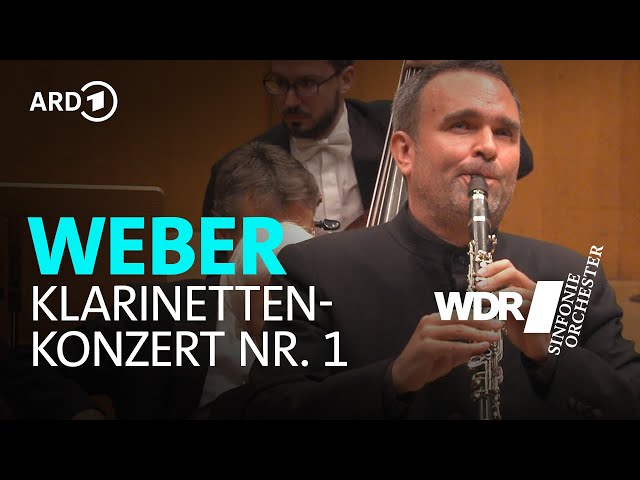
One of the representative concertos of the German Romantic school, this is a beautiful work that fully draws out the clarinet’s allure.
In the first movement, a dramatic introduction is followed by the clarinet singing an emotionally rich melody.
The second movement is notable for its warm tone, with a wistful melody that deeply touches the heart.
In the third movement, amidst a lively tempo, a succession of virtuosic clarinet passages captivates the listener.
Written for the clarinet virtuoso Heinrich Bärmann, it premiered in Munich on June 13, 1811.
As a groundbreaking work that expanded the instrument’s possibilities, it remains beloved by many to this day.
Carl Maria von Weber Popular Songs Ranking [2026] (21–30)
First movement from Clarinet Concerto No. 1Carl Maria von Weber21rank/position

Clarinet Concerto No.
1 in F minor, Op.
73 – First Movement: Allegro (fast).
This is Weber’s first clarinet concerto.
The clarinet soloist is Roeland Hendrikx of the Belgian National Orchestra, and the orchestra is the Frascati Symphonic.