

Carl Maria von Weber Popular Song Rankings [2026]

Composer Carl Maria von Weber, who wrote his first opera at age 11 and is also known for being the first to use a conductor’s baton with an orchestra.
He made numerous contributions to music history, including establishing the style of German Romantic opera and devising the modern layout of the orchestra.
Here, we present a ranking of Carl Maria von Weber’s most popular pieces—why not immerse yourself in his music?
- [Weber] Masterpieces by the founder of German opera
- Johann Burgmüller Popular Song Rankings [2026]
- Bedřich Smetana Popular Songs Ranking [2026]
- Arnold Schönberg Popular Songs Ranking [2026]
- A masterpiece by Richard Wagner. Popular classical music.
- Robert Schumann | Introduction to his famous and representative works
- Mozart: An Introduction to His Signature and Popular Works
- Yamada Kōsaku Popular Song Rankings [2026]
- Georg Friedrich Handel Popular Songs Ranking [2026]
- Jean Sibelius Popular Songs Ranking [2026]
- Johann Nepomuk Hummel Popular Song Rankings [2026]
- Niccolò Paganini Popular Song Rankings [2026]
- [Orchestra] Introducing famous and popular pieces
Carl Maria von Weber Popular Songs Ranking [2026] (41–50)
Grand Polonaise, Op. 21Carl Maria von Weber43rank/position
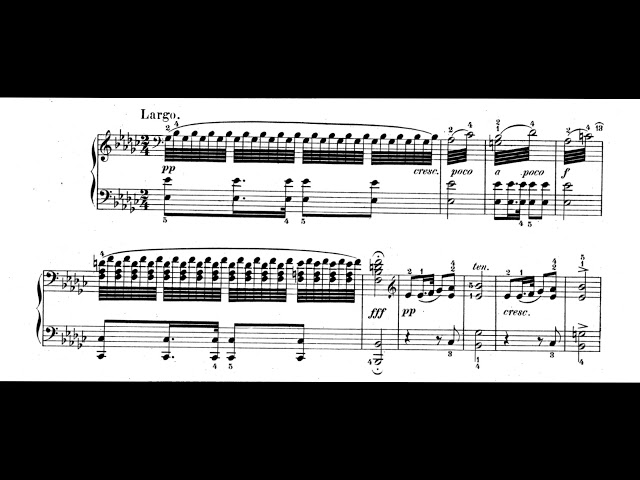
Carl Maria von Weber, hailed as the “founder of German opera,” revealed his musical talent at a young age and flourished as an important composer of the German Romantic school.
Among his piano works, the Grand Polonaise, composed in 1808, stands out for its dazzling and memorable character.
Its stately main theme is interwoven with inventive harmonies and virtuosic passages, showcasing Weber’s distinctive expressive power to the fullest.
Combining strength with elegance, this piece allows listeners to savor the piano’s allure in abundance.
It is recommended both for those looking to become familiar with Romantic music and for intermediate to advanced players seeking to refine their technique.
Overture to the opera ‘Abu Hassan’Carl Maria von Weber44rank/position

It’s a one-act opera based on the Arabian Nights.
It was reportedly composed during the period when Weber was in his most difficult financial situation and unable to earn an income.
Conducted by Simcha Heled, with the Philharmonia Pomorska of Poland performing.
Overture to the opera ‘Euryanthe’Carl Maria von Weber45rank/position

The libretto is based on a medieval French romance.
A full performance takes nearly three hours, and nowadays the complete work is seldom staged; the overture is often performed on its own.
Conducted by Daniel Smith, performed by the Frankfurt Radio Symphony.
From the opera ‘Oberon’: ‘Ocean, thou mighty monster’Carl Maria von Weber46rank/position

Known as one of Weber’s late masterpieces, the aria “Ocean! Thou Mighty Monster” from Act II of the opera Oberon vividly portrays the raging sea and the protagonist’s determination to face it, rendered exquisitely through music.
The grand orchestration and dramatic vocal lines leave a strong impression.
While conveying the sea’s power and terror, the piece also deftly depicts glimmers of hope, stirring the listener’s heart.
Highly recommended for those who enjoy the contrast between the forces of nature and human emotion.
Overture to the opera “Oberon”Carl Maria von Weber47rank/position

The overture derived from Weber’s final opera is marked by fantastical, expressive music.
From the opening three-note phrase that imitates Oberon’s magical horn, a beguiling atmosphere gradually unfolds.
The orchestration, making striking use of woodwinds and brass, vividly depicts moments where fantasy and reality intersect.
Premiered in London in April 1826, it has long been acclaimed as a forerunner of Romantic music.
It’s a highly recommended piece not only for classical music fans but also for anyone drawn to a fantastical sound world and rich musical expression.
Overture to the opera “Peter Schmoll”Carl Maria von Weber48rank/position

An important early orchestral work composed by Weber at the age of fifteen.
It begins with a quiet introduction, presents a theme by the oboe, and then moves into a more dramatic development.
Notable features include the brilliant use of woodwinds and emotional contrasts, offering a glimpse of elements that would lay the groundwork for later Romantic music.
Its pursuit of colorful orchestral sonorities and depiction of dramatic progression reveals Weber’s innovativeness.
It is a narratively rich work themed around family love and the resolution of misunderstandings.
Overture to the opera ‘Der Freischütz’Carl Maria von Weber49rank/position

This overture by Weber is a work that can be called a monument of German Romantic opera.
After the opening Adagio creates a mysterious atmosphere, a beautiful horn quartet appears.
The melody, evoking the calm scenery of a forest, soothes the listener’s heart.
Then, with tremolo strings and the clarinet’s uncanny timbre, it conjures an eerie mood that hints at a pact with the devil.
Finally, lively rhythms foreshadow the unfolding of the story.
Since its premiere in June 1821, this masterpiece has continued to be performed around the world.
As the overture to Weber’s most representative opera, it’s one you should definitely listen to!