

Déodat de Séverac Popular Song Rankings [2026]

Déodat de Séverac was a French composer who created numerous works that reveal the influence of French traditional music.
He was even described as composing “music with a pleasant fragrance” and “lovely music with the scent of the earth.”
He is known for songs and choral works, and it is said that his particularly distinctive solo piano pieces were highly acclaimed.
In this article, we present a ranking of Déodat de Séverac’s most popular pieces.
Whether you’re a classical music enthusiast or not, why not immerse yourself in his uniquely original music?
- Gabriel Fauré Popular Songs Ranking [2026]
- Manuel de Falla Popular Song Rankings [2026]
- César Franck Popular Songs Ranking [2026]
- Cécile Chaminade Popular Song Rankings [2026]
- Francis Poulenc Popular Songs Ranking [2026]
- François Couperin Popular Songs Ranking [2026]
- Olivier Messiaen Popular Songs Ranking [2026]
- Pablo de Sarasate Popular Song Rankings [2026]
- Scott Joplin Popular Song Rankings [2026]
- Yamada Kōsaku Popular Song Rankings [2026]
- Jean-Philippe Rameau Popular Songs Ranking [2026]
- Jacques Ibert Popular Song Ranking [2026]
- Henri Dutilleux Popular Songs Ranking [2026]
Déodat de Séverac Popular Song Rankings [2026] (1–10)
From the Days of Vacation, Book I, No. 7: When the Old Music Box Is HeardDéodat de Séverac8rank/position

Déodat de Séverac was a composer who continually created music deeply rooted in the land and culture of southern France.
His works, with their sweet melodies and refined harmonies, were highly praised by Debussy.
The seventh piece from En vacances, Book I is a simple work whose gentle, nostalgic melody evokes the timbre of an old music box.
It carries a wistful atmosphere, as if recalling everyday scenes from childhood.
Performed with tender, delicate expression, it is sure to soothe the listener’s heart.
From the Days of Holiday, Book I, No. 8: Romantic WaltzDéodat de Séverac9rank/position

While drawing influence from the traditional music of southern France, Déodat de Séverac left numerous piano works that are simple yet richly expressive.
“Valse romantique” is one of the most popular pieces from his piano collection “En vacances.” Its classical waltz form is interwoven with flowing melodies and gentle harmonies that tenderly envelop the listener.
Evoking a deep affection for the nature and culture of his native Languedoc, the piece exudes a calm, nostalgic atmosphere, making it a work that all piano enthusiasts will surely enjoy playing.
From the Days of Holiday, Book II, No. 1: “Chopin’s Spring”Déodat de Séverac10rank/position

The French composer Déodat de Séverac left works deeply rooted in the musical traditions of Languedoc in southern France, and his sweet melodies and refined harmonies were highly praised by Claude Debussy as “music with a pleasant fragrance.” “The Fountain of Chopin,” included in his piano collection En vacances (Days of Holiday), is a lyrical piece that conveys the composer’s love for his homeland and a sense of gentle everyday life.
Its graceful melody, reminiscent of an homage to Chopin, evokes scenes as if one were looking at a painting.
It is a soothing and beautiful work that I recommend even to those unfamiliar with Séverac’s music.
Déodat de Séverac Popular Song Ranking [2026] (11–20)
Song of the Earth (an agrarian poem in seven parts), Overture: “Spirit of the Earth”Déodat de Séverac11rank/position
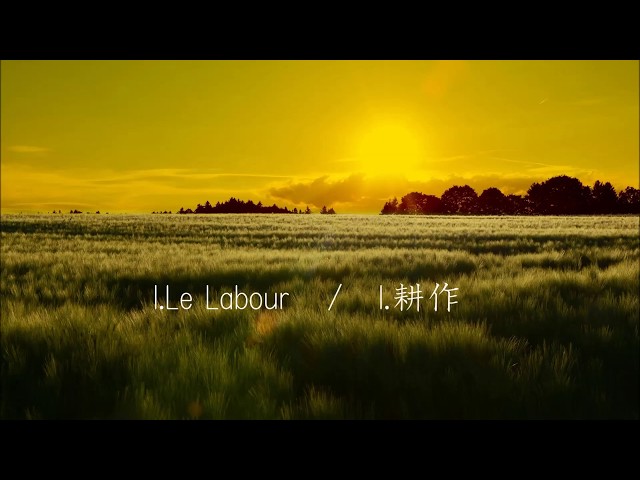
Déodat de Séverac was a French composer active from the late 19th to the early 20th century, who left many works rooted in the traditional culture of his native Languedoc.
His Chant de la Terre (Song of the Earth) is a suite of seven piano miniatures themed around agrarian poetry.
Séverac carefully depicts the nature and changing seasons of Languedoc, expressing through music the scenes of farm work and the feelings of the farmers who live alongside it.
Filled with affection and respect for the land, this work, while drawing on the currents of Impressionist music, captivates with its simple charm and poetic character.
It is highly recommended for those who want to feel nature through the piano or are seeking music rich in the local color of rural France.
The Water Nymph and the Impertinent FaunDéodat de Séverac12rank/position

Déodat de Séverac was a composer from Saint-Félix-de-Caraman in southern France.
Among Séverac’s many inspired and beautiful works for piano, The Water Nymph and the Irreverent Faun is a particularly striking piece.
True to its subtitle, “Dance of the Night,” the music evokes the night’s beguiling lights and scents—brilliant and unrestrained.
Séverac’s works are deeply imbued with the landscapes and culture of his homeland.
Why not take your time and savor the charms of this regionally rooted music?
A brilliant concert waltz, “Peppermint Jet.”Déodat de Séverac13rank/position

Born in southern France, the composer Déodat de Séverac loved the traditions of his native Languedoc and is known for weaving their musical elements into his works.
Claude Debussy praised his style as “music with a pleasant fragrance,” marked by luscious melodies and refined harmonies.
Composed in 1907, the Concert Waltz “Peppermint-Jette” is a bright and buoyant piece named after a popular liqueur from the South of France.
Its appeal lies in a vibrant energy that evokes glittering social scenes and in its sophisticated piano writing.
Among Séverac’s works, it shines for its originality—an inventive reimagining of the waltz.
A piece I highly recommend to anyone who loves the piano.
Suite ‘In Languedoc’ No. 1: ‘Toward the Farm at the Festival’Déodat de Séverac14rank/position

Déodat de Séverac, who cherished the local color of southern France and was captivated by the traditional music of Languedoc.
His works convey a deep attachment to the land and an homage to the beauty of nature.
En Languedoc is one of his representative piano suites.
In the first piece, the scene of a farmhouse, brimming with abundant nature and the joy of festivals, is vividly depicted.
With Séverac’s delicate touch and dazzling harmonies, the everyday life of Languedoc is rendered with great savor.
This compelling work is a masterpiece that everyone who loves their homeland should hear.