

![Déodat de Séverac Popular Song Rankings [2026]](https://i.ytimg.com/vi_webp/SwOssMvCPzI/maxresdefault.webp)

Déodat de Séverac was a French composer who created numerous works that reveal the influence of French traditional music.
He was even described as composing “music with a pleasant fragrance” and “lovely music with the scent of the earth.”
He is known for songs and choral works, and it is said that his particularly distinctive solo piano pieces were highly acclaimed.
In this article, we present a ranking of Déodat de Séverac’s most popular pieces.
Whether you’re a classical music enthusiast or not, why not immerse yourself in his uniquely original music?
- Gabriel Fauré Popular Songs Ranking [2026]
- Manuel de Falla Popular Song Rankings [2026]
- César Franck Popular Songs Ranking [2026]
- Cécile Chaminade Popular Song Rankings [2026]
- Francis Poulenc Popular Songs Ranking [2026]
- François Couperin Popular Songs Ranking [2026]
- Olivier Messiaen Popular Songs Ranking [2026]
- Pablo de Sarasate Popular Song Rankings [2026]
- Scott Joplin Popular Song Rankings [2026]
- Yamada Kōsaku Popular Song Rankings [2026]
- Jean-Philippe Rameau Popular Songs Ranking [2026]
- Jacques Ibert Popular Song Ranking [2026]
- Henri Dutilleux Popular Songs Ranking [2026]
Déodat de Séverac Popular Song Rankings [2026] (1–10)
Women bathing in the sunDéodat de Séverac1rank/position

Déodat de Séverac was a composer from southern France who loved the traditional music of his native Languedoc and skillfully wove its elements into his works.
Composed in 1908, his signature piece, “Women Bathing in the Sun,” is a pictorial work depicting the beautiful seaside scenery of Banyuls-sur-Mer.
Employing techniques such as glissandi that imitate the shimmer of water and reflections of light, it vividly renders in sound the joyful figures of women beneath the radiant southern French sun.
Showcasing refined pianistic writing, the piece is a colorful masterpiece whose elegant melodies convey, in every detail, a deep affection for the nature and culture of Languedoc.
Cerdanya — Five Picturesque Etudes No. 1: In the Two-Wheeled Carriage — Arrival in CerdagneDéodat de Séverac2rank/position

Born in 1872, Déodat de Séverac was a composer who loved the traditional music of the Languedoc region.
His works, praised by Debussy as “music with a pleasant fragrance,” are highly regarded for their beautiful melodies and harmonies.
The first piece from his piano suite Cerdanya — Five Picturesque Studies, titled In a Two-Wheeled Carriage — Arrival in Cerdanya, is a pictorial scene piece that reflects his deep affection for his homeland.
From its bright, energetic opening, it invites listeners on an unhurried journey.
Through Séverac’s musical vision, the beautiful landscapes of Cerdanya are vividly portrayed, making you feel as if you’re standing there yourself.
It is a masterpiece that everyone who loves their homeland should hear.
Cerdanya – Five Pictorial Etudes No. 2: Festival ~Memories of Puigcerdà~Déodat de Séverac3rank/position
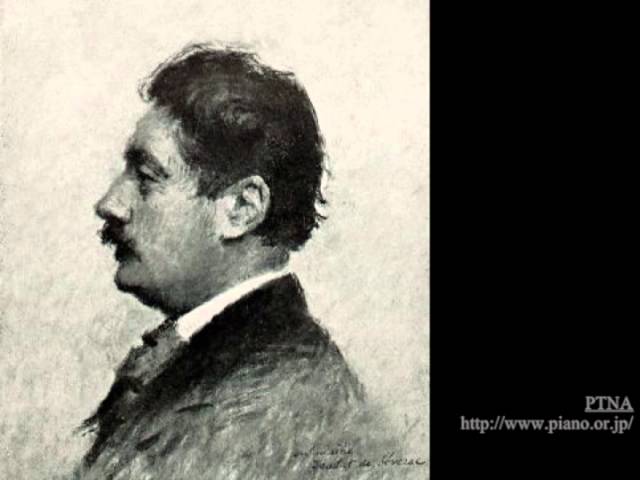
The French composer Déodat de Séverac had a deep affection for the traditional music of his native Languedoc.
His works vividly reflect the local climate and culture.
Cerdanya – Five Picturesque Studies is one of his representative piano suites, depicting the landscapes of the Cerdanya region near the Spanish border.
The second piece, Festival – Souvenir of Puigcerdà, evokes the lively festivities of the border town Puigcerdà.
Spanish-tinged rhythms intertwine with sparkling high-register figures and a sweet, lyrical melody, conjuring a beautiful scene.
Through Séverac’s music, why not immerse yourself in landscapes brimming with exotic charm?
Stance toward Madame de PompadourDéodat de Séverac4rank/position
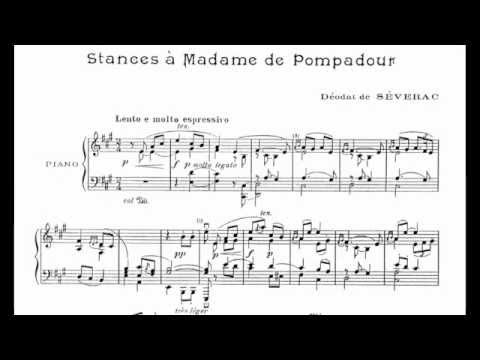
Déodat de Séverac was a French composer active from the late 19th to the early 20th century.
His works are characterized by mellifluous melodies and refined harmonies that reflect the traditional music of his native Languedoc.
The piano piece Stances à Madame de Pompadour, composed in 1907, is thought to have been written as a homage to Madame de Pompadour, a prominent woman of 18th-century France.
Serene yet richly expressive, this work embodies Séverac’s distinctive, sophisticated aesthetic and is highly recommended for lovers of classical music.
Vals MetecDéodat de Séverac5rank/position

The French composer Déodat de Séverac was born in 1872 in the Languedoc region of southern France and died in 1921.
His works incorporate elements of the traditional music of his homeland, and his piano pieces in particular have long been praised for their beautiful melodies and harmonies.
His Valse Mécanique is a striking work with a light, nostalgic melody, and can be seen as emblematic of his beautifully wistful musical style.
Through this romantic music, evoking local scenes and memories, why not let your thoughts wander to the beautiful landscapes of France?
From the Holiday Days, Book I: No. 1, “Prayer to Schumann”Déodat de Séverac6rank/position

Déodat de Séverac left works imbued with the spirit of southern France.
A lover of Languedoc’s traditional music, he deftly wove its elements into his piano works, whose refined, mellifluous sonorities are deeply appealing.
Prayer to Schumann, included in From the Days of Holiday, Book I, is a piece that conveys profound respect for Robert Schumann.
While singing Séverac’s characteristic lyrical melodies, it pays homage to Schumann in a musical language that is uniquely his own.
With its gentle, beautiful lines that soothe the soul, this work is highly recommended for admirers of Romantic-era music.
From the Days of Holiday, Book I, No. 5: Mimi Disguises Herself as a MarchionessDéodat de Séverac7rank/position

Born in Languedoc in southern France, Déodat de Séverac is a composer known for his sweet melodies and refined harmonies, which Debussy praised as “music with a pleasant fragrance.” Mimi Dons the Costume of a Marchioness, included in his piano collection En vacances, captivates with its light touch that evokes children’s dress-up play.
At the same time, the work as a whole also reflects the influence of Renaissance counterpoint.
Rich in regional color yet endowed with universality, Séverac’s music offers pianists a valuable repertoire that broadens their expressive range.